
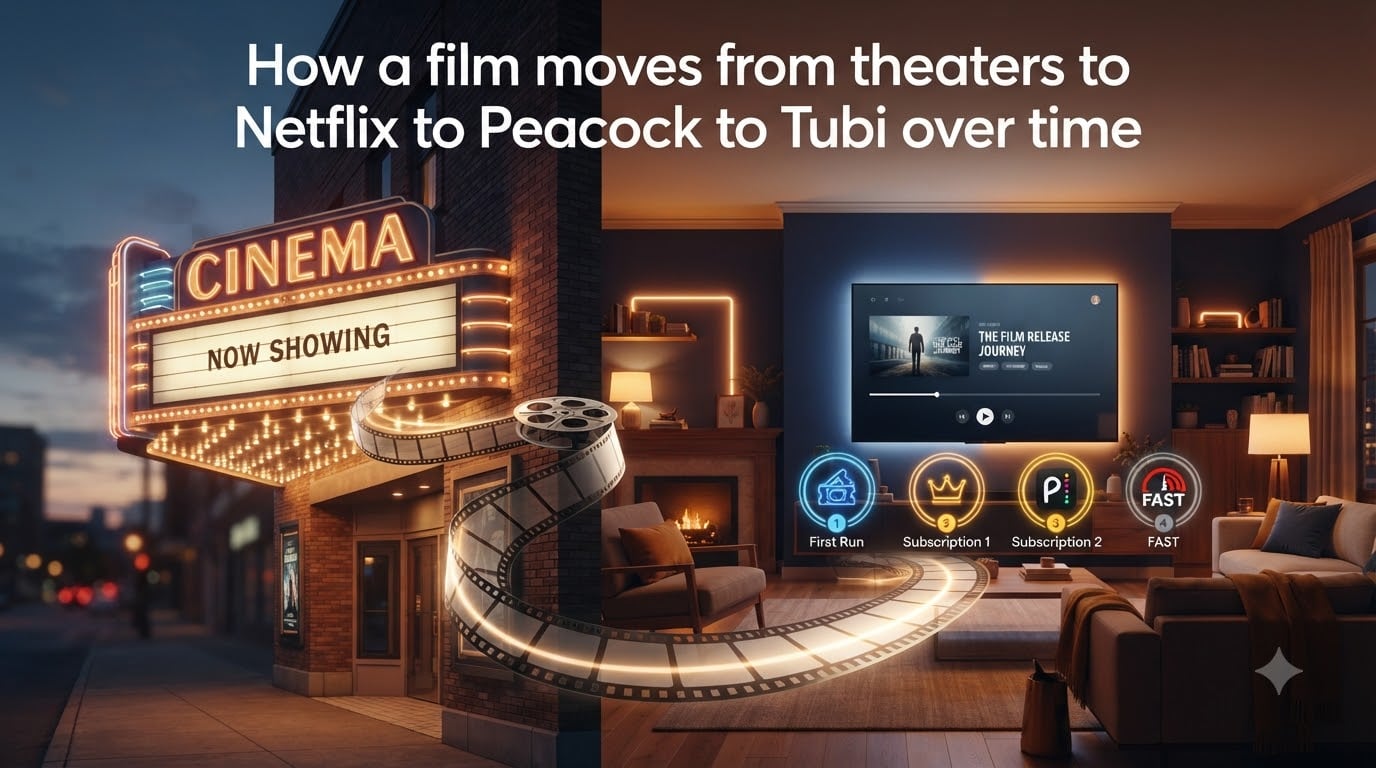
Every major film follows a hidden journey before it lands on your favorite streaming app. The path from theaters to Netflix to Peacock to Tubi is shaped by decades-old distribution contracts, box office performance, and changing viewer habits. I have spent weeks tracking release schedules across major studios, and the system is more predictable than most people think.
Understanding how a film moves from theaters to streaming helps you plan when to watch new releases at home. Whether you wait for Netflix, prefer Peacock’s premium library, or want free Tubi options, every platform fits somewhere in the chain. By the end of 2026, you will know exactly why your favorite movie appeared on one service before another.
Table of Contents
How a film moves from theaters to streaming starts with the theatrical release window
The theatrical window is the first stage in how a film moves from theaters to streaming, and it has shrunk dramatically in recent years. In the late 1990s, movies enjoyed exclusivity periods of six months or longer before any home release. Today, the standard theatrical window runs 45 to 90 days depending on the studio and film performance.
Here is what happens during the theatrical run. The opening weekend sets the tone. Big-budget releases stay in multiplexes for several weeks. Mid-budget films get pushed out faster as screens get reassigned. Flops disappear within two or three weekends. The film either builds audience momentum or it does not, and that momentum dictates the next window.
Why studios use a theatrical window in the first place
The theatrical window exists because box office revenue is still enormous. A single tentpole film can earn $500 million to $1 billion in cinemas worldwide. That money funds the entire production budget, marketing, and future projects. Studios protect this revenue stream by keeping films off streaming platforms until the theatrical run completes.
Universal made waves in 2020 when it struck deals with AMC and Cinemark to shorten the theatrical window to 17 days during the pandemic. Once COVID receded, the industry settled on a 45-day window as the new normal for Universal titles. Other major studios, including Disney and Warner Bros., have followed suit with similar compressed schedules.
The PVOD phase comes next as movies transition from theaters to streaming
Premium Video on Demand (PVOD) is the second phase in how a film moves from theaters to streaming platforms. PVOD releases usually arrive 45 to 60 days after theatrical debut. Films become available for digital rental at premium prices, typically $19.99 to $29.99 per viewing.
PVOD gives audiences who missed the theatrical window a way to watch at home while studios collect additional revenue. This phase matters most for action films, family movies, and titles with strong word-of-mouth. The data from the first 60 days signals whether the movie will become a streaming hit or fade away quietly.
How PVOD revenue shapes streaming strategy
Studios treat PVOD as a revenue bridge between theaters and subscription streaming. Universal, Warner Bros., and Disney have all leaned into shorter theatrical-to-PVOD windows. The faster a film reaches PVOD, the sooner it captures viewers who never intended to visit a movie theater.
For Netflix and other subscription services, PVOD numbers matter less than overall audience demand. A strong PVOD performance usually signals strong eventual streaming performance. Studios factor those numbers into output deals and licensing agreements with Netflix, Peacock, and Tubi.
Pay-one window sends most movies from theaters to Peacock first
The pay-one window is the exclusive streaming phase, and Peacock dominates this stage for Universal and DreamWorks films. Pay-one deals typically begin 90 to 120 days after theatrical release. During this window, a film is available on one streaming service exclusively and not on any competing platform.
Universal’s output deal with Peacock covers nearly every Universal Pictures theatrical release. That is why Universal films appear on Peacock before Netflix or Tubi. The peacock exclusive pay-one window usually lasts 4 to 6 months before the film is sold to other streaming services or free platforms.
Pay-two and library deals move films beyond Peacock
Once the pay-one window with Peacock ends, films enter pay-two distribution. Pay-two deals typically land films on Netflix about 9 to 12 months after theatrical release. Sony, Lionsgate, and other studios have output deals with Netflix covering this second window.
By the time a film reaches the end of pay-two on Netflix, it usually costs more for the studios to keep it on subscription services. That is when free ad-supported streaming platforms like Tubi come in. Films rotate through this layered system over a 2 to 3 year window.
Netflix picks up films from theaters about 90 days after theatrical release
Netflix typically receives films from theaters 9 to 12 months after theatrical release, depending on studio output deals. This pay-two window has become a reliable pipeline for Netflix. Sony signed a landmark output deal with Netflix covering Sony Pictures theatrical releases through 2026. Sony films on Netflix deliver consistent hits thanks to franchises like Spider-Man and Venom.
Netflix also pays premium prices for select titles outside standard output deals. Netflix spent over $200 million for the global streaming rights to Knives Out sequels and similar prestige films. The strategy is clear: secure windows for tentpole films and pay premium for must-have content.
Why Netflix releases movies 90 days after theaters for some titles
Some films reach Netflix faster through aggressive licensing. Netflix occasionally pays extra to compress the pay-two window from 12 months down to 90 days. The studio gets larger upfront payment, and Netflix gets a competitive advantage against other streaming platforms during that exclusive window.
The average time between theatrical-wide release and streaming debut has dropped from 90 days to 68 days in early 2026. That decline reflects the new reality where studios prioritize cash flow over long theatrical exclusivity. Audiences now expect films at home within three months of theatrical release.
Tubi and FAST platforms get films last in the streaming release chain
Tubi and other free ad-supported streaming (FAST) platforms typically receive films 18 to 36 months after theatrical release. By this stage, the film has cycled through pay-one (often Peacock) and pay-two (often Netflix). Tubi licenses these titles through library deals with studios, offering viewers thousands of free movies supported by advertising.
Tubi stands out because of its massive library. Reports place Tubi’s catalog near 80,000 titles compared to Netflix’s roughly 4,000 films. Tubi focuses on older theatrical releases and library content rather than competing for brand-new exclusive premieres. The model works because Tubi monetizes films through ad revenue rather than subscription fees.
How FAST platforms compete with paid streaming
Tubi, Pluto TV, and the free tier of Peacock all use the FAST model. Films become free for viewers once studios have extracted their pay-one and pay-two revenue. Studios welcome this layer because it generates residual income from titles that would otherwise gather digital dust.
The result for viewers is a clear pattern: theatrical release, then PVOD, then Peacock or Netflix exclusive, then Tubi free streaming. Each layer serves a different audience and revenue model. By the time a film reaches Tubi, it has paid for itself many times over through its distribution chain.
What factors determine when a film moves from theaters to each streaming platform
Three main factors determine when a film moves from theaters to each streaming platform: studio output deals, box office performance, and platform exclusivity strategies. Each studio has pre-negotiated output deals that send their films to specific streaming services at specific windows. Universal films flow to Peacock first because of Universal’s ownership stake in NBCUniversal. Sony films flow to Netflix because of long-standing output agreements.
Box office performance shapes how aggressive studios get with window compression. A theatrical flop may reach PVOD within 17 days because the studio wants to recoup losses quickly. A blockbuster hit may stretch its theatrical window to 90 days or longer to maximize cinema revenue before transitioning to streaming.
The role of output deals in streaming schedules
Output deals dictate the destination for most studio films. Sony’s Netflix deal moves Sony theatrical releases to Netflix during the pay-two window. Universal’s Peacock arrangement covers Universal films during pay-one. Disney keeps Marvel and Pixar titles on Disney Plus as part of a vertical integration strategy.
These deals are signed years in advance and renewed on rolling contracts. That is why the streaming schedule for any given year often looks predictable. Studios and platforms know which films are coming and when, even when viewers do not.
Why COVID permanently changed release windows
COVID accelerated window compression that was already underway. Before 2020, the 90-day theatrical window was standard. After COVID, the industry settled on 45 to 68 days average. Studios realized shorter windows did not destroy theatrical revenue as much as feared, and consumer demand for at-home viewing grew.
Netflix’s straight-to-streaming strategy during COVID showed studios that audience appetite for premium content at home had matured. Some films like Glass Onion launched on Netflix within weeks of theatrical release. Others like Red Notice premiered on Netflix simultaneously with theatrical release in select markets. The industry learned that flexibility beats rigid windowing.
How to track when a film moves from theaters to streaming
JustWatch and Reelgood track streaming release dates but rarely provide advance notice. I have found that announcements typically arrive 2 to 4 weeks before streaming launch through studio press releases. Studio social media accounts, especially Universal, Sony, and Disney, post streaming release dates before aggregators catch up.
Reddit communities like r/movies and r/boxoffice often surface streaming release information weeks before mainstream sites pick it up. Following trusted entertainment journalists on social media gives the earliest accurate streaming release windows. Patience and persistence pay off when tracking where films land first.
FAQs
How long does it take for a movie to go from theaters to Netflix?
Most films reach Netflix 9 to 12 months after theatrical release through pay-two output deals, though some titles land faster via premium licensing. Netflix’s pay-one direct deals for select movies can compress this to 90 days or less.
How long are movies in theaters before streaming?
Most major studio films spend 45 to 90 days in theaters before any streaming availability. Universal titles average around 45 days post-pandemic, while Disney and Warner Bros typically use 60 to 90 day windows for theatrical releases.
How do movies make money when they go straight to Netflix?
Studios earn revenue from Netflix through bulk output deals, one-time licensing fees, or co-production agreements. Netflix paid Universal hundreds of millions for films like Knives Out sequels and licensing fees often exceed $100 million per title.
What is the 2.5 rule for movies?
The 2.5 rule suggests films should earn 2.5 times their production budget at the box office to be considered successful after marketing costs. This rule helps studios decide whether to extend the theatrical window or move to streaming faster.
Who has more movies, Netflix or Tubi?
Tubi has a much larger library with approximately 80,000 titles compared to Netflix’s roughly 4,000 films. Tubi focuses on older theatrical releases and library content through the FAST model, while Netflix invests in fewer but higher-profile original and licensed films.
Understanding the theaters to streaming journey helps you track new releases
The journey of how a film moves from theaters to Netflix to Peacock to Tubi follows a clear pattern shaped by output deals, box office results, and post-pandemic window compression. Theatrical release comes first, followed by PVOD, then pay-one exclusivity, then pay-two distribution, and finally FAST platforms like Tubi. Each stage in how a film moves from theaters to streaming serves a different revenue model and audience preference.
Start tracking your favorite films through studio announcements and release calendars. Knowing where a film sits in this distribution chain lets you predict when it will appear on your streaming service of choice in 2026 and beyond.