
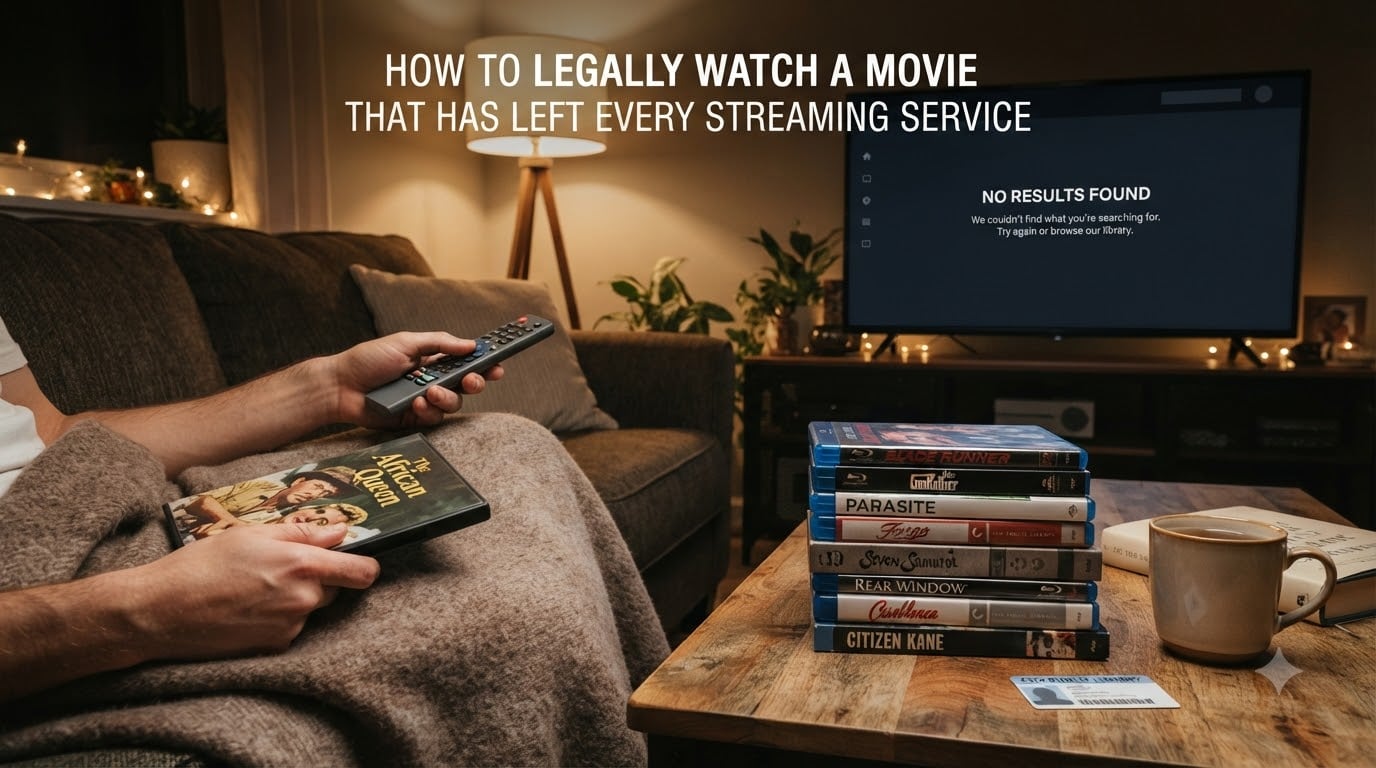
You finally sat down to watch that film you have been meaning to see for months, searched every app on your TV, and came up empty. It was on Netflix last year, then it moved to Hulu, and now it is just gone. If this sounds familiar, you are dealing with one of the most frustrating realities of modern streaming.
The good news is that almost no movie truly disappears forever. Films that have left every subscription streaming service still exist on physical media, digital rental platforms, library systems, and specialty channels. You just need to know where to look.
In this guide, I walk through every legal method for tracking down and watching a movie that has vanished from streaming. Whether you want a free solution tonight or you are building a permanent collection, there is an option here that works.
Table of Contents
Why Movies Disappear From Streaming Services
Movies leave streaming services because of licensing agreements, not because the films themselves stopped existing. When Netflix, Hulu, or Amazon Prime Video adds a title, they are usually renting the rights to stream it for a fixed window. Once that contract expires, the title moves on.
Those rights are often exclusive, meaning a studio can only license a film to one platform at a time in a given region. When a deal ends, the movie may hop to a competing service, go to a free ad-supported channel, or simply sit unavailable until the studio negotiates a new agreement. Sometimes the studio pulls content to pad its own platform.
This is why a film can vanish overnight without warning. It is also why building a personal library of the movies you love matters more than ever. Subscription services are rental arrangements at the end of the day, and what they offer today may not be there tomorrow.
How to Legally Watch a Movie That Has Left Every Streaming Service
Here are the most reliable legal methods, ranked roughly from fastest to most permanent. Most people end up combining several of these approaches depending on the film and their budget.
1. Buy or Rent the Physical Media (DVD and Blu-ray)
Physical media is the single most dependable way to watch a movie that has left streaming. If a film was ever released on DVD or Blu-ray, a copy exists somewhere, and once you own it, no licensing deal can take it away from you.
Amazon, eBay, and specialist retailers like DeepDiscount carry new and used copies of titles spanning decades. For out-of-print films, the used market is your best friend. I have tracked down cult classics and foreign films on eBay for a few dollars that simply do not exist on any streaming platform.
Blu-ray also gives you the best picture and sound quality available outside a commercial cinema. Many releases include bonus features, commentaries, and alternate cuts that streaming versions strip out. If you care about film as an art form, a region-free Blu-ray player opens up international catalogs that never get licensed in the US.
2. Use Digital Video on Demand (VOD) Platforms
When a movie leaves subscription services, it very often shows up for digital rental or purchase on VOD platforms. These stores do not rely on the same licensing model as Netflix or Disney Plus, so their catalogs tend to be far broader and more stable.
The major platforms to check are:
Apple TV (iTunes) – One of the largest digital catalogs, with rental options typically starting around 48-hour viewing windows.
Amazon Prime Video Store – Even without a Prime membership, you can rent or buy thousands of titles here.
Google Play Movies and YouTube Movies – Wide availability, especially for international and independent films.
Vudu – Strong catalog with frequent rental discounts and a large free ad-supported section.
Most rentals cost between three and six dollars and give you 30 days to start watching, plus 48 hours to finish once you hit play. If you know you will rewatch a film, buying a digital copy is often only a few dollars more and gives you permanent access through that account.
3. Borrow From Your Local Library
Your public library is one of the most underused resources in entertainment, and it is completely free. Most library systems stock extensive DVD and Blu-ray collections, including recent releases, documentaries, foreign films, and television series.
If your local branch does not have a title, nearly every library system offers interlibrary loan. You request the film, and the library borrows it from another branch or even another library network in the region. I have used this to track down obscure documentaries that were impossible to find anywhere else.
All you need is a free library card. Some systems even let you search their catalog and place holds online, so you can check availability before making the trip.
4. Try Library Streaming Apps: Kanopy and Hoopla
Libraries have gone digital, and that means you can stream movies for free without leaving your couch. Two services dominate this space, and both only require a library card.
Kanopy partners with libraries and universities to offer a curated collection heavy on classic cinema, documentaries, world cinema, and independent films. If a movie left mainstream streaming but has critical or artistic significance, Kanopy is often where it lands. The Criterion Collection has a rotating selection here, which alone makes it worth checking.
Hoopla offers a broader mix including mainstream movies, family titles, and television alongside its film catalog. You get a set number of borrows per month, and titles stream instantly with no waiting list.
Neither service costs money or shows ads. They are funded through your library, so if your local branch participates, you already have access.
5. Check Specialty Streaming Services
Some films leave mainstream platforms because they belong on niche services that cater to specific audiences. These specialty streamers often license catalogs that the big platforms ignore.
The Criterion Channel is the gold standard for classic, art-house, and world cinema. If a respected older film vanished from Netflix or Prime Video, there is a real chance Criterion is streaming it. The curation is exceptional and the library rotates regularly with themed collections.
Mubi focuses on hand-picked international and independent films, with a rotating selection that changes weekly. It is perfect for discovering foreign films and festival darlings that never get wide streaming distribution.
Other options include Fandor for indie and documentary films and Shudder for horror. If you know the genre or era of the movie you are hunting, a specialty service may already have it.
6. Look for Free Ad-Supported Options
Free ad-supported streaming services have grown dramatically, and they often pick up titles that paid services dropped. These platforms cost nothing and run short commercial breaks during playback.
Tubi, Pluto TV, The Roku Channel, and Freevee all maintain large rotating libraries. Tubu in particular has built a reputation for hosting weird, obscure, and out-of-print titles that exist nowhere else digitally. I have found forgotten 1990s thrillers on Tubi that were not available for rental on any paid platform.
The trade-off is commercial interruptions and no download option for offline viewing. But for finding a movie that has left everywhere else, these services are absolutely worth a search.
7. Buy Used Discs From Thrift Stores and Marketplaces
Thrift stores, garage sales, estate sales, and used bookstores are treasure troves for physical media. Goodwill and Salvation Army locations frequently stock DVDs for one or two dollars each. You will not always find what you came for, but the surprise discoveries are half the fun.
Online marketplaces like eBay, Mercari, and Discogs make it easy to search for specific titles across thousands of sellers. For out-of-print or rare editions, set a saved search alert and wait for a copy to surface. Patience pays off, and the prices are often lower than any digital alternative.
Tools to Track Down Any Movie
Before you start hunting through individual platforms, use a search tool to see where a film is currently available. This saves enormous time and prevents you from subscribing to a service that does not actually have what you want.
JustWatch is the most popular option. You type in a movie title, and it shows every streaming, rental, and purchase option across dozens of services in your country. It even lets you filter by price, so you can see what is free versus paid. I use it every time a movie leaves my watchlist.
Movies Anywhere solves a different problem. If you buy digital films, this service links your accounts across Apple TV, Amazon, Google Play, and Vudu so your purchased library appears in one place. Buy a movie once on any connected platform and it shows up everywhere. It is the closest thing to true digital ownership available today.
For library searches, your local library system website and the Libby app (for digital borrowables) let you check availability across your entire library network from your phone.
Legal Considerations When Watching Unavailable Movies
It is worth being direct about why legal methods matter. Streaming a movie from an unauthorized piracy site is illegal, full stop. While individual viewers are rarely prosecuted, these sites also carry significant risks including malware, intrusive advertising, and poor video quality that ruins the viewing experience.
The methods in this guide are all fully legitimate. Physical media you own is yours to watch permanently. Digital purchases through major platforms are licensed to your account. Library borrows are funded publicly for community use. Specialty and ad-supported services operate under proper licensing agreements.
If you travel internationally, keep region coding in mind. DVDs and Blu-rays are often locked to specific geographic regions, so a disc bought in Europe may not play on a US player without a region-free device. Digital purchases can also have geographic restrictions, though Movies Anywhere helps bridge some of these gaps within the US.
The bottom line is that legal options exist for virtually every film ever made. You just need to be willing to look beyond the major subscription services.
Tips for Building a Collection That Lasts
If you are tired of movies disappearing from your watchlist, the best long-term solution is building your own library. Here are practical strategies based on what collectors and film communities recommend.
Prioritize physical media for your favorites. The films you rewatch regularly deserve a permanent spot on your shelf. Streaming rights can vanish, but a Blu-ray in your cabinet is forever. This is especially true for cult films, foreign cinema, and anything from smaller studios that may not prioritize re-licensing.
Use digital purchases for convenience. Movies Anywhere-linked purchases give you multi-platform access that is more durable than any single subscription. Spread across Apple, Amazon, and Google, your library survives even if one platform changes its policies.
Check thrift stores regularly. Physical media prices at thrift shops are unbeatable. Build a habit of scanning the DVD section whenever you visit. You will accumulate a surprisingly diverse collection for very little money.
Follow specialty retailers and boutiques. Labels like Criterion, Arrow Video, Kino Lorber, and Shout Factory release beautifully restored editions of films that mainstream services ignore. Sign up for their newsletters to catch limited editions before they sell out.
Keep a running wishlist. Use a notes app or letterboxd list to track films you want to own. When you spot a copy at a thrift store or see a sale online, you will know instantly whether to grab it.
FAQs
Why do movies keep leaving streaming services?
Movies leave streaming services when their licensing agreements expire. Studios lease the right to stream a film for a set period, and once that contract ends, the title moves to another platform, returns to the studio catalog, or becomes available through rental and purchase instead.
How to watch movies that aren’t on streaming services?
You can legally watch movies not on streaming through physical media like DVD and Blu-ray, digital rental platforms like Apple TV and Amazon, library services including Kanopy and Hoopla, specialty streamers like the Criterion Channel, and free ad-supported services like Tubi and Pluto TV.
What websites can you watch movies legally?
Legal movie websites include subscription services like Netflix and Hulu, digital rental stores like Apple TV, Amazon, Google Play, and Vudu, free ad-supported platforms like Tubi, Pluto TV, and The Roku Channel, and library-powered apps like Kanopy and Hoopla.
Is it illegal to watch movies on unauthorized streaming sites?
Yes. Streaming copyrighted movies from unauthorized piracy websites is illegal. Legal alternatives include buying or renting physical media, using licensed VOD platforms, borrowing from libraries, and watching ad-supported services that pay proper licensing fees.
How to find movies leaving Netflix?
Use the JustWatch website or app to check current availability across all platforms. Netflix also flags expiring titles within the app, typically in the ‘Last Chance’ or similar section. You can also search a title on JustWatch to see where it is headed next.
What is Movies Anywhere and how does it work?
Movies Anywhere is a free service that links your digital movie purchases across Apple TV, Amazon Prime Video, Google Play, Vudu, and other platforms. Buy a movie once on any connected retailer and it appears in your library on all of them, giving you more durable digital ownership.
Conclusion
No movie is truly gone for good. When a film leaves every streaming service, it almost always survives on physical media, digital rental platforms, library systems, or specialty channels. The key is knowing which method fits your situation and budget.
Start with a free JustWatch search to see current availability, then work through library apps, ad-supported services, digital rentals, and physical media until you find it. For the films you love most, consider building a permanent collection so you never lose access again. Knowing how to legally watch a movie that has left every streaming service puts you back in control of what you watch and when you watch it.