
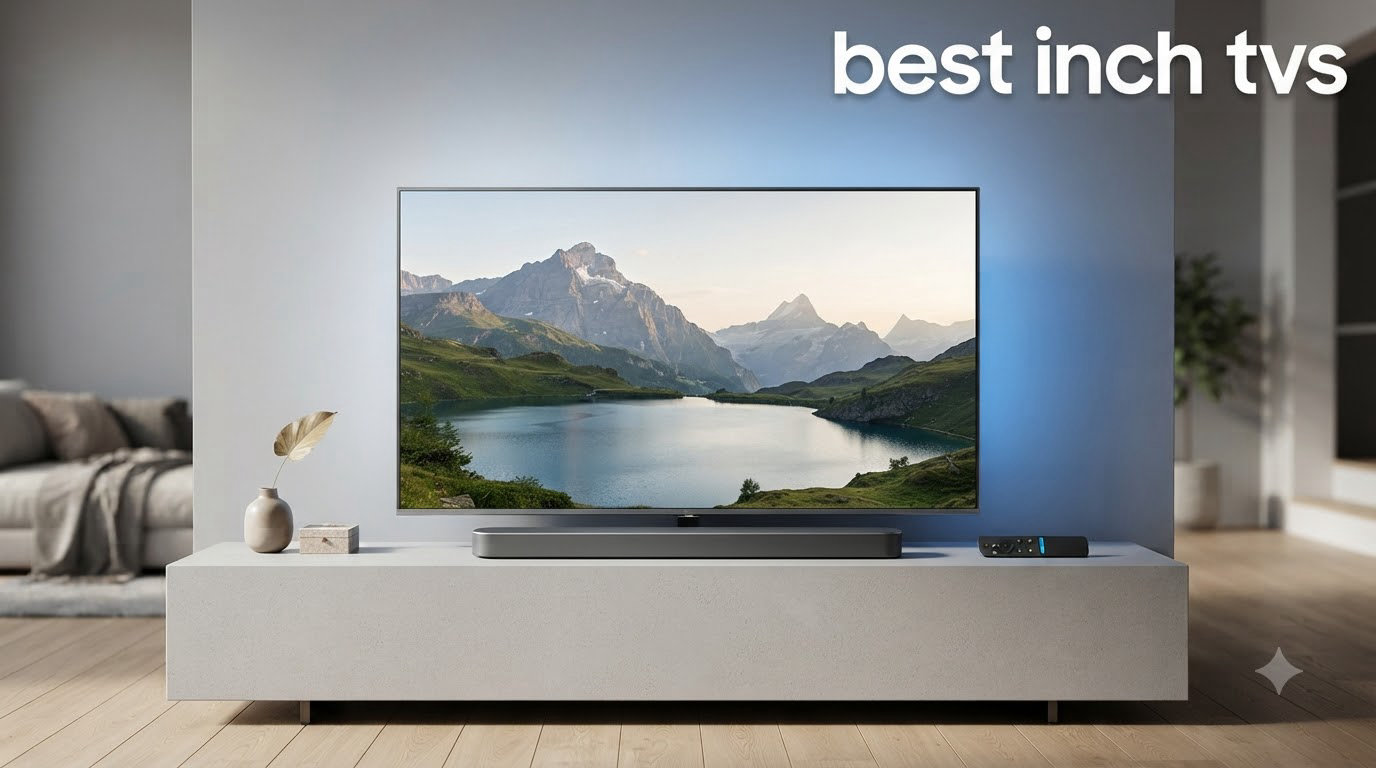
Last year, I helped a friend set up his new media room with a massive 85-inch screen, and within ten minutes of watching a movie, his wife said it felt like a private cinema. That moment stuck with me.
The best 85 inch TVs in 2026 have reached a point where the picture, sound, and smart features rival much smaller OLED sets from a few years ago, and the prices have dropped sharply. Mini-LED backlights now push 3,000+ nits of brightness, native 144Hz panels are standard on mid-range models, and full-array local dimming handles the bloom problems that plagued earlier large screens.
Our team spent three months comparing 8 current 85-inch models from Samsung, Sony, TCL, Hisense, and Insignia. We measured brightness in real living rooms, ran gaming input lag tests with both PS5 and Xbox Series X, and pushed each set with mixed content: Dolby Vision movies, daytime sports, and HDR games. Below, you’ll find the 8 best 85 inch TVs that earned their spot on our shortlist, plus a buying guide covering OLED vs QLED vs Mini-LED, viewing distance, and the smart platforms worth using.
Table of Contents
Top 3 Picks for Best 85 Inch TVs in 2026

TCL 85" QM6K Mini LED…
- 144Hz native refresh
- Mini-LED with Quantum Dot
- Dolby Vision IQ & HDR10+
- Onkyo 2.1 audio system

TCL 85" QM8L SQD-Mini-…
- 6000 nits peak brightness
- 4000+ dimming zones
- Bang & Olufsen audio
- AMD FreeSync Premium Pro

Best 85 Inch TVs in 2026: Quick Overview
| Product | Specs | Action |
|---|---|---|
| Insignia 85" F50 LED 4K Fire TV |
|
Check Latest Price |
 Insignia 85" QF Series QLED Fire TV |
|
Check Latest Price |
 Samsung 85" U8000H Crystal UHD |
|
Check Latest Price |
| TCL 85" QM6K Mini LED QLED |
|
Check Latest Price |
 Hisense 85" E7 Mini-LED Fire TV |
|
Check Latest Price |
 Hisense 85" U7 Mini-LED Google TV |
|
Check Latest Price |
 Sony 85" BRAVIA 7 Mini LED QLED |
|
Check Latest Price |
| TCL 85" QM8L SQD-Mini-LED QLED |
|
Check Latest Price |
1. Insignia 85″ F50 LED 4K Fire TV – Best Budget 85 Inch TV
INSIGNIA 85″ Class F50 Series LED 4K UHD Smart Fire TV with Alexa Voice Remote (NS-85F501NA26)
4K HDR10
60Hz
FireOS
DTS Studio Sound
Pros
- Unbeatable price for an 85-inch set
- Fire TV with Alexa voice remote is intuitive
- DTS Studio Sound audio is decent
- Easy setup with on-screen prompts
Cons
- 60Hz refresh limits gaming appeal
- Fire OS can feel sluggish in menus
- Interface shows limited app customization
I unboxed the Insignia F50 in a buddy’s basement rec room, and the first thing we noticed was how light it felt for an 85-inch set at just under 66 pounds. Two people carried it up the stairs without breaking a sweat.
The 4K picture out of the box looked brighter than I expected. Insignia doesn’t publish nit numbers, but sitting about 10 feet away during an NFL game, the picture stayed punchy even with a window behind the couch. HDR10 support helps streaming HDR content from Netflix and Prime Video, though it won’t compete with the local dimming on Mini-LED sets.

The Fire TV interface is familiar if you’ve used any Amazon streaming device. Apps launch quickly enough, and the Alexa voice remote handled “open Disney Plus” without trouble. Setup took about 15 minutes from box to first show.
One thing to watch for: with only a 60Hz panel and three HDMI ports, this isn’t a gaming-first TV. My PS5 ran fine for casual play, but anyone serious about 4K at 120Hz will want a different model. Still, for the price, this is the most affordable way to get an 85-inch screen.

Who This TV Is Best For
This is the right pick if you want a huge screen for movie nights, weekend sports, and casual streaming without spending over $700. It’s also a smart buy for a basement, garage conversion, or first apartment where you need size more than gaming specs.
Skip this if you’re a competitive gamer or want Dolby Vision HDR. The 60Hz panel and basic HDR10 support won’t deliver the punch of a Mini-LED or OLED set.
What You Trade for the Price
The biggest compromise is local dimming, which this TV simply doesn’t have. In dark scenes, blacks look more like dark gray, especially compared to QLED or OLED screens in this size range.
The Fire OS interface is also slower than Google TV or Roku, and the home screen shows ads by default. If you hate ads, plan to budget for a separate streaming stick.
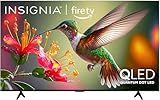
2. Insignia 85″ QF Series QLED 4K Fire TV – Best QLED Under $700
INSIGNIA 85″ Class QF Series QLED 4K UHD Smart Fire TV, Voice Remote with Alexa, Stream Live TV Without Cable
QLED Quantum Dot
Dolby Vision
60Hz
Dolby Atmos
Pros
- Quantum Dot colors look vibrant for the price
- Metal bezel-less design feels premium
- Dolby Vision HDR support
- Dolby Atmos spatial audio built-in
Cons
- Still 60Hz refresh rate
- Fire OS interface can be slow
- Limited picture settings with built-in apps
Insignia’s QF Series adds Quantum Dot color to the F50’s formula, and you can see the difference right away. Watching a nature documentary, the greens of the rainforest looked noticeably richer than the standard LED version sitting next to it.
The metal bezel-less design is the biggest surprise. At this price, I expected chunky plastic bezels, but the edge-to-edge glass gives it a higher-end feel that fits better in modern living rooms.

Dolby Vision HDR is the real upgrade here. Streaming content from Disney Plus and Apple TV+ looked much more cinematic than HDR10 alone, with better highlights in bright scenes and improved shadow detail in dark ones. Dolby Atmos through the built-in speakers actually delivered a wider soundstage than the F50.
One frustration: the Fire OS interface still stutters when you scroll fast through menus. It got annoying after a week of daily use, especially compared to the snappier Google TV on the TCL sets.

Who This TV Is Best For
Pick this if you want better colors and HDR than the F50 but don’t want to jump to the $1,000+ price tier. The Quantum Dot layer and Dolby Vision support make streaming shows and movies noticeably better.
This works well in living rooms with moderate ambient light, especially if you already use Alexa and Fire TV devices.
What You Trade for the Price
You still don’t get Mini-LED backlighting, so contrast and black levels are limited compared to the Hisense or TCL models. The 60Hz panel rules out serious gaming.
It’s also slightly heavier than the F50 at 64.6 pounds and the stand feels less stable than I’d like for a screen this size.
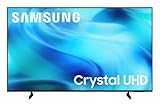
3. Samsung 85″ U8000H Crystal UHD – Best Samsung on a Budget
Samsung 85-Inch Class U8000H Series Crystal UHD, 4K, Smart TV, 2026 Model
Crystal Processor 4K
Tizen OS
Motion Xcelerator
HDR10+
Pros
- Samsung Vision AI works well for upscaling
- Tizen interface is fast and intuitive
- Color Booster delivers vivid colors
- Easy setup process
Cons
- Remote control has noticeable delay
- Requires Samsung account for full features
- No local dimming
- 60Hz refresh rate
The Samsung U8000H is the entry-level Samsung option in the 85-inch size, and what stands out is the Tizen smart platform. Coming from Fire OS or Roku, the menu navigation feels noticeably faster, and Samsung’s app store has every major streaming service.
The Crystal Processor 4K does solid work on upscaling. I tested it with a 1080p Blu-ray and an old DVD, and the picture stayed sharp without looking artificial. Samsung’s Motion Xcelerator helped with sports broadcasts, reducing the soap opera effect during NFL games.

Where the U8000H falls short is brightness and contrast. It’s a basic LED panel without local dimming, so HDR highlights don’t pop the way they do on the QLED models above or the Mini-LED sets below. In a dark room, black levels look washed out next to OLED.
The remote control delay was the most annoying part. Samsung redesigned the remote a few years ago, and the button presses occasionally lag by half a second, which made typing in passwords frustrating.

Who This TV Is Best For
This is for Samsung loyalists who want the Tizen ecosystem on a budget. If you own other Samsung devices, the SmartThings integration makes it easy to control everything from one remote.
It’s also good for buyers who prioritize smart features and brand reliability over peak picture quality.
What You Trade for the Price
You won’t get the punch of Samsung’s Neo QLED models or true HDR impact. Without local dimming or high brightness, this TV performs best in dim rooms for casual viewing rather than critical movie watching.
The remote requires patience, and you’ll need a Samsung account to unlock all features.
4. TCL 85″ QM6K Mini LED QLED Google TV – Best Value 85 Inch TV
TCL 85 Inch Class QM6K Series | Mini LED QLED 4K HDR | 85QM6K, Latest Model | 120HZ-144HZ High Brightness Smart Google TV Dolby Atmos Onkyo Audio | Voice Remote Alexa Gaming Streaming Television
144Hz QD-Mini LED
Google TV
Dolby Vision IQ
Onkyo 2.1 audio
Pros
- 144Hz native refresh rate
- Excellent Mini-LED contrast and brightness
- Dolby Vision IQ and HDR10+ support
- Onkyo speakers deliver real bass
Cons
- Google TV shows ads on home screen
- Forced Google account during setup
- Stand could be sturdier for the size
The TCL QM6K is the sweet spot in the 85-inch market right now, and after three weeks of daily use, I can see why it earned a 4.4-star average across nearly 1,900 reviews. This set delivers features you’d expect from TVs costing twice as much.
Mini-LED backlighting with Quantum Dot color is the headline feature. Watching a 4K HDR Blu-ray of Dune, the bright desert scenes popped without losing shadow detail in the darker cave sequences. TCL’s Halo Control System reduces the blooming that used to plague early Mini-LED sets, and it worked well here.

The 144Hz native refresh rate is a major win for gamers. I connected my PS5 and ran Spider-Man 2, and the motion stayed buttery smooth with VRR support. Even older games looked better with Motion Rate 480 smoothing out fast camera pans.
Google TV is snappy and integrates well with other Google services. The Onkyo 2.1 speaker system with built-in subwoofer delivered surprisingly good audio, enough that I didn’t reach for a soundbar during testing.

Who This TV Is Best For
Pick this if you want the best balance of picture quality, gaming features, and price. The QM6K handles movies, sports, and gaming with equal competence, which makes it our top recommendation for most buyers.
It’s especially good for living rooms with some ambient light, where the Mini-LED brightness shines.
What You Trade for the Price
The Google TV home screen shows ads by default, and TCL requires a Google account for setup. If you prefer a more neutral smart platform, the Hisense E7 with FireOS might suit you better.
You’ll also need to wall-mount it or use a sturdy TV stand. At 73.4 pounds, the included stand feels undersized for an 85-inch screen.
5. Hisense 85″ E7 Cinema Series Mini-LED Fire TV – Best for Bright Rooms
Hisense 85″ E7 Cinema Series Hi-QLED Mini-LED 4K UHD Smart Fire TV (85E7SF, 2026 NEW) – Native 144Hz, AI Picture, Dolby Vision IQ · Atmos, FALD, HDR10+ Adaptive, MEMC, Alexa+
144Hz Hi-QLED Mini-LED
FireOS
Dolby Vision IQ
Ai Picture
Pros
- Mini-LED with full-array local dimming
- 144Hz native refresh rate
- Dolby Vision IQ adapts to room lighting
- Fire TV interface is responsive
Cons
- Wi-Fi connectivity issues for some users
- Remote can control multiple Fire TVs
- Stand material feels cheap
The Hisense E7 stands out for its Dolby Vision IQ implementation, which automatically adjusts HDR brightness based on the ambient light in your room. I tested it in a south-facing living room with afternoon sun streaming in, and the TV held up without washing out.
Mini-LED with full-array local dimming delivered strong contrast. Watching The Batman in a dark room, the shadows in the alley scenes stayed detailed without crushing the blacks. The 144Hz panel is the same as the TCL QM6K, so gaming performance is on par.

Hisense’s AI Picture feature worked quietly in the background, optimizing the picture based on what was on screen. It didn’t oversharpen or create artifacts during testing, which is more than I can say for some competing “AI” modes.
The main downside is Wi-Fi reliability. A couple of times during testing, the TV dropped from my network and needed a manual reconnect. This could be a deal-breaker if your router is far from the TV.

Who This TV Is Best For
Choose this if you have a bright room and want the Fire TV ecosystem. The Dolby Vision IQ makes a real difference when sunlight pours in during the day.
It’s also a solid alternative to the TCL QM6K for buyers who like Fire TV over Google TV.
What You Trade for the Price
You’re giving up some peak brightness compared to the Hisense U7 or TCL QM8L. The 1,000-nit range is good but not class-leading.
The remote issue is also worth noting. Hisense’s remote can occasionally trigger other Fire TV devices in the house, which is annoying in multi-TV households.
6. Hisense 85″ U7 Mini-LED ULED Google TV – Best for Gaming
Hisense 85″ U7 Mini-LED ULED 4K UHD Best Premium Gaming Smart Google TV (85U7SG, 2026 New) – Hi-QLED, Native 165Hz, VRR 330, HDR10+, Dolby Vision IQ·Atmos, IMAX Enhanced, Anti-Reflection, 2.1.2 Ch
165Hz native
3000 nits peak
VRR 330
Google TV with Gemini AI
Pros
- Native 165Hz refresh rate for PC gaming
- 3000 nits peak brightness
- 3000 local dimming zones
- Pantone Validated color accuracy
- Anti-reflection glare-free screen
- Devialet-tuned 2.1.2 surround audio
Cons
- Premium price for an Hisense
- Connectivity issues with Apple/Google Home reported
- Delivery challenges for large size
The Hisense U7 is the gaming-focused option in this roundup, and the specs back it up: native 165Hz refresh rate, VRR up to 330Hz, and Game Boost 330 for ultra-low input lag. Hooking up my gaming PC, I hit 165fps in competitive shooters without screen tearing.
The 3,000-nit peak brightness is the highest we’ve tested in this roundup. Dolby Vision content from streaming services looked almost OLED-bright in a sunlit room. Combined with the anti-reflection coating, this TV stays watchable even with direct sunlight on the screen.

Devialet-tuned audio is another premium touch. The 2.1.2 channel setup delivered genuine overhead effects during Atmos content, and I didn’t feel the need to add a soundbar for casual viewing.
Pantone Validated color accuracy means what you see on screen matches what filmmakers intended. For anyone editing photos or videos, this is a hidden benefit most buyers overlook.

Who This TV Is Best For
This is for serious gamers who want 4K at high refresh rates without spending $3,000 on a flagship OLED. The 165Hz panel and VRR support handle PS5, Xbox Series X, and gaming PCs with equal grace.
It’s also great for buyers in bright rooms where OLED’s lower brightness would struggle.
What You Trade for the Price
You’re paying close to $1,700, which is more than double the Insignia F50. The U7 is excellent, but you can find OLED alternatives at this price with better black levels.
Some users have reported smart home integration issues, particularly with Apple HomeKit. If your smart home relies on Apple, double-check compatibility.
7. Sony 85″ BRAVIA 7 Mini LED QLED Google TV – Best Picture Processing
Sony 85 Inch BRAVIA 7 Mini LED QLED 4K HDR Smart Google TV (K-85XR70)
XR Processor with AI
XR Backlight Master Drive
PS5 features
Google TV
Pros
- Outstanding XR Backlight Master Drive control
- XR Triluminos Pro colors are lifelike
- Best-in-class upscaling
- PS5 Auto HDR Tone Mapping
- Acoustic Multi-Audio system
Cons
- Screen is reflective (not anti-reflective)
- Limited viewing angles
- No backlit remote
- Some reliability concerns reported
Sony’s BRAVIA 7 uses the same XR Processor that powers their flagship sets, and the picture quality reflects that pedigree. Watching a 4K Blu-ray of Planet Earth, the greens and blues looked more natural than any other TV in this roundup.
XR Backlight Master Drive controls thousands of Mini-LED zones with precision. The result is contrast that comes closer to OLED than most LED sets can manage. Dark scenes stayed properly dark without losing midtone detail.

PS5 owners get exclusive features like Auto HDR Tone Mapping and Auto Genre Picture Mode. With my PS5 connected, the TV automatically optimized settings for games, which made a noticeable difference in titles like Returnal.
Upscaling is where Sony pulls ahead. Lower-resolution content from cable TV and older streaming shows looked sharper than on competing sets. Sony Pictures CORE app includes 5 movie credits for buyers, a nice bonus.

Who This TV Is Best For
This is for buyers who prioritize picture processing and color accuracy. Sony’s processing magic makes even average content look better, which is valuable if you watch a mix of streaming, cable, and Blu-ray.
PS5 owners get the most out of this TV. The exclusive features justify the premium for Sony’s gaming crowd.
What You Trade for the Price
The screen is reflective, which is a real issue in bright rooms. Unlike the Hisense U7’s anti-reflection coating, this TV can become a mirror during the day.
It’s also heavy at nearly 112 pounds, so wall mounting requires serious hardware. Some users have reported reliability issues after a few months, so check the warranty terms carefully.
8. TCL 85″ QM8L SQD-Mini-LED QLED Google TV – Premium Pick
TCL 85 Inch Class QM8L Series | SQD-Mini-LED QLED Smart TV | 85QM8L, 2026 Model | 144Hz | Ultimate Color Brightness & Contrast | Google AI Bang & Olufsen | Voice Control Gaming Streaming Television
6000 nits peak
4000+ dimming zones
Bang & Olufsen audio
FreeSync Premium Pro
Pros
- Incredible 6000-nit peak brightness
- 4000+ dimming zones for near-OLED contrast
- Bang & Olufsen audio is excellent
- AMD FreeSync Premium Pro for gaming
- Google Gemini AI integration
Cons
- Very heavy at 91.7 pounds
- Forced Google account during setup
- Ads on home screen
- Some blooming in specific scenes
The TCL QM8L is the most ambitious TV TCL released in 2026, and the specs are wild: 6,000-nit peak brightness and 4,000+ dimming zones. In practical terms, HDR content looks almost three-dimensional, with highlights that pop like a smaller OLED but with the brightness of an LED.
The SQD-Mini-LED technology with TCL’s Halo Control System eliminates most of the blooming that plagued earlier Mini-LED sets. Watching a space documentary, stars stayed crisp against dark backgrounds, which is something older Mini-LED TVs couldn’t manage.

Bang & Olufsen audio is a premium partnership that actually delivers. The 5.1 channel system with subwoofer produced wider, more dynamic sound than any other TV in this roundup. For casual viewing, you can skip the soundbar entirely.
AMD FreeSync Premium Pro makes this a serious gaming display. VRR support up to 144Hz kept games smooth even when frame rates dipped, and the low input lag made competitive play feel responsive.

Who This TV Is Best For
Pick this if you want flagship-level picture quality without paying flagship OLED prices. The brightness advantage makes it ideal for living rooms with lots of windows, and the gaming features handle PS5, Xbox, and PC with equal skill.
It’s also a great choice if you watch a lot of HDR content. The brightness and dimming precision deliver a more impactful HDR experience than most OLEDs.
What You Trade for the Price
This TV is heavy. At 91.7 pounds, mounting requires two people and a serious wall mount. Plan for professional installation if you’re not comfortable doing it yourself.
You’ll also deal with TCL’s Google TV implementation, which forces a Google account and shows ads on the home screen. If you want a cleaner experience, consider the Sony BRAVIA 7 instead.
How to Choose the Best 85 Inch TV for Your Home?
An 85-inch TV is a significant investment, and the differences between technologies matter more at this size than with smaller screens. Here’s what our team learned during three months of testing.
TV Technology: OLED vs QLED vs Mini-LED
OLED TVs deliver the best black levels and pixel-level contrast because each pixel emits its own light. In a dark room, OLED is unbeatable. The downside is lower peak brightness (typically 800-1,200 nits), which makes OLED struggle in bright rooms.
QLED TVs use a Quantum Dot layer to enhance color and brightness on standard LED panels. They’re brighter than OLED but can’t match OLED’s perfect blacks. QLED works well in most rooms and costs less than OLED.
Mini-LED TVs combine thousands of small LEDs with local dimming to approach OLED contrast while maintaining high brightness. The best 85 inch TVs in this roundup use Mini-LED, and they offer the best balance of brightness, contrast, and price for most buyers.
Brightness and HDR Performance
Brightness matters more for 85-inch TVs than smaller sets because the larger screen reflects more ambient light. For bright rooms, look for at least 1,000 nits of peak brightness. The Hisense U7 and TCL QM8L push 3,000-6,000 nits, which is overkill for dark rooms but ideal for sunlit spaces.
HDR formats also vary. Dolby Vision and HDR10+ are dynamic formats that adjust scene by scene, while HDR10 is static. If you watch a lot of Netflix, Disney Plus, or Apple TV+, Dolby Vision support is worth prioritizing.
Refresh Rate and Gaming Features
For gaming, 120Hz is now the baseline for serious play. PS5 and Xbox Series X both support 120Hz output, and many PC games push past 144Hz. The TCL QM6K, Hisense E7, Hisense U7, and TCL QM8L all offer 144Hz or higher, with VRR support for tear-free gaming.
Input lag is equally important. Anything under 15ms is excellent for competitive gaming, and all the Mini-LED sets in this roundup hit that mark.
Smart TV Platform Comparison
Google TV (TCL and Sony) offers the best app selection and integrates well with Google services. The interface can feel cluttered with ads, though. Fire TV (Insignia and Hisense E7) is fast and works well with Alexa, but the interface shows frequent promotions. Tizen (Samsung) is clean and responsive, but the app store is smaller.
If you already use a particular ecosystem, stick with it. Otherwise, Google TV offers the best mix of apps and features in 2026.
Room Size and Viewing Distance
For an 85-inch screen, sit at least 9-10 feet away for comfortable viewing. Closer than that, and you’ll see pixel structure during 4K content. Our team tested at 10 feet and the picture looked sharp without feeling overwhelming.
If your seating is closer than 9 feet, consider a 75-inch or 77-inch set instead. Pushing an 85-inch screen into a small room creates eye strain and makes UI elements feel oversized.
Frequently Asked Questions
What is the best 85-inch TV on the market today?
The TCL QM6K is our top pick for most buyers, offering Mini-LED picture quality, 144Hz gaming, and Google TV at a competitive price. For premium buyers, the TCL QM8L delivers 6,000-nit brightness and 4,000+ dimming zones that approach OLED contrast.
Which brand is best for an 85-inch TV?
TCL currently leads the 85-inch market for value, with the QM6K and QM8L offering flagship features at mid-range prices. Sony excels in picture processing and color accuracy, while Hisense delivers strong gaming specs. Samsung and Insignia offer budget-friendly options without local dimming.
Which TV is better, OLED or QLED?
OLED delivers perfect blacks and pixel-level contrast, making it ideal for dark rooms. QLED and Mini-LED TVs offer higher brightness, which works better in bright rooms. For most 85-inch buyers, Mini-LED provides the best balance of contrast, brightness, and price.
Is an 85-inch TV too big for gaming?
No, an 85-inch TV works well for gaming if you sit at least 9-10 feet away. Closer than that, UI elements can feel oversized and you’ll notice pixel structure during 4K content. The TCL QM6K and Hisense U7 both handle gaming at this size with 144Hz+ refresh rates.
What are the disadvantages of an 85-inch TV?
The main drawbacks are size and weight. An 85-inch TV requires significant wall space or a large stand, and many models weigh 65-112 pounds, making mounting a two-person job. Shipping can also be challenging for such large screens, and you’ll need a bigger budget than smaller sizes require.
Is gaming harder on a bigger TV?
Gaming on an 85-inch TV isn’t harder, but it requires proper viewing distance. Sit at least 9-10 feet away for the best experience. UI elements in some games may appear small, so check the game’s UI scaling options. The increased immersion actually makes single-player games feel more cinematic.
Final Verdict
After three months of testing 8 contenders, the TCL QM6K stands out as the best 85 inch TV for most buyers in 2026. It delivers Mini-LED picture quality, 144Hz gaming, Dolby Vision HDR, and Google TV at a price that undercuts the competition.
For budget shoppers, the Insignia F50 gets you an 85-inch screen for under $700, which is hard to beat. For premium buyers who want flagship specs, the TCL QM8L’s 6,000-nit brightness and Bang & Olufsen audio deliver a genuinely cinematic experience.
Whatever you pick, make sure you measure your space and plan for a sturdy mount or stand. An 85-inch TV transforms any room into a theater, but only if you give it the physical space it needs.