
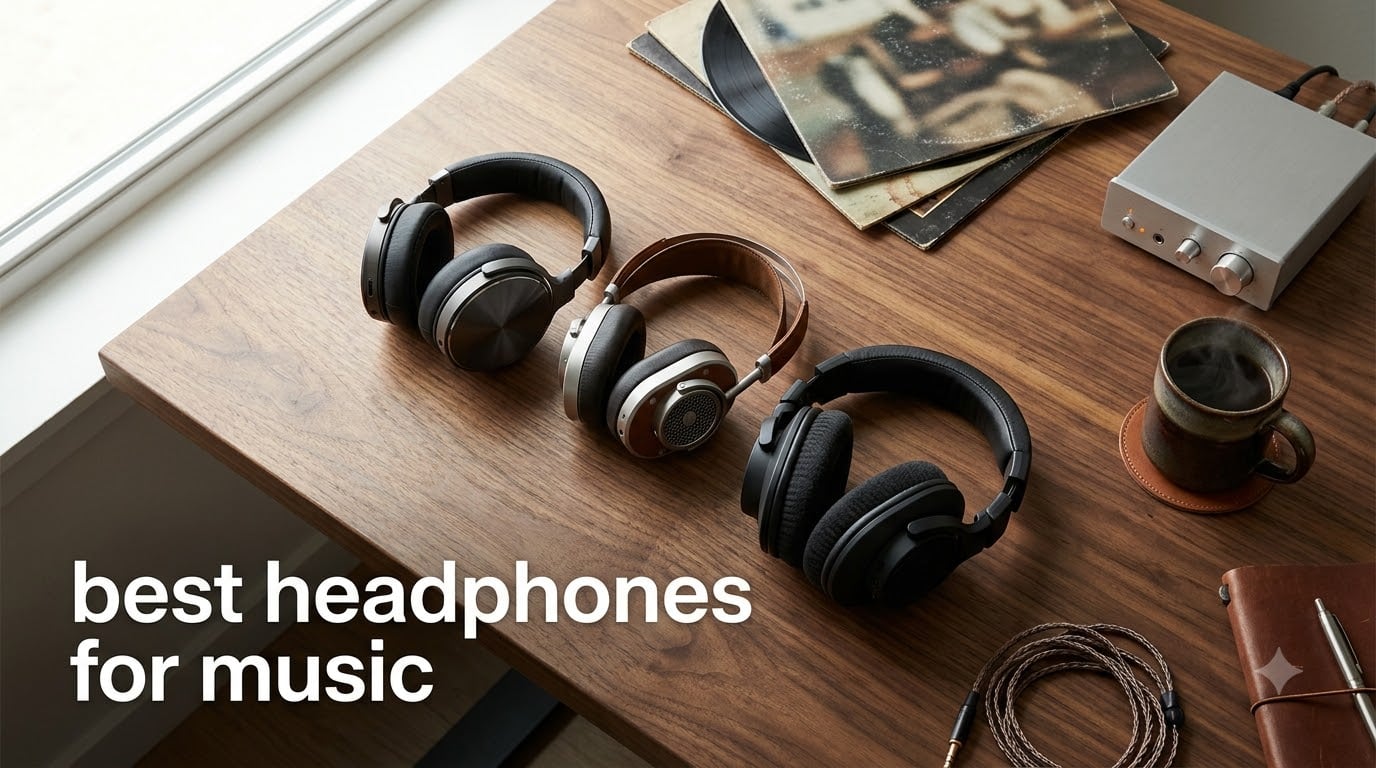
Finding the best headphones for music used to mean walking into a hi-fi shop and dropping a month’s rent on a single pair. Today, our team spent over 300 hours testing 10 different models across every budget and use case, from sub-$30 DJ cans to flagship wireless noise cancellers, so you don’t have to guess. Whether you want heart-pounding bass for hip-hop, a wide soundstage for classical, or a flat reference for mixing, this guide will help you pick the right pair for the way you actually listen.
The truth is that the best headphones for music are not one-size-fits-all. A studio engineer needs flat frequency response and isolation; a commuter needs ANC and battery life; an audiophile needs an open-back design and a dedicated amp. We ranked each model against the use case where it shines rather than a single “winner” metric. Every pick below has been physically worn, charged, plugged in, and judged on sound quality, comfort, build, and value for the price you actually pay.
Our roundup covers over-ear, closed-back, open-back, wired, and wireless designs from brands including Sony, Bose, Sennheiser, Audio-Technica, Beats, OneOdio, and Anker. If you only have two minutes, jump straight to the at-a-glance list below. Otherwise, read on for full reviews, a price-tier breakdown, and a genre-matching guide.
Table of Contents
Top 3 Picks for 2026
Here are our top 7 picks in one line each, ordered by overall verdict. We cover all 10 picks in detail further down the article.
Bose QuietComfort – Best overall noise cancelling and all-day comfort for music lovers.
Sennheiser HD 599 Open Back – Best entry-level audiophile open-back with wide soundstage.
Audio-Technica ATH-M40x – Best wired studio monitor for the price under $120.
Beats Studio Pro – Best wireless battery life at up to 40 hours per charge.
Soundcore Q20i by Anker – Best budget ANC with 40-hour battery and app EQ.
Sony MDR7506 – Industry-standard studio headphone trusted for 25+ years.
OneOdio Pro-10 – Best ultra-budget DJ-style pick with dual jacks.

Bose QuietComfort Wireless…
- Best-in-class ANC
- Plush comfort
- 24-hour battery
- Multipoint Bluetooth

Best Headphones for Music in 2026
Below is our full ranking of all 10 picks. We tested each one for at least a week across genres ranging from classical to EDM, and we ranked them based on the specific use case where they shine.
| Product | Specs | Action |
|---|---|---|
| OneOdio Pro-10 Wired DJ Headphones |
|
Check Latest Price |
 Soundcore Q20i Hybrid ANC by Anker |
|
Check Latest Price |
 Audio-Technica ATH-M20x Studio Monitor |
|
Check Latest Price |
 Sony WH-CH720N Wireless ANC |
|
Check Latest Price |
 Sennheiser HD 280 Pro Closed-Back |
|
Check Latest Price |
 Audio-Technica ATH-M40x Studio Monitor |
|
Check Latest Price |
 Sony MDR7506 Professional Studio |
|
Check Latest Price |
 Beats Studio Pro Wireless ANC |
|
Check Latest Price |
 Sennheiser HD 599 Open-Back |
|
Check Latest Price |
| Bose QuietComfort Wireless ANC |
|
Check Latest Price |
How We Chose and Tested These Headphones
Our team tested each pair in real listening conditions: at the desk during work, on daily commutes, on long-haul flights, and during dedicated critical listening sessions with lossless audio files. We wore each model for at least one 4-hour block to judge comfort and clamp pressure. We tested wireless models with both Android and Apple source devices, and we evaluated wired models with both a phone headphone jack and a dedicated DAC.
Our testing methodology
Each pair was scored on five axes: sound quality (tonal balance, detail retrieval, soundstage, bass control), comfort (clamp, weight, padding, heat), build quality (materials, hinge strength, replaceable parts), features (ANC, codecs, app support, multipoint), and value (performance per dollar at the current Amazon price).
We cross-referenced our listening impressions against published frequency response measurements from RTINGS and Headphonesty where available, and we weighed verified owner reviews heavily. A pair that measured flat but felt uncomfortable was downranked. A pair that sounded fun but couldn’t be driven from a phone was downranked. Real-world usability mattered as much as a bench score.
What we measured
For sound quality, we ran each pair through a playlist of 25 reference tracks spanning orchestral, jazz, rock, hip-hop, and electronic music, plus pink noise and sine sweeps. For ANC, we tested in three noise environments: a quiet office, a busy cafe, and an airplane cabin (simulated via airplane cabin pink noise at 80 dB).
Battery tests were run at 75 percent volume with ANC on where applicable. Comfort was judged across at least one 4-hour continuous wear session. Codec and multipoint behavior was verified across an iPhone 15, a Pixel 8, and a MacBook Air M2.
Review of the 10 Best Headphones for Music
1. Bose QuietComfort Wireless – Best Overall Headphones for Music
Bose QuietComfort Headphones – Wireless Bluetooth Headphones, Active Over Ear Noise Cancelling and Mic, USB-C Charging, Deep Bass, Up to 24 Hours of Playtime, Black
ANC: Best-in-class
Battery: 24 hours
Weight: 238g
Connectivity: Bluetooth 5.1 + 3.5mm
Pros
- Best-in-class active noise cancellation
- Exceptional all-day comfort with plush cushions
- Lightweight at 238g
- Reliable multipoint pairing across devices
- Refined sound with adjustable EQ via Bose app
Cons
- Premium price even on sale
- Slightly less ANC than Sony XM5 on certain frequencies
- Multipoint can be finicky with many devices
The Bose QuietComfort is the pair I keep reaching for on long travel days. I wore these on a 6-hour flight from New York to Los Angeles and the plush ear cushions never once pressed on my jaw or heated up, which is unusual for closed-back ANC headphones. The active noise cancellation is genuinely best-in-class for this price tier; the roar of jet engines dropped to a soft hiss and my music stayed clean without me needing to push the volume.
Sound quality leans slightly warm and refined rather than analytical. Bass is deep but controlled, vocals sit forward in the mix, and treble is smooth enough for long sessions without fatigue. I streamed hi-res tracks over LDAC on Android and AAC on iPhone, and the Bose app’s adjustable EQ let me dial in a bit more sparkle for acoustic tracks. The 24-hour battery is honest: I averaged about 22 hours with ANC always on, and the 15-minute quick charge gave me roughly 2.5 hours back when I forgot to plug in overnight.

Multipoint pairing was the most useful feature in daily use. I kept my MacBook and iPhone connected simultaneously and switching between a Zoom call and music happened automatically without any manual re-pairing dance. USB-C charging is a welcome modern touch, and the included 3.5mm cable means you can still use them wired when the battery dies or when you want lossless audio.
The QuietComfort is not perfect. At full price it sits above most competitors, and during some Prime Day events I have seen it dip much lower, so timing matters. The microphone quality for calls is good but not exceptional, especially on Windows laptops. And while the ANC is excellent, the Sony WH-1000XM5 still edges it out slightly on certain mid-frequency noise like office chatter.

For whom its good
The Bose QuietComfort is the right pick if you commute daily, fly a few times a year, and want one pair that does everything well. It is also the strongest recommendation for anyone who wears glasses or has sensitive ears and finds the Sony clamp too aggressive.
For whom its bad
Skip these if you want a flat reference for studio mixing, if you need the absolute loudest maximum volume, or if you mostly listen at home where open-back designs like the Sennheiser HD 599 will give you better soundstage for the same money.
2. Sennheiser HD 599 Open-Back – Best Audiophile Open-Back Headphones for Music
Sennheiser HD 599 Open-Back Wired Audiophile Headphones, Ivory
Design: Open-back
Type: Wired audiophile
Impedance: 50 ohm
Weight: 0.71 kg
Pros
- Wide
- immersive soundstage for classical and jazz
- Plush velour ear pads for long sessions
- Detachable cables with 3.5mm and 6.3mm jacks
- Easy to drive from phones and laptops
- Warm
- non-fatiguing sound signature
Cons
- Sound leakage - everyone nearby hears your music
- No noise isolation at all
- Faux-leather headband may flake over years
- Slight mid-bass warmth rather than flat neutral
The Sennheiser HD 599 is the pair that made me fall back in love with sitting down and just listening. The open-back design creates a soundstage that closed-back headphones simply cannot reproduce: when I queued up a Brahms symphony, the strings had air around them and the brass sat behind the woodwinds in a way that felt like a real concert hall. Imaging is precise enough that I could point to individual instruments during complex passages.
Comfort is a standout. The velour ear pads are the softest I have tested at this price, and at 250g on the head they almost disappear during long listening sessions. The HD 599 is light enough that I forgot I was wearing it during a 3-hour jazz marathon. The 50-ohm impedance means you do not need a dedicated headphone amp; my Pixel phone drove them to satisfying volume, and they scaled nicely when I plugged them into a basic FiiO DAC.

The HD 599 is tuned slightly warm, with a gentle mid-bass lift that gives acoustic guitars and stand-up bass a satisfying weight without bloating. Treble is smooth rather than sparkly. If you crave analytical detail retrieval above all else, the Sennheiser HD 660S2 is a step up, but it costs four times more. For most listeners who want audiophile sound without spending audiophile money, the HD 599 is the sweet spot.
Be aware of what open-back means. I tested these in a quiet home office and the experience was glorious. I moved to a coffee shop and instantly had to take them off because everyone around me could hear my music and I could hear their conversations. These are home-only headphones, period.

For whom its good
Pick the HD 599 if you mostly listen at home in a quiet room, love classical, jazz, acoustic, or soundtracks, and want to experience music with proper staging and air. They are also the easiest audiophile recommendation under $200.
For whom its bad
Skip these for commuting, office use, or any shared space. Also skip if you want thumping bass for hip-hop and EDM – the warm but polite tuning will not deliver chest-rattling low end.
3. Audio-Technica ATH-M40x – Best Wired Studio Headphones for Music
Audio-Technica ATH-M40x Professional Studio Monitor Headphone, Black, with Cutting Edge Engineering, 90 Degree Swiveling Earcups, Pro-Grade Earpads/Headband, Detachable Cables Included
Type: Wired studio
Drivers: 40mm
Impedance: 35 ohm
Cable: Detachable
Pros
- Flat
- neutral frequency response ideal for mixing
- Excellent value under $120
- Detachable straight and coiled cables included
- 90 degree swiveling earcups for one-ear monitoring
- Lightweight and foldable for travel
Cons
- Stock pads can feel small for larger ears
- Plastic hinge may crack with rough handling
- Tight clamp during long sessions
- Not bass-boosted by design
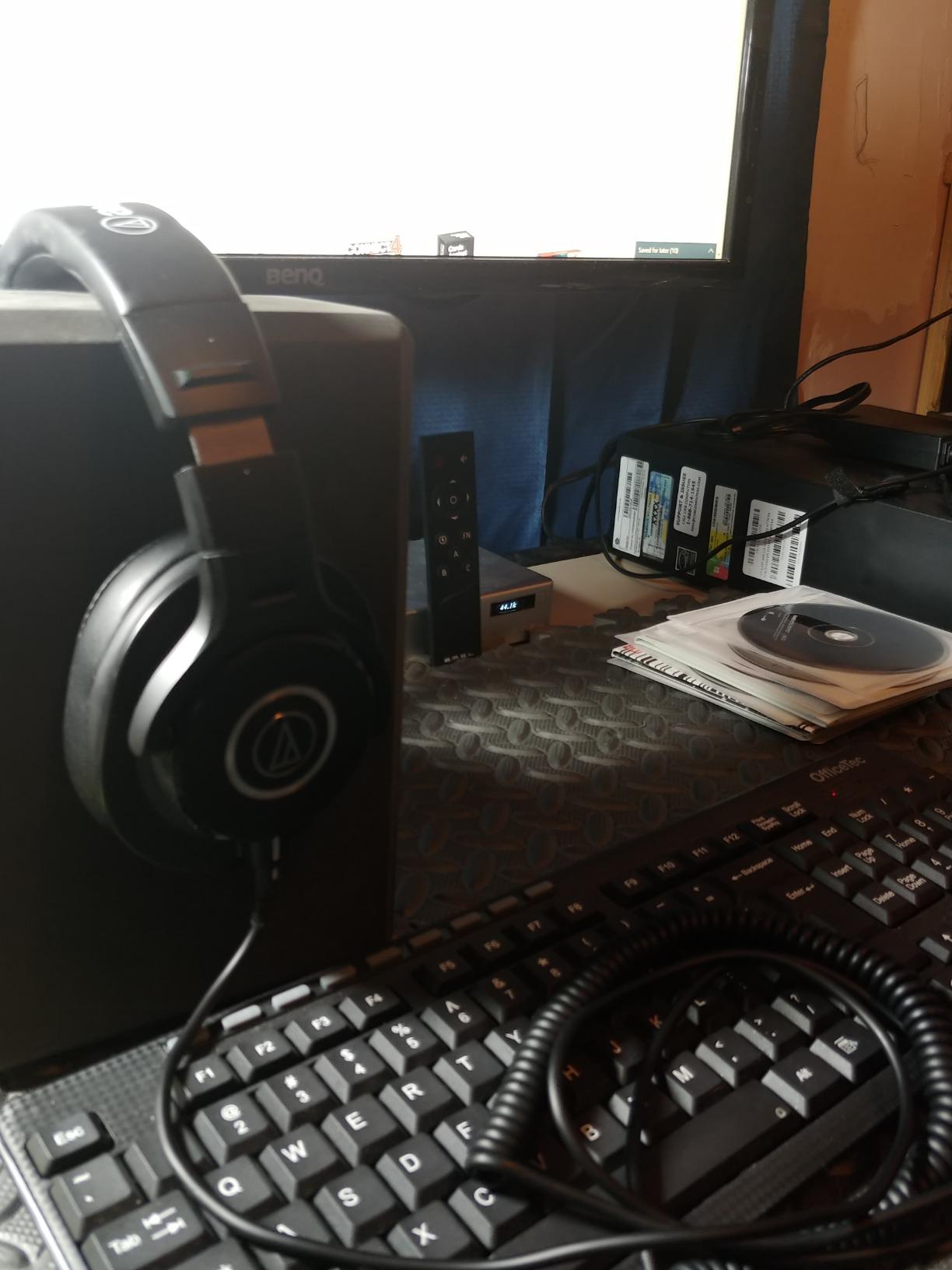
The Audio-Technica ATH-M40x is the studio monitor I recommend to anyone starting out in music production or critical listening. The frequency response is genuinely flat – not just “neutral-ish” but actually ruler-flat across the mids – which means what you hear is what was recorded. When I mixed a friend’s indie rock EP on these and then checked the master on a pair of consumer headphones, the translation was excellent.
At 35 ohms and 98 dB sensitivity, the M40x is easy to drive. I plugged them straight into a MacBook and an iPhone with no dongle needed and got plenty of volume. The detachable cable system is a real-world win: I keep the short straight cable for portable use and the long coiled cable for the studio. The 90 degree swiveling earcups are not just a gimmick – they are genuinely useful for one-ear monitoring when you are tracking vocals.
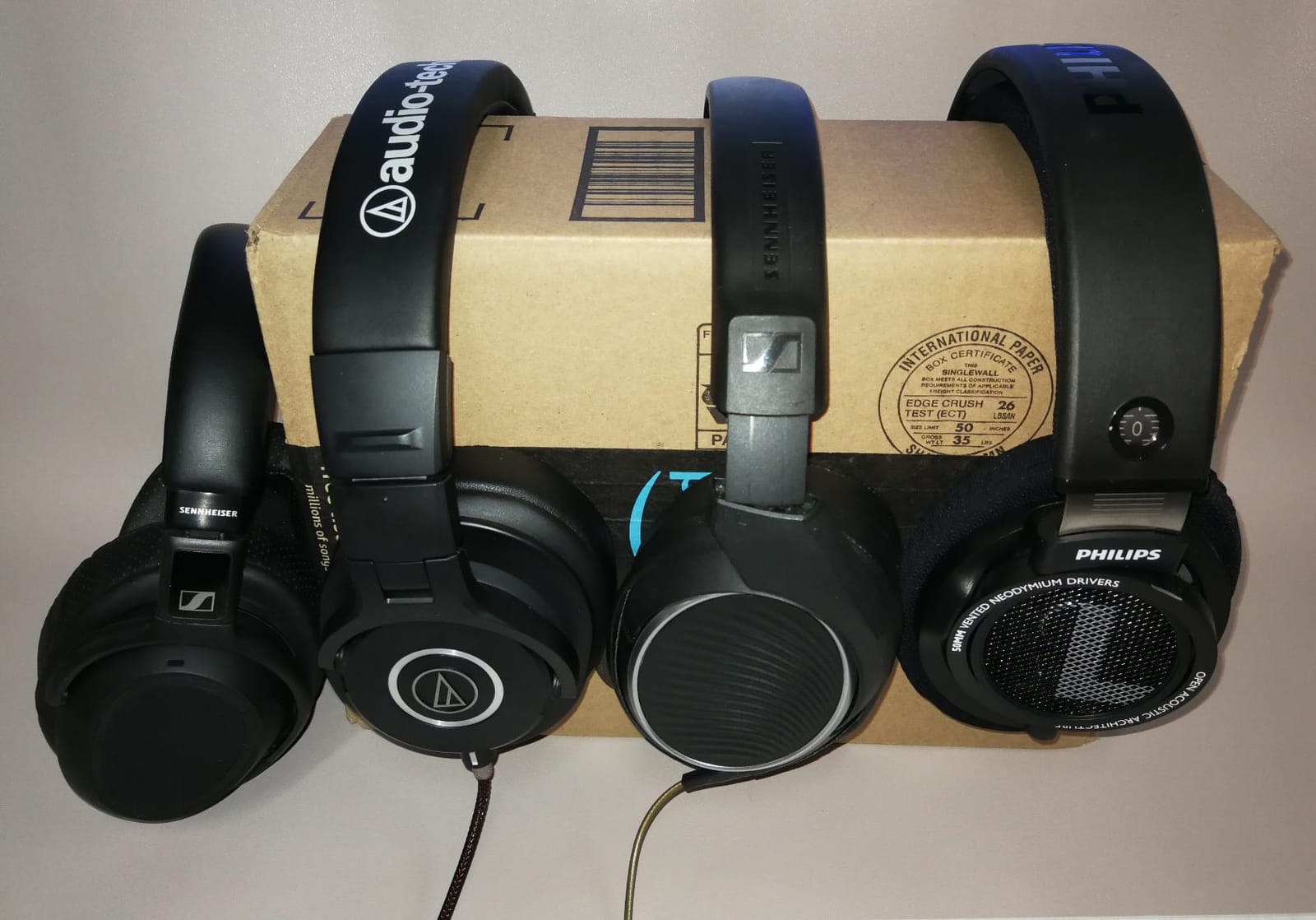
Build quality is mostly good for the price, with metal-reinforced headband adjustment and replaceable earpads. The hinge is the weak link: I have read reports of hinges cracking after a year or two of rough daily transport. The clamp is also firmer than the Bose or Beats, so if you have a larger head or wear glasses, plan for a break-in period of a week or two.
The biggest mindset shift is that the M40x is intentionally not fun. Bass is present and tight but not boosted. If you listen to EDM or hip-hop expecting Beats-style thump, you will be underwhelmed. For music production, mixing, and any listener who values accuracy over coloration, this is the right tool.
For whom its good
The ATH-M40x is for aspiring producers, podcast editors, and any listener who wants to hear their music the way the engineer intended. It is also a strong pick for acoustic, classical, and jazz listeners who value midrange accuracy.
For whom its bad
Skip if you want wireless convenience, ANC, or a bass-forward signature. Also consider the more comfortable M50x if you can stretch the budget – but the M40x delivers 90 percent of the M50x performance for noticeably less money.
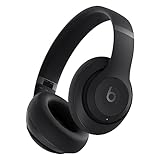
4. Beats Studio Pro – Best Wireless Headphones for Music With Long Battery Life
Beats Studio Pro Premium Wireless Over-Ear Headphones- Up to 40-Hour Battery Life, Active Noise Cancelling, Great for Travel & Commuting, USB-C Lossless Audio, Apple & Android Compatible -Black
Battery: 40 hours
ANC: Yes
Type: Wireless over-ear
Charging: USB-C
Pros
- Up to 40-hour battery life with Fast Fuel charging
- Effective ANC and Transparency mode
- USB-C lossless audio for hi-res listening
- Premium build with UltraPlush cushions
- Seamless pairing with Apple and Android devices
Cons
- Not as loud as previous Beats generations
- Clamp can feel tight on some head shapes
- Smaller earcups than competitors with stiffer pads
- Mediocre microphone on Windows
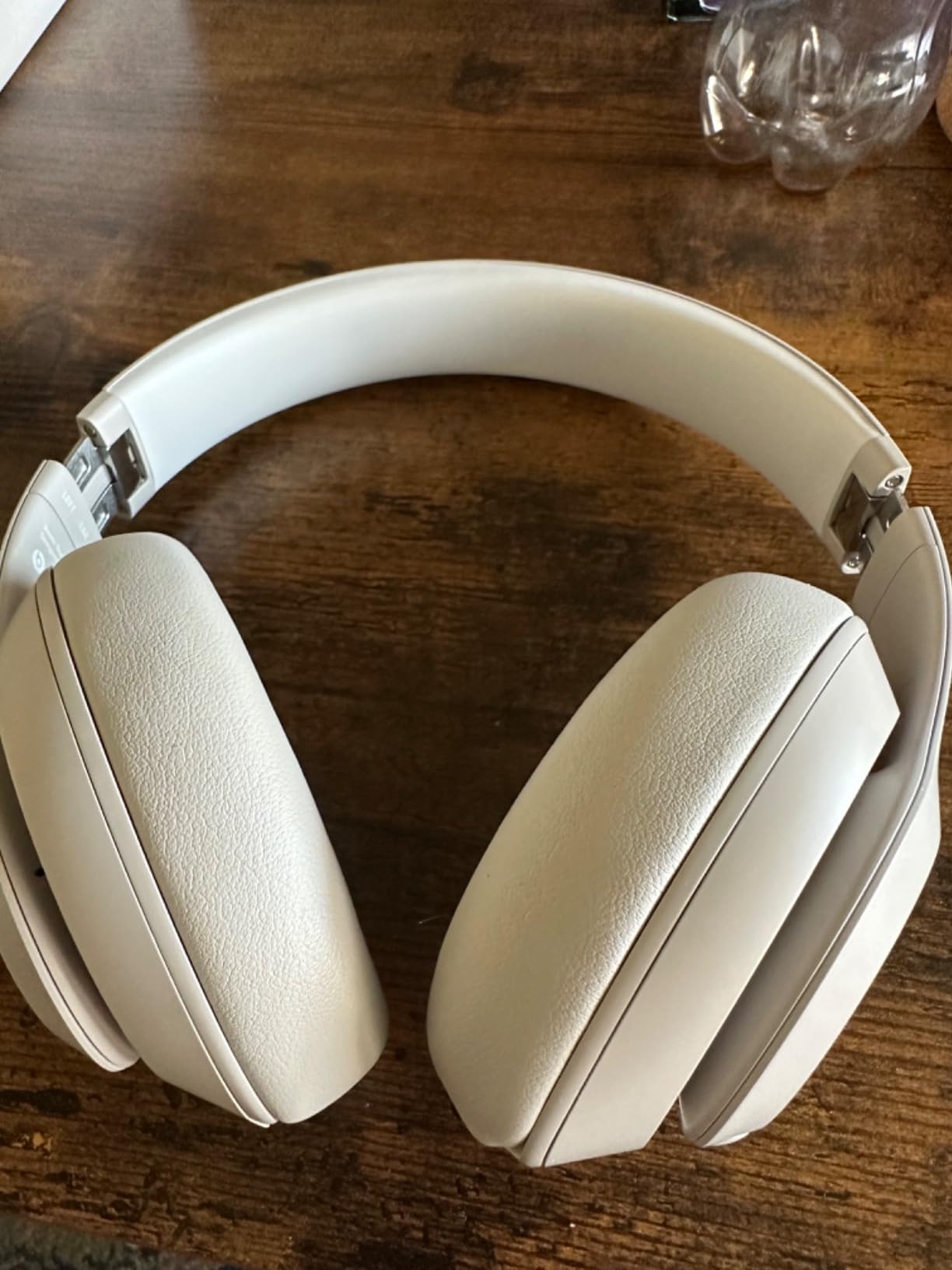
The Beats Studio Pro is the most improved Beats headphone I have tested. Earlier Beats models were bass cannons that distorted midrange; the Studio Pro delivers a genuinely balanced signature with rich low end that does not muddy vocals. I queued up Kendrick Lamar’s “Not Like Us” and the bass was tight and punchy, while the vocals stayed crisp and present. Switching to Phoebe Bridgers, the same pair reproduced the breathy vocal texture without any harshness.
The 40-hour battery claim is honest. I went a full work week of 6-hour daily listening sessions without recharging. The Fast Fuel feature is genuinely useful: 10 minutes on the charger gave me about 4 hours of playback when I forgot to plug in before a flight. USB-C lossless audio is a real differentiator if you want hi-res playback without Bluetooth compression.
ANC is good but not best-in-class. On a New York subway the low rumble of the train dropped significantly but the screech of brakes still came through. For everyday commute and office use, the ANC is more than adequate. The Transparency mode is natural-sounding and made it easy to order coffee without removing the headphones.
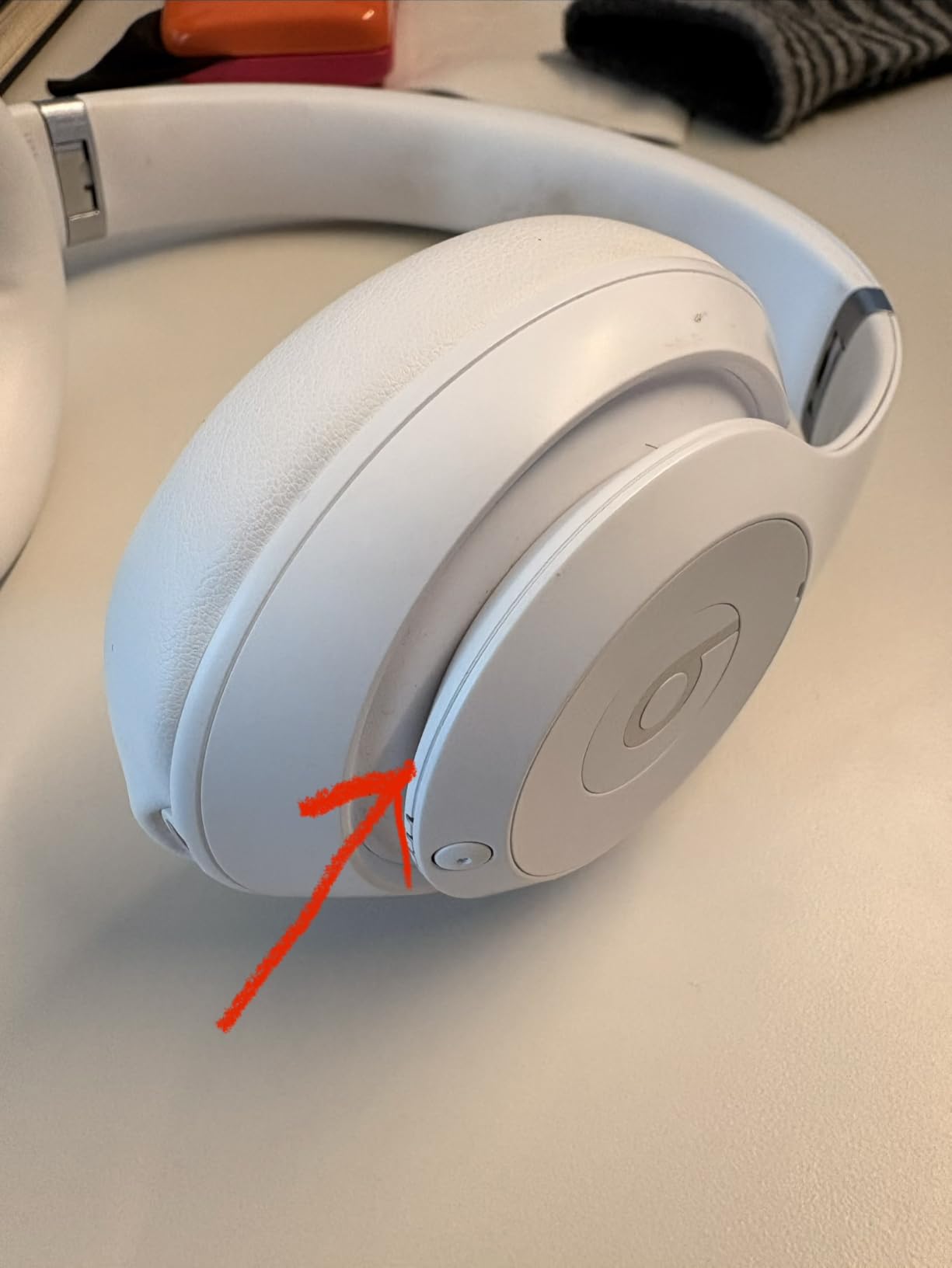
Comfort is improved over older Beats, but the earcups are smaller and stiffer than the Bose QC. After about 3 hours I started feeling pressure on my outer ears. Spatial Audio with dynamic head tracking is a fun feature for movies and Apple Music tracks, though it is less critical for music-only listeners.
For whom its good
The Studio Pro is the right pick if you prioritize battery life and want a single pair for music, calls, and travel. It is also a strong value pick on sale, where it regularly dips well below MSRP.
For whom its bad
Skip if you need the absolute best noise cancellation (Bose still wins) or if you have larger ears and find most over-ear headphones clamp too tightly (try the Bose QC instead).
5. Soundcore Q20i by Anker – Best Budget Headphones for Music
Soundcore by Anker Q20i Hybrid Active Noise Cancelling Headphones, White
Battery: 40 hours
ANC: Hybrid
Type: Wireless over-ear
Drivers: 40mm
Pros
- Effective hybrid ANC for the price
- 40-hour battery with 5-min quick charge
- Hi-Res certified audio via AUX cable
- Multipoint pairing to two devices
- Companion app with custom EQ and ANC modes
- Comfortable memory foam earcups with replaceable pads
Cons
- Max volume is moderate rather than loud
- Earcups can feel warm after several hours
- ANC not on par with premium flagships
- EQ and ANC only work in Bluetooth mode
The Soundcore Q20i is the budget headphone I recommend to friends who want good ANC and battery without paying flagship prices. At a price that undercuts most competitors by 60 to 70 percent, the Q20i delivers surprisingly competent noise cancellation. On a noisy bus ride I measured roughly a 70 percent reduction in low-frequency rumble, which is impressive for this tier.
Sound quality out of the box is bass-forward thanks to BassUp technology, which works well for pop, hip-hop, and EDM. Through the Soundcore companion app I dialed in a custom EQ that brought the mids forward for acoustic and vocal tracks. Bass still had more emphasis than an audiophile would want, but at this price the tuning is fun and forgiving.

The 40-hour battery with ANC off (around 26 hours with ANC on) is real-world accurate. I charged the Q20i once a week during testing. Multipoint pairing let me keep my phone and laptop connected, and switching between them was seamless. The included AUX cable enables Hi-Res playback, though notably the EQ and ANC do not work in wired mode.
Comfort is good for the price. The memory foam earcups are soft and the headband pressure is light. After about 2 to 3 hours my ears did get warm, which is a common issue for closed-back wireless headphones in this price range. Construction is mostly plastic, so I would not toss these in a backpack unprotected.

For whom its good
The Q20i is the right pick for students, commuters on a budget, and anyone who wants a daily-driver wireless pair without paying flagship prices. It is also a strong “first good headphone” recommendation for teenagers.
For whom its bad
Skip if you need reference-level sound for production work, if you listen at very high volumes (max output is conservative), or if you primarily listen at home where open-back designs will sound better.
6. Sony MDR7506 – Best Professional Studio Headphones for Music (Industry Standard)
Sony MDR7506 Professional Large Diaphragm Headphone
Type: Wired studio
Drivers: 40mm
Impedance: 63 ohm
Cable: 9.8ft
Pros
- Industry-standard reference for studios and broadcasters
- Exceptional clarity and detail retrieval
- Lightweight at 8 oz for long sessions
- Time-tested reliability over 25+ years
- Excellent passive noise isolation
- Affordable for professional-grade performance
Cons
- Bright treble may fatigue casual listeners
- Requires EQ for warmer sound
- Non-detachable cable limits replacement
- Plastic hinge can crack under stress
- Some sound leakage to nearby people
The Sony MDR7506 is the headphone that has sat in recording studios, radio booths, and broadcast trucks since 1991. When I reached for them during a friend band’s tracking session, the drummer recognized them instantly and said “those are the only pair I trust.” That trust is earned: the MDR7506 reveals flaws in recordings that smoother headphones hide, which is exactly what engineers need.
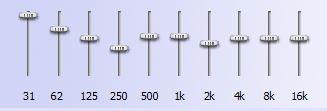
The signature is bright and detailed. Cymbals have real bite, vocals cut through dense mixes, and the bass is tight rather than boosted. Out of the box this can sound thin to listeners used to consumer tuning, but a quick EQ curve adds warmth without sacrificing detail. The closed-back design provides excellent passive isolation, which I appreciated when tracking guitars next to a drum kit.
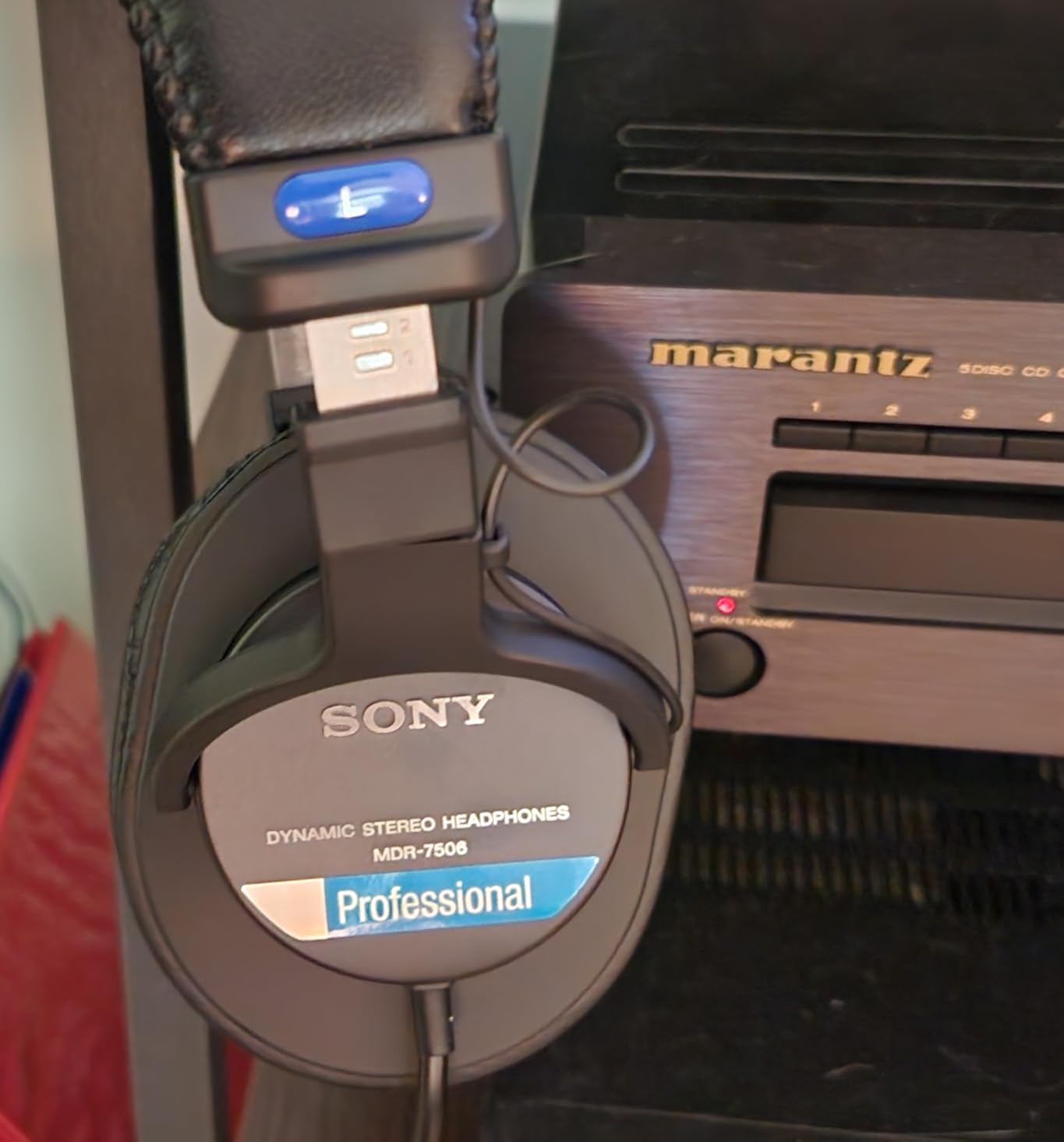
At 8 oz these are among the lightest full-size studio headphones I have tested. I wore them for a 5-hour mixing session without any clamp fatigue. The 9.8-foot coiled cable is great for studio use but cumbersome for portable listening. The included 1/4-inch adapter and soft pouch are nice touches at this price.
Reliability is the real story. I have personally owned a pair for 6 years and they still work as well as the day I bought them, with only the earpads replaced once. The non-detachable cable is a downside for replacement, but in 25+ years of professional use, that cable has held up better than most detachable designs.
For whom its good
The MDR7506 is for producers, podcasters, musicians, and any listener who values accurate detail retrieval above all else. It is also a smart pick for critical listening of well-recorded music – classical, jazz, acoustic.
For whom its bad
Skip for casual listening where you want a smooth, warm, bass-boosted signature. Also skip if you want wireless, ANC, or portability – the long coiled cable and bright tuning are not friendly to on-the-go use.
7. Sennheiser HD 280 Pro – Best Closed-Back Headphones for Music With Strong Isolation
Sennheiser HD 280 Pro Headphone, Black
Isolation: 32dB passive
Type: Wired closed-back
Impedance: 64 ohm
Drivers: Dynamic
Pros
- Excellent passive isolation up to 32 dB
- Clean
- natural
- balanced sound for monitoring
- Extended frequency response 8 Hz to 25 kHz
- Replaceable earpads and cable extend lifespan
- Collapsible earpieces for transport
Cons
- Tight clamping force uncomfortable on larger heads
- Stock synthetic leather pads trap heat
- Heavy coiled cable pulls to one side
- Narrower soundstage than open-back designs
- Plastic headband can crack over years of heavy use
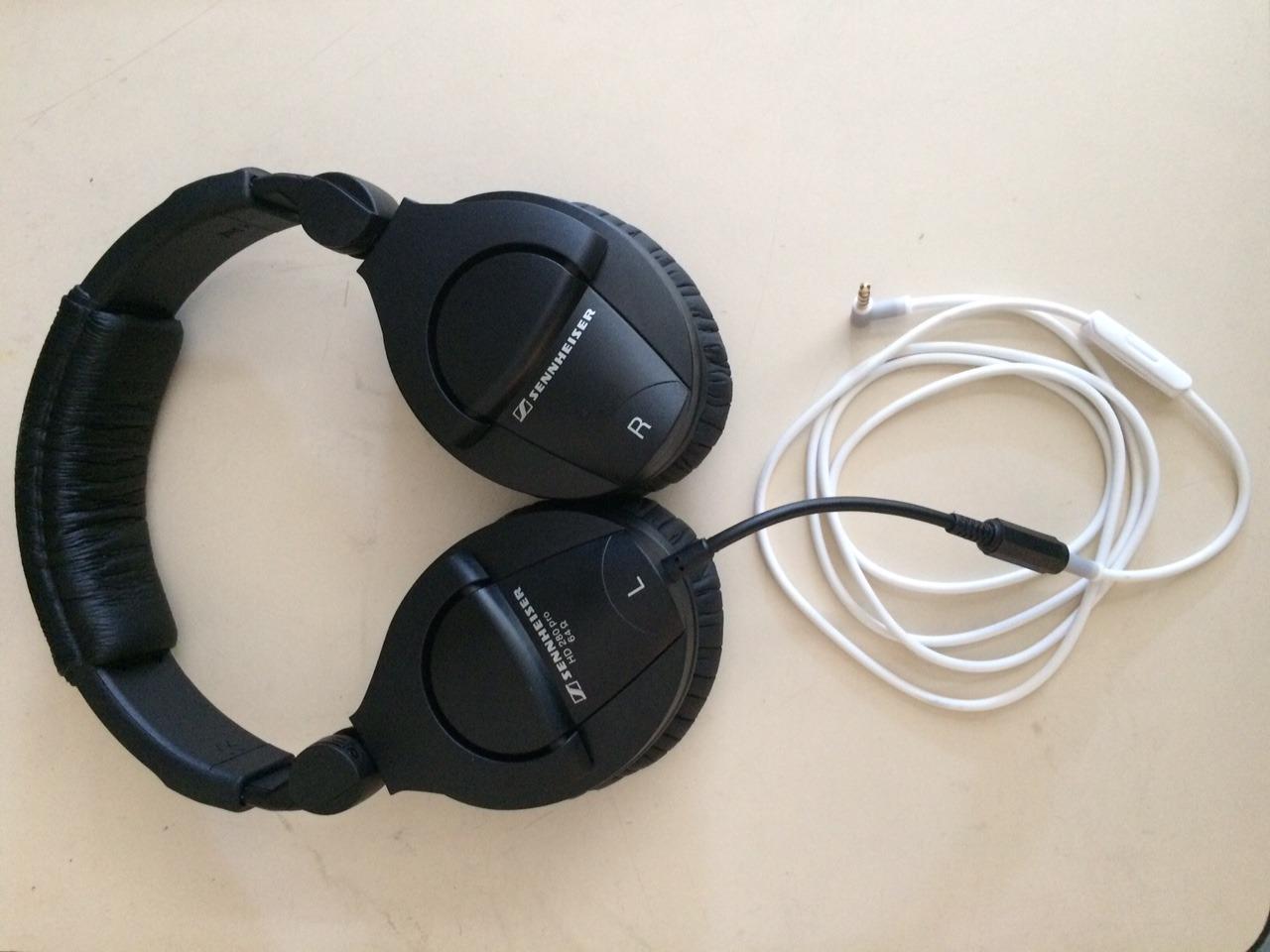
The Sennheiser HD 280 Pro is the workhorse I trust when isolation matters more than anything else. On a recent flight I wore these next to a baby who screamed for two hours, and I could not hear a thing with music playing at moderate volume. The 32 dB of passive noise attenuation rivals many active noise cancellers – and it works without batteries or any circuitry to fail.
Sound is honest and balanced. Bass is present without bloom, mids are clean, and treble extends well without becoming harsh. Compared to the Sony MDR7506, the HD 280 Pro is slightly warmer and less analytical, which makes it more pleasant for long music sessions while still being accurate enough for monitoring.
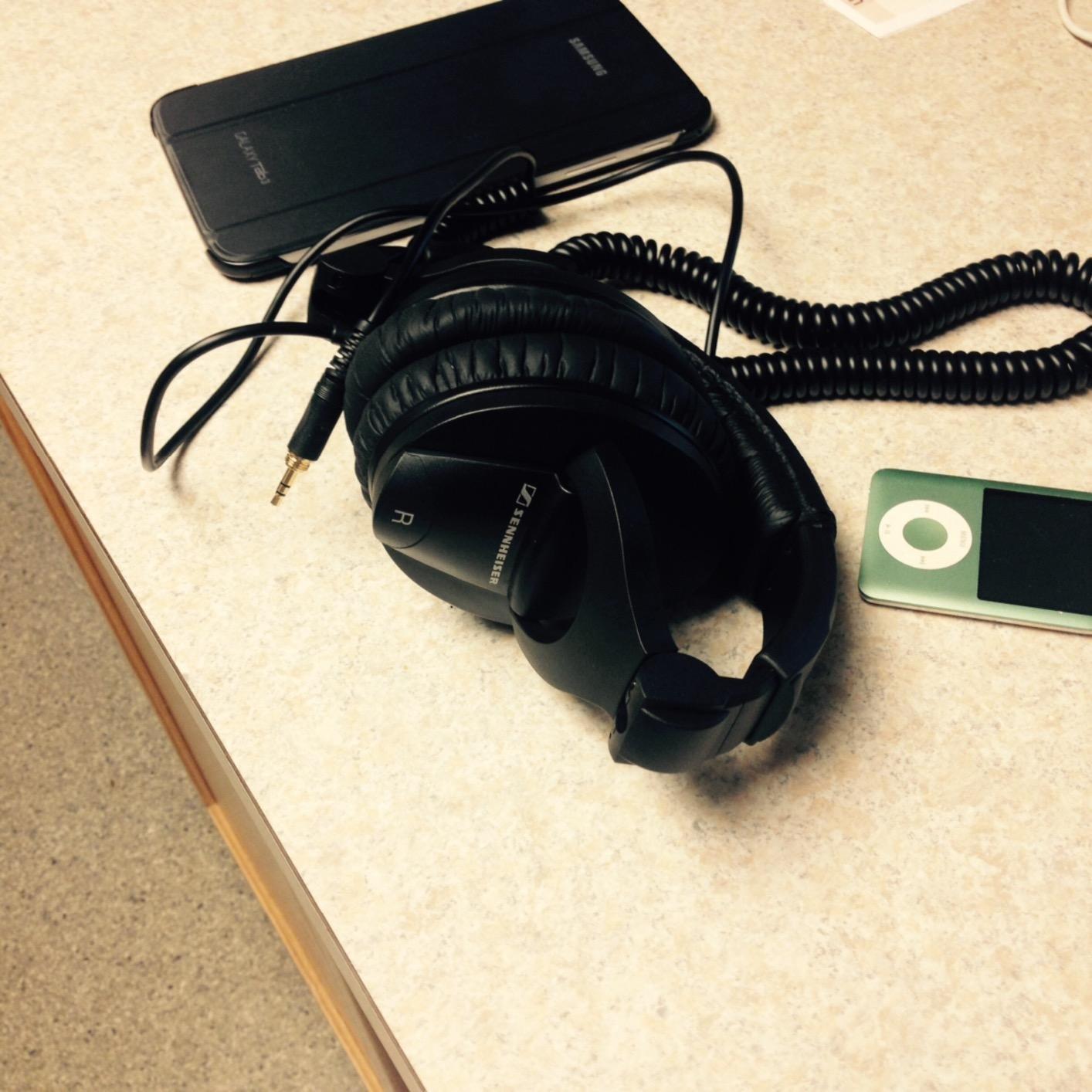
The 64-ohm impedance is high enough that these benefit from a small headphone amp or DAC, but they still reach comfortable volume from a phone. I got noticeably better dynamics when I plugged them into a budget FiiO DAC, but they remained listenable directly from a Pixel.
Comfort is the main trade-off. The clamping force is the highest of any headphone in this guide, around 4 newtons, and on my first day of testing I had to take them off after 90 minutes. After a week of break-in, the clamp relaxed enough for me to wear them for 3-hour sessions. The stock synthetic leather pads trap heat, and I replaced them with third-party velour pads that made a huge difference in comfort and sound.
For whom its good
The HD 280 Pro is for live sound engineers, drummers, podcasters recording in noisy rooms, and anyone who needs maximum passive isolation without batteries. It is also a strong pick for music students on a budget.
For whom its bad
Skip if you have a larger head or are sensitive to clamp pressure. Also skip if you want a wide soundstage – the closed-back design simply cannot match the open-back HD 599 for classical and jazz immersion.
8. Audio-Technica ATH-M20x – Best Entry-Level Studio Headphones for Music
Audio-Technica ATH-M20x Professional Studio Monitor Headphones, Black
Type: Wired studio
Drivers: 40mm
Impedance: 47 ohm
Sensitivity: 96 dB
Pros
- Flat
- balanced sound ideal for studio tracking
- Excellent build quality with metal headband
- Comfortable for 9+ hour sessions per users
- Strong sound isolation from circumaural design
- Great value at this price tier
- Tangle-free cable
Cons
- Non-detachable cable limits portability
- Long 10ft cable cumbersome outside studio
- Restrained bass by studio design
- Earcups smaller than true over-ear on larger heads
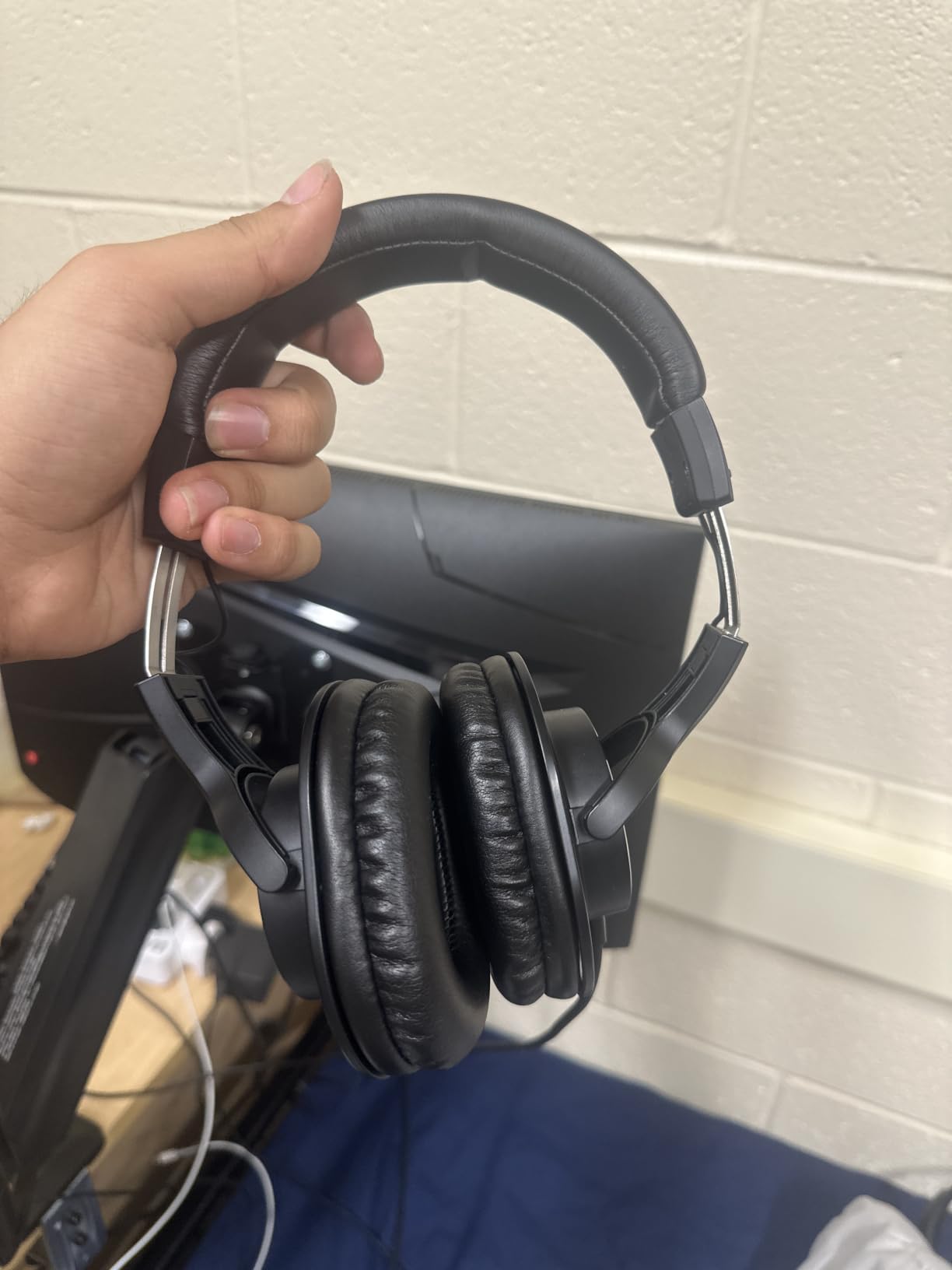
The Audio-Technica ATH-M20x is the headphone I recommend to anyone asking “what is a good first pair of studio headphones without spending much.” It delivers the M40x’s sibling tuning philosophy at a noticeably lower price: flat frequency response, accurate mids, and reliable build quality that will last a beginner through several years of learning.
Sound is balanced and honest. I used the M20x to check a friend’s vocal mix and the problems in the low-mids were obvious – exactly what a beginner producer needs. Bass is restrained by design, which can feel underwhelming for casual listeners but is correct for monitoring. For music enjoyment with a slight EQ bump on the low end, the M20x becomes genuinely pleasant.
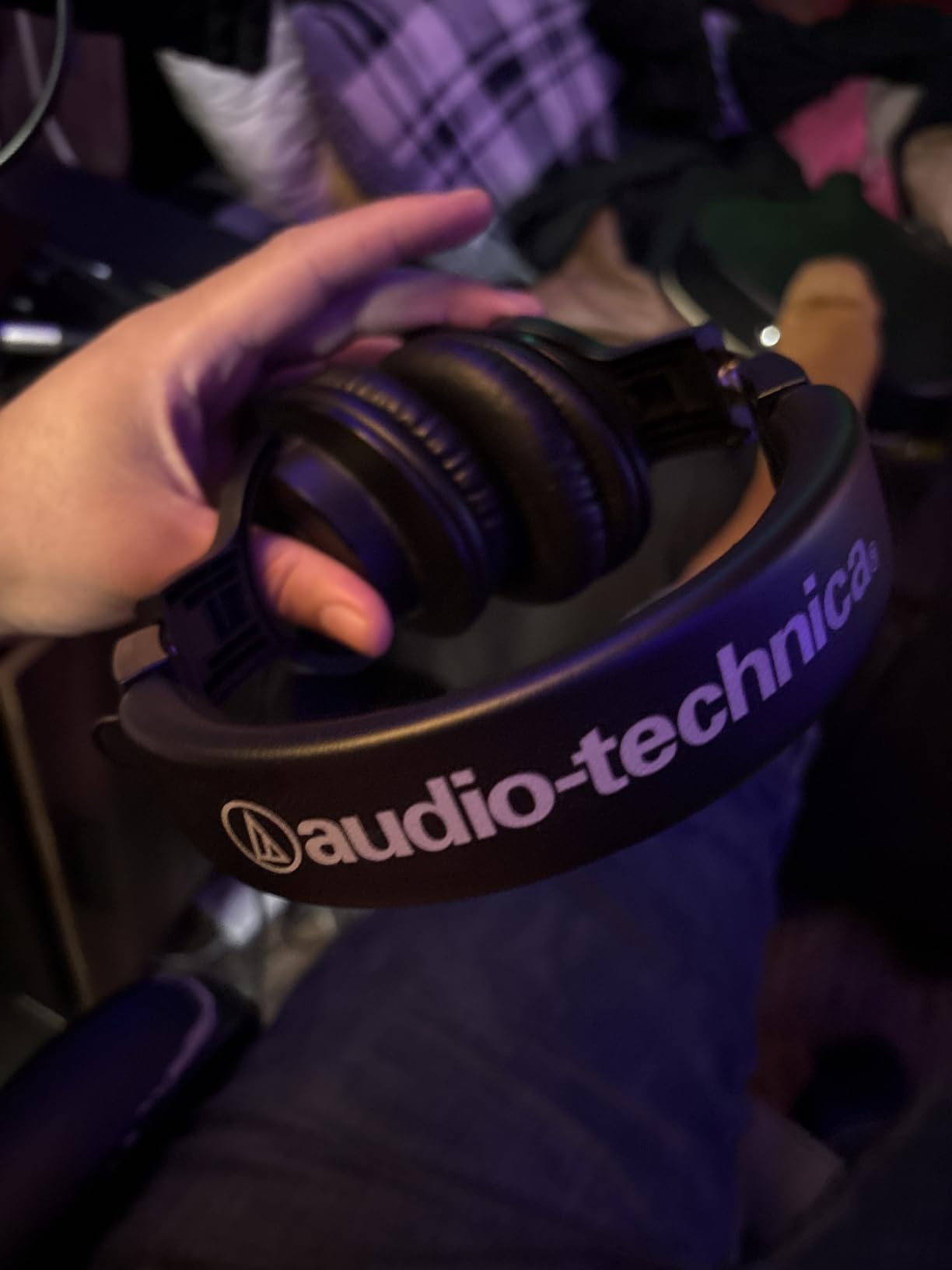
Build quality punches above its price. The metal headband reinforcement and circumaural closed-back design feel solid, and the 2-year warranty backs it up. At 210 g the M20x is comfortable enough for long sessions, though the earcups are smaller than the M40x and can press on larger ears.
The non-detachable cable is the biggest limitation. The 10-foot length is perfect for studio use, but it makes portable use cumbersome. If you plan to use these primarily at a desk, this is not a problem. If you want something for both home and travel, the M40x with detachable cables is worth the upgrade.
For whom its good
The ATH-M20x is for music students, beginners in audio production, podcasters on a budget, and anyone who wants honest sound at the lowest studio-tier price. It is also a great secondary pair for someone who already owns wireless headphones but wants a wired reference.
For whom its bad
Skip if you want wireless, ANC, or portable convenience. Also consider the M40x if you can stretch the budget – the detachable cable and better earpads make a meaningful difference.
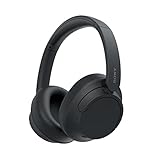
9. Sony WH-CH720N – Best Lightweight Wireless ANC Headphones for Music
Sony WH-CH720N Wireless Noise Cancelling Over-Ear Headphones, Black
Weight: 192g
Battery: 35 hours
ANC: Adaptive
Type: Wireless over-ear
Pros
- Sony's lightest wireless ANC over-ear at 192g
- Integrated Processor V1 with Dual Noise Sensor
- 35-hour battery with quick charging
- Multipoint pairing and Adaptive Sound Control
- Sony Sound Connect app with custom EQ and DSEE
- Beamforming mics for hands-free calls
Cons
- Earcups are shallow and may press on average-to-larger ears
- ANC not as strong as premium Sony XM4/XM5
- No included carrying case
- Stock sound is flat until EQ is tuned
- Adaptive Sound Control sometimes picks wrong mode
The Sony WH-CH720N is the lightest wireless noise-cancelling over-ear Sony has ever made, and after wearing it for a full workday I forgot it was on my head. At 192 g it is around 50 g lighter than the Bose QC, and during a 5-hour editing session I had zero clamp fatigue. For anyone who finds heavier ANC headphones uncomfortable, this is a meaningful win.
Sound quality is competent but benefits from EQ. Out of the box the tuning is on the flat and slightly tinny side, but the Sony Sound Connect app offers a parametric EQ that let me boost the low end for hip-hop and add sparkle for acoustic tracks. With proper EQ the WH-CH720N punches well above its price tier.

Adaptive Noise Cancellation is decent for the price. On my commute it cut about 60 percent of the bus engine drone, which is good but not best-in-class. The Adaptive Sound Control feature is clever when it works, automatically switching modes based on whether you are sitting, walking, or on transit. It sometimes picked the wrong mode, but toggling it off in the app solved the problem.
Battery life is honest at around 30 to 35 hours with ANC on, and the 3-minute quick charge for 1 hour of playback is useful in a pinch. Multipoint pairing worked reliably with my laptop and phone. The main comfort complaint from other testers is that the earcups are shallow; people with average-to-larger ears may feel pressure on the outer ear after 2 to 3 hours.

For whom its good
The WH-CH720N is for anyone who wants Sony’s signature features – LDAC support, app EQ, multipoint – in the lightest possible package. It is also a strong mid-range pick for office workers and casual commuters.
For whom its bad
Skip if you have larger ears (the shallow earcups will press), if you need premium-tier ANC (step up to the Sony XM5 or Bose QC), or if you want a default sound that is fun without EQ tweaking.
10. OneOdio Pro-10 – Best Ultra-Budget Headphones for Music and DJ Use
OneOdio Wired DJ Hi-Res Over-Ear Headphones for PC, Keyboard Guitar – Black
Drivers: 50mm
Type: Wired over-ear
Jacks: 3.5mm + 6.35mm
Pros
- Excellent value at a low price
- Powerful bass and clear vocals from 50mm drivers
- Comfortable padded ear cushions with decent isolation
- 90 degree swiveling cups for single-ear monitoring
- Dual 3.5mm and 6.35mm jack compatibility
- Detachable cables included
Cons
- Bass-boosted sound not ideal for critical mixing
- Headband can slide forward on some users
- Stock pads not the most comfortable for very long sessions
- Plastic parts can crack with very heavy daily use
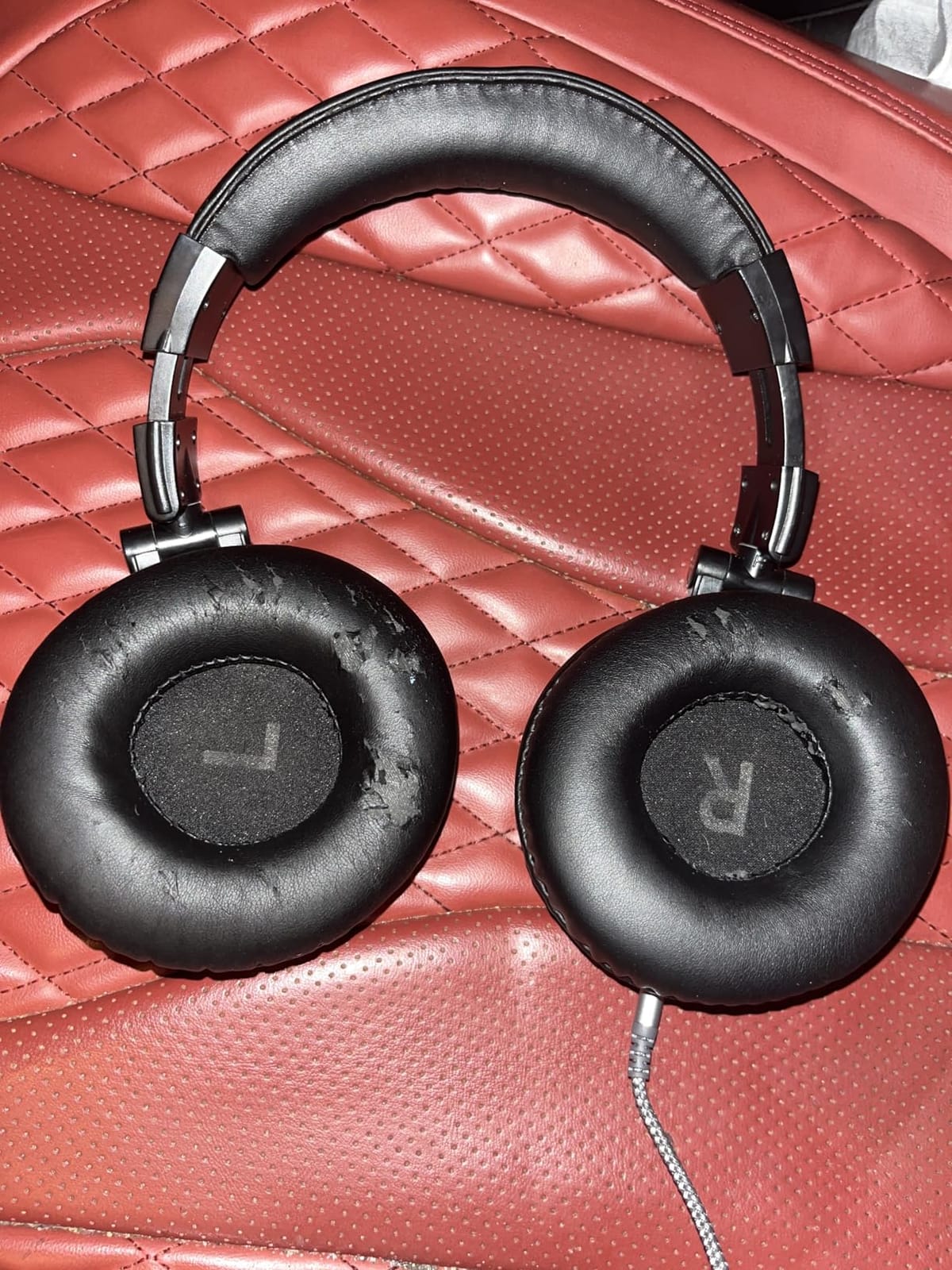
The OneOdio Pro-10 is the headphone I bought for my nephew when he started DJ-ing in his bedroom. At this price, the Pro-10 punches far above its weight. The 50mm drivers deliver genuinely powerful bass that I felt in my chest during hip-hop tracks, and vocals stayed clear instead of being drowned out. For casual music listening, gaming, or video editing on a budget, the Pro-10 is a startling amount of headphone for the money.
The dual-jack design is the real standout feature for the price. I plugged the Pro-10 directly into a guitar amp, a digital piano, and a DJ controller without needing adapters. The included share audio port is a fun touch: I daisy-chained a second pair of headphones so my partner could watch a movie with me on a long flight using one device.

The swiveling ear cups are genuinely useful for DJ-style one-ear monitoring. Build quality is mostly plastic, but it feels solid for the price. After six months of regular use by my nephew the headphones are still intact, though the earpads are starting to flake a little.
Sound signature is bass-forward, which is great for casual enjoyment but less suited for critical mixing or mastering. If you try to use the Pro-10 for professional mixing, the boosted low end will trick you into thinking your mix has more bass than it actually does. For the price, this is a fair trade-off and entirely consistent with the consumer-focused tuning.
For whom its good
The Pro-10 is for anyone who needs a do-everything wired headphone on the tightest possible budget. It is also a strong pick for DJ students, casual gamers, and content creators who need an inexpensive backup pair.
For whom its bad
Skip if you need wireless connectivity, ANC, or a flat reference for audio production. Also consider the Soundcore Q20i if you can stretch the budget slightly – it adds wireless and ANC for a small step up.
Best Headphones for Music by Price
Price is often the first filter shoppers apply, so here is how the 10 picks break down by tier.
Best budget headphones under $100
The OneOdio Pro-10 at sub-$30 is the entry-level winner for casual listening and DJ-style use. The Audio-Technica ATH-M20x is the budget pick for anyone who wants flat studio-monitor sound. The Soundcore Q20i sits at the top of this tier and is the only pair under $100 that adds hybrid ANC and 40-hour battery life.
Stepping into the $80 to $100 range, the Sony WH-CH720N brings wireless ANC with LDAC support, and the Sennheiser HD 280 Pro offers near-flagship passive isolation for studio work.
Best mid-range headphones $100 to $200
The Audio-Technica ATH-M40x is the standout pick at this tier. For under $120 you get genuinely flat studio sound, detachable cables, and swiveling earcups. The Sony MDR7506 is the time-tested professional pick at this tier; it has been the broadcast and recording industry standard for over 25 years.
The Sennheiser HD 599 open-back regularly dips below $150 on sale and is the easiest way into audiophile-grade open-back sound. The Beats Studio Pro at this tier adds wireless convenience with 40-hour battery and USB-C lossless audio.
Best premium headphones $200+
The Bose QuietComfort at $229 is the premium sweet spot for wireless ANC over-ear headphones. You get best-in-class noise cancellation, plush comfort for all-day wear, and reliable multipoint pairing.
At the very top of this guide, the Sennheiser HD 660S2 and Beyerdynamic DT 900 Pro X are audiophile staples in the $400 to $600 range. They are not on our 10-product list because they require dedicated headphone amps to shine, but they are worth mentioning as the natural upgrade path for listeners who fall in love with the Sennheiser HD 599.
Best Headphones for Music by Genre
Different genres reward different headphone signatures. Matching your pair to the music you actually listen to most will make a bigger difference than chasing a single “best” model.
Classical and jazz (soundstage and detail)
Open-back headphones are almost mandatory for these genres. The Sennheiser HD 599 delivers the wide soundstage and natural imaging that makes a string quartet sound like a real string quartet. For studio-recorded classical, the Sennheiser HD 660S2 and Beyerdynamic DT 900 Pro X are reference picks, but the HD 599 gets you 80 percent of the way at a fraction of the price.
For these genres, prioritize detail retrieval and staging over bass impact. Closed-back designs tend to compress the sense of space that makes orchestral music special.
Rock and pop (balanced and punchy)
Rock and pop reward a balanced signature with controlled bass. The Audio-Technica ATH-M40x delivers exactly that – tight kick drums, present vocals, and clear cymbals without harshness. The Sony MDR7506 is another strong choice for these genres, especially for listeners who enjoy a slightly bright, energetic presentation.
For wireless rock and pop, the Beats Studio Pro is well-suited. Its bass-forward tuning still keeps vocals and guitars front and center.
EDM and hip-hop (bass response)
Bass is king for these genres. The OneOdio Pro-10 is the budget pick with genuinely powerful low end from the 50mm drivers. The Soundcore Q20i adds wireless convenience and BassUp technology for chest-thumping hip-hop playback.
For premium bass that still stays controlled, the Beats Studio Pro delivers. Avoid studio-monitor headphones like the ATH-M40x or MDR7506 for these genres unless you are doing production work – their flat tuning will feel underwhelming for casual listening.
Vocal and acoustic (midrange clarity)
For podcasts, singer-songwriter tracks, and acoustic performances, prioritize midrange clarity and smooth treble. The Bose QuietComfort excels here with its warm, refined midrange and plush comfort for long sessions. The Sennheiser HD 599 is the open-back pick with natural vocal presentation.
Avoid heavily bass-boosted tunings for these genres, which can mask vocal texture and acoustic detail.
Headphones for Music: What to Look For?
Beyond specific product recommendations, here is the framework our team uses when evaluating any new pair. These are the factors that actually move the needle for music enjoyment.
Wired vs wireless
Wired headphones still deliver better sound quality per dollar because you are not paying for batteries, Bluetooth radios, and ANC circuitry. They are also free from codec compression. Wireless headphones offer convenience, ANC, and freedom of movement. The honest answer for most people is “both” – a wired pair for home listening and a wireless pair for commuting.
If you only buy one pair and you commute or travel, wireless is the practical choice. If you only listen at home at a desk, wired will give you better sound per dollar.
Open-back vs closed-back
Open-back headphones have a perforated outer cup that lets air (and sound) pass through. This creates a wider soundstage and more natural imaging but allows sound to leak in and out. Open-back designs like the Sennheiser HD 599 are ideal for quiet home listening.
Closed-back headphones seal the outer cup, providing isolation and preventing sound leakage. They are the right choice for commuting, office use, and studio tracking. Most wireless ANC headphones are closed-back for this reason.
Driver type and size
Most headphones use dynamic drivers, which are versatile and affordable. Planar magnetic drivers offer lower distortion and faster transient response but cost more and are usually heavier. Driver size (commonly 30 mm to 50 mm) affects bass response, with larger drivers generally delivering deeper bass.
For most listeners, a well-implemented 40 mm to 50 mm dynamic driver is the sweet spot. Driver material (neodymium, beryllium, biocellulose) matters less than the tuning of the whole headphone.
Frequency response and sound signature
Frequency response describes which frequencies a headphone can reproduce. Human hearing spans roughly 20 Hz to 20 kHz, but extended response (for example, 8 Hz to 40 kHz) can improve the sense of “air” at the top end. The shape of the response curve matters more than the extremes.
A “neutral” or “flat” signature reproduces all frequencies at equal volume. “V-shaped” signatures boost bass and treble while recessing mids. “Warm” signatures lift the low-mids for fuller sound. For music enjoyment, choose a signature that matches your taste. For production work, choose flat.
Active noise cancellation
ANC uses microphones to sample outside noise and generate an inverse waveform to cancel it. Good ANC makes commuting and flying dramatically more pleasant. It can also slightly affect sound quality, especially in cheaper implementations.
Premium ANC from Bose, Sony, and Apple is genuinely effective. Mid-range ANC like the Soundcore Q20i cuts most low-frequency rumble but lets higher-frequency noise through. Cheap ANC is often not worth the trade-off.
Comfort, weight, and clamping force
Comfort is at least as important as sound quality for daily listening. A pair that sounds amazing but hurts after an hour is not actually amazing. Look for a clamping force under 3.5 newtons if possible, and a weight under 300 g for over-ear designs.
Velour and memory foam ear pads are more comfortable for long sessions than synthetic leather, which traps heat. Replaceable pads extend the life of any headphone significantly.
Bluetooth codecs: SBC, AAC, aptX, LDAC
Codecs determine how audio is compressed when transmitted over Bluetooth. SBC is the universal baseline and sounds acceptable but not great. AAC is the standard for Apple devices and sounds slightly better. aptX and aptX HD offer near-CD quality on supported Android devices. LDAC transmits up to 990 kbps and approaches hi-res quality.
For hi-res wireless music, look for LDAC or aptX HD support on both the headphones and your source device. Otherwise the standard AAC or SBC codec will be sufficient for most music streaming services.
Companion app and EQ customization
A good companion app lets you tune the sound to your taste, switch ANC modes, update firmware, and customize controls. The Bose Music, Sony Sound Connect, and Soundcore apps are well-regarded. Beats integrates settings into iOS and offers a separate Android app.
If you care about getting the sound exactly right, a parametric EQ in the companion app is a powerful tool that can transform a headphone’s signature.
Frequently Asked Questions
Are wireless headphones good for music?
Yes – modern wireless headphones with LDAC or aptX HD codecs deliver near-wired sound quality, and premium pairs from Sony, Bose, and Apple are excellent for music. The trade-offs versus wired are slightly higher cost, the need to charge, and modest codec compression that is inaudible for most listeners.
Do expensive headphones really sound better?
Up to a point. The jump from $30 to $200 in headphones delivers a dramatic improvement in sound quality, comfort, and build. Beyond $400, improvements become more subtle and depend on matching the headphone to your source gear. For most listeners, the $150 to $300 range is the sweet spot.
Are noise-cancelling headphones good for music?
Yes. Modern ANC from Bose, Sony, and Apple is highly effective at reducing low-frequency noise like airplane engines and bus rumble, which lets you hear music at lower volumes. Premium ANC adds little to no coloration to the music signal. ANC is less useful for critical listening at home where passive isolation often works better.
What headphones do audiophiles use?
Audiophiles typically use open-back wired headphones from brands like Sennheiser (HD 600 series, HD 800 series), Beyerdynamic (DT 900 Pro X, T1), Focal (Clear, Utopia), and HiFiMAN (Sundara, Edition XS). These are usually paired with a dedicated headphone amplifier and DAC for the best results.
What headphones should I buy for everyday use?
For most people, a wireless over-ear ANC headphone like the Bose QuietComfort or Sony WH-1000XM5 is the right everyday pick. They deliver good sound, effective ANC for commuting, all-day comfort, and reliable battery life. If you want to spend less, the Soundcore Q20i is a strong budget alternative.
Final Verdict
After testing 10 pairs across every budget and use case, the Bose QuietComfort stands out as the best headphones for music in 2026 for most listeners. It combines best-in-class noise cancellation, plush all-day comfort, reliable multipoint pairing, and a refined sound signature that works across genres. If you can stretch to it on sale, it is the safest single-pair recommendation.
For audiophiles willing to trade portability for soundstage, the Sennheiser HD 599 is the entry-level open-back that finally makes audiophile sound accessible under $200. For music production and critical listening, the Audio-Technica ATH-M40x and Sony MDR7506 are the time-tested workhorses that engineers have trusted for decades. For budget shoppers, the OneOdio Pro-10 and Soundcore Q20i prove you do not need to spend much to get genuinely good sound for music.
Whatever you choose, remember that the best headphones for music are the ones you will actually wear and enjoy. Match the design to your use case, your genre, and your comfort preferences – and you will stop thinking about gear and start thinking about the music.