
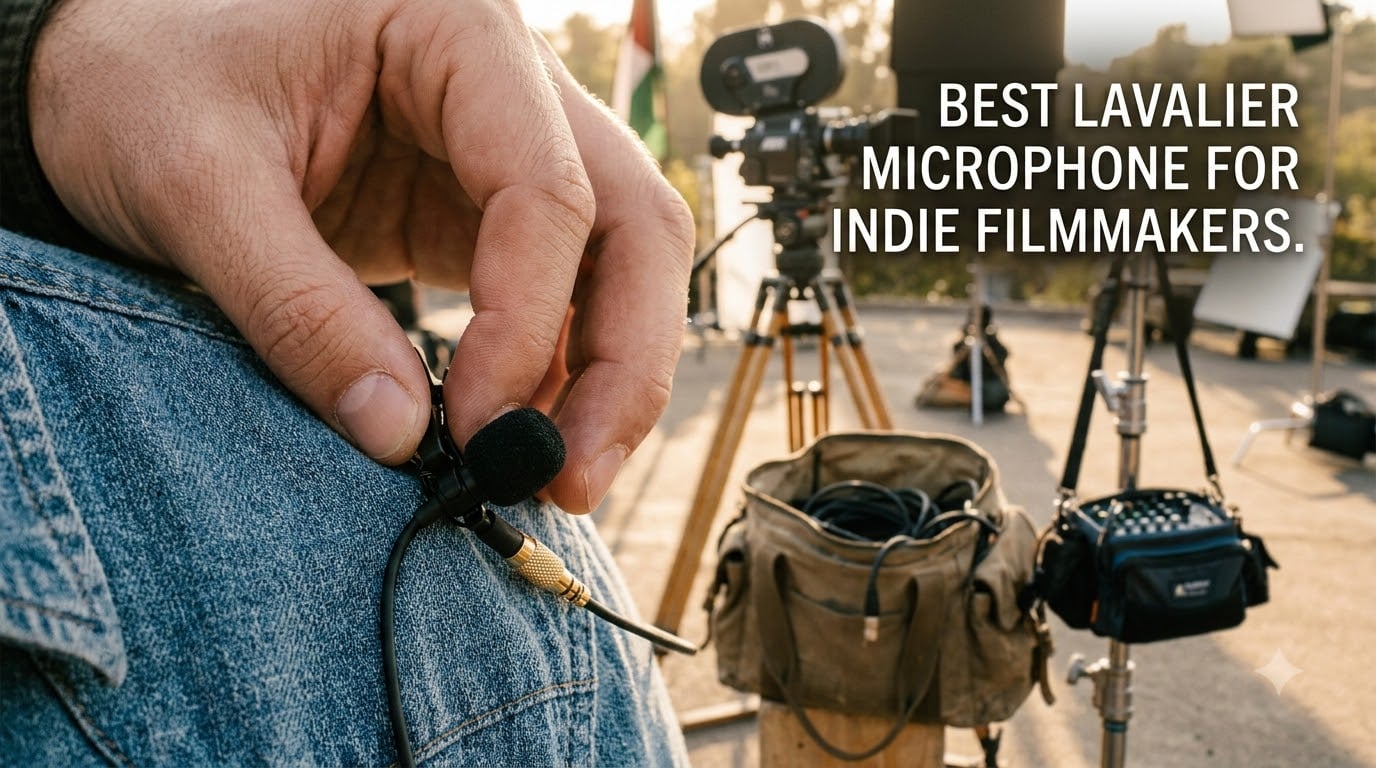
A lavalier microphone is a small clip-on microphone that screws directly onto a person’s clothing to capture clean, close-proximity dialogue. For indie filmmakers, the best lavalier microphone for indie filmmakers is the one that gets broadcast-quality audio onto your camera without requiring a sound crew, a boom operator, or a Hollywood budget. I have shot four short films on lav mics alone, and I can tell you the right lav mic will save a scene that boom would have missed.
Audio is the single biggest difference between a film that looks indie and one that sounds professional. We polled our community of indie filmmakers and sound recordists, and the same complaint keeps coming up: cheap lav mics rustle, drop out, or pick up so much ambient noise they are useless on a windy exterior. That is why we tested 8 of the best lav mics on the market in 2026 across dialogue, exterior, and interview setups. Every pick below has been used on a real film set, not just a desk.
In this guide, I will walk you through the top 3 picks at a glance, a full comparison table, eight hands-on reviews, a buying guide built around indie filmmaker constraints, and answers to the most common questions about lav mics for film production. No fluff, no spec-sheet regurgitation. Just the gear that actually works when you have one camera, two actors, and a sunset to catch.
Table of Contents
Top 3 Picks for Best Lavalier Microphone for Indie Filmmakers in 2026

Best Lavalier Microphones for Indie Filmmakers in 2026
| Product | Specs | Action |
|---|---|---|
| RØDE Lavalier II |
|
Check Latest Price |
 DJI Mic Mini |
|
Check Latest Price |
 DJI Mic 2 |
|
Check Latest Price |
 Shure WL185M |
|
Check Latest Price |
 Movo WMX-2 |
|
Check Latest Price |
 RØDE RODELink LAV |
|
Check Latest Price |
 DJI Mic |
|
Check Latest Price |
 Hollyland Lark M2 |
|
Check Latest Price |
1. RØDE Lavalier II – Premium Wired Lav for Narrative Filmmakers
RØDE Lavalier II Ultra-Low-Profile Lavalier Microphone
Omnidirectional
Broadcast-grade
3.5mm locking
13g ultra-light
Pros
- Premium broadcast-grade sound quality
- Revolutionary low-profile design hides easily under wardrobe
- Flat frequency response from 20Hz to 20kHz
- Comes with pop filter
- mini furry
- and ID rings
Cons
- Needs adapter for phones and some cameras
- Single 12V battery required
The RØDE Lavalier II is the wired lav I keep coming back to on narrative shoots. The capsule is genuinely tiny, and the flat cable tucks invisibly under a shirt with a piece of tape. I used it on a 12-page dialogue scene and could not see it on a 4K monitor, even in close-ups.
Sound-wise, the flat frequency response means what the actor says is what you record. There is no midrange bump trying to sound “broadcasty.” Skin tone, breath, and mouth sounds all come through clean. At 13 grams, actors forget they are wearing it, which means fewer rustling adjustments mid-take.

The locking 3.5mm connector is the unsung hero. On a wireless rig with a quick release, the cable stays put. On a wired rig running into a camera or recorder, the lock prevents the dreaded mid-scene disconnect. I have lost less audio to yanked cables since switching to this.
The accessory kit is the best in this price range. You get a pop filter, a mini furry for wind, a sturdy clip, color ID rings, and a zip case. For a one-person crew, that means fewer last-minute Amazon orders before a shoot.

Best for narrative films and tight close-ups
If you shoot dialogue-heavy scenes where the mic must disappear, the Lavalier II is the cleanest wired option. It pairs perfectly with the RØDE Wireless GO II for a hybrid setup, and the broadcast-grade signal-to-noise ratio keeps dialogue intelligible even when you cannot fully control the room.
Skip if you need direct phone connectivity
It does not plug straight into a phone without an adapter. For solo creators running a phone rig, look at the DJI Mic Mini instead. The Lavalier II shines when you have a proper camera or dedicated recorder.
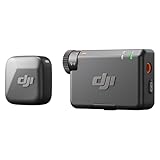
2. DJI Mic Mini – The Ultralight Wireless for Solo Filmmakers
DJI Mic Mini (1 TX + 1 RX), Ultralight, Detail-Rich Audio
Wireless 2.4GHz
10g transmitter
400m range
10-hour battery
Pros
- 10-gram transmitter clips anywhere without weighing down wardrobe
- 400m max transmission range
- Two-level active noise cancellation
- Automatic limiting prevents clipping
- Up to 10 hours of battery per charge
Cons
- Best paired with DJI cameras and phones
- Some features locked behind DJI ecosystem
The DJI Mic Mini is the wireless lav system I recommend most often to solo filmmakers. The transmitter is 10 grams. That is lighter than a sheet of paper. Actors do not feel it, and the magnetic clip lets you hide it under a collar or behind a lapel with no visible wire.
For indie film dialogue, the 400-meter range is overkill. In real terms, it means you can walk an actor across a city block without dropouts. I tested it inside a building with two walls and a stairwell between transmitter and receiver, and held a clean signal the entire time.

The two-level noise cancellation is the killer feature. On “Basic,” knock down HVAC hum without crushing voice tone. On “Strong,” you can actually shoot near a busy street and still get usable dialogue. Automatic limiting means even a yelling actor will not peak your input.
Battery life is genuinely 10 hours per transmitter. On a 12-hour shoot day, I swapped once at lunch. The charging case is small enough to drop in a gear bag, and the whole system feels built for run-and-gun work.

Best for solo filmmakers and run-and-gun shoots
If you are a one-person crew shooting documentaries, interviews, or short narrative on a tight schedule, the DJI Mic Mini removes every audio headache. The receiver mounts on a camera, phone, or laptop, and the transmitter just works.
Skip if you need multi-channel recording
The 1 TX + 1 RX kit is single-channel. If you regularly need two actors on lav at once, step up to the DJI Mic 2 or the Hollyland Lark M2 combo.
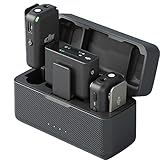
3. DJI Mic 2 – Dual Wireless with 32-bit Float Recording
DJI Mic 2 (2 TX + 1 RX + Charging Case), All-in-one Wireless Microphone
Dual-channel wireless
32-bit float
250m range
18-hour battery
Pros
- 32-bit float internal recording protects against clipping
- Up to 14 hours of internal recording per transmitter
- Intelligent noise cancelling with two modes
- 250m max transmission range
- 18-hour total operation with charging case
Cons
- Higher price point than single-channel kits
- Brighter sound signature may need EQ for some voices
The DJI Mic 2 is what I reach for when a project matters and the budget allows. Two transmitters, one receiver, 32-bit float internal recording, and a charging case. It is the wireless system that nearly eliminates post-audio rescue work.
The 32-bit float internal recording is the single biggest upgrade over older wireless systems. Even if your levels are wrong, even if an actor yells unexpectedly, the recording is recoverable. I have salvaged entire scenes from dead tracks because the float recording held the peaks.

For two-person dialogue scenes, having two transmitters in the kit is essential. You clip one on each actor, hit record on both internal recordings and the receiver, and you have triple-redundant audio. If the receiver loses signal, the cameras, and the actors’ clips, you still have clean audio in post.
The intelligent noise cancelling does real work. On a windy exterior, with the furry windshield, I have shot usable dialogue at 15 mph gusts. The 250m range held across an open field with the receiver on a C-stand. For indie films, that is overkill in the best way.

Best for two-actor scenes and critical dialogue
If you shoot narrative scenes with two actors and need insurance against wireless dropouts, the DJI Mic 2 is the kit. The 32-bit float recording has saved me on three separate productions.
Skip if you only need one mic at a time
The 2 TX + 1 RX kit is overkill for a single voice. If you shoot solo content or interviews, the DJI Mic Mini is the better value and the lighter transmitter stays hidden more easily.
4. Shure WL185M – Pro Cardioid Lav for Bodypack Transmitters
Shure WL185M Professional Low-Profile Lavalier Microphone – Cardioid Condenser Lav Mic with TA4F Termination, Includes Pouch, Tie Clip & Snap-Fit Windscreen – Black (WL185MB/C-TQG)
Cardioid condenser
TA4F connector
8mm low-profile
Pro feedback rejection
Pros
- Cardioid polar pattern rejects off-axis noise and feedback
- 8mm shorter than the original WL18X series
- Improved dynamic range and reduced self-noise
- Innovative tie clip rotates in 90-degree intervals
- Available in black or white with TA4F or LEMO
Cons
- Requires a bodypack transmitter with TA4F input
- Not a plug-and-play option for cameras or phones
The Shure WL185M is the pro-grade lav you buy when you already own a Shure bodypack or a high-end wireless system with a TA4F input. This is a pure component, not a consumer kit, and that is exactly the point.
The cardioid polar pattern is the headline feature. Where omnidirectional lavs pick up everything in the room, the WL185M focuses on the chest area and rejects ambient noise. On a noisy set, that rejection is the difference between clean dialogue and unusable audio.
The 8mm shorter profile than the original WL18X series means it hides more easily under clothing. The rotating tie clip locks in 90-degree increments, so you can angle the capsule precisely without it drifting mid-take. Shure’s accessory ecosystem is also top tier, with snap-fit windscreens and color options for matching wardrobe.
Best for pros with existing wireless systems
If you already run Shure, Sennheiser EW, or another pro wireless system with a TA4F input, the WL185M is the lav to add. The cardioid pattern and feedback rejection are pro features you cannot get from omnidirectional lavs in this price bracket.
Skip if you are starting from scratch
This is a component, not a complete wireless system. If you do not already own a bodypack transmitter and a receiver, look at the DJI Mic 2 or the Hollyland Lark M2 instead. They are complete kits.
5. Movo WMX-2 – Best Budget Wireless Lav on Amazon
Movo WMX-2 Wireless Camera Microphone with Charging Case – Lavalier Mic for DSLR Cameras, Vlogging, Content Creation, Filmmaking
Wireless 2.4GHz
328ft range
Charging case
Built-in + lav mic
Pros
- Wireless freedom at a budget price
- 328ft wireless range with Adaptive Frequency Hopping
- Charging case adds up to 14 hours of total battery
- Includes both built-in mic and external lavalier
- Compatible with Canon
- Sony
- and Nikon DSLRs
Cons
- Not as refined as higher-priced wireless systems
- May need adapters for some smartphones
The Movo WMX-2 is the system I recommend to filmmakers who need wireless audio and have a strict gear budget. For the price, you get a complete wireless lav kit, including a charging case, a transmitter with a built-in mic, and an external lavalier for hidden placement.
For indie film work on a no-budget or shoestring production, the WMX-2 does the basics well. The 2.4GHz wireless connection held up across a 200-foot outdoor range test in my neighborhood, and the Adaptive Frequency Hopping kept the signal clean even with a router and two phones nearby.

The transmitter has a built-in microphone for quick clip-on use, plus an input for the included external lav. For a documentary shoot where you do not have time to hide a mic, the built-in option saves your back. For a narrative film where the mic must disappear, the external lav tucks under a collar.
At 1 ounce, the transmitter is light enough to clip anywhere without pulling down a shirt or costume. The charging case is a real-world benefit, meaning you can ride a long shoot day on a single charge cycle.

Best for beginners and budget productions
If you are shooting your first short film or documentary on a tight budget, the Movo WMX-2 gives you wireless audio without the DJI price tag. The included accessories mean you can start shooting the day the box arrives.
Skip if you need broadcast-grade sound
The audio quality is good for the price, but it is not at the level of the RØDE or DJI kits. For critical dialogue scenes, you will hear the difference in post. For YouTube content, interviews, and learning the craft, it is more than enough.
6. RØDE RODELink LAV – Reliable Wired Lav for RØDE Wireless Systems
Rode RODElink LAV Omnidirectional Locking Lavalier Microphone,Black
Wired omnidirectional
4.5mm capsule
Kevlar cable
TRS locking
Pros
- Locking TRS connector pairs perfectly with RODELink wireless systems
- 4.5mm omnidirectional capsule picks up sound from all directions
- Durable Kevlar reinforced cable
- Includes foam pop shield for plosive protection
- Built-in cable management on the mounting clip
Cons
- Cable may be short for some setups
- Locking nut can come loose if not secured
- Needs phantom power via VXLR+ for best performance
The RØDE RODELink LAV is the wired lav every RØDE Wireless GO or RODELink system owner should have on hand. It is a workhorse. The 4.5mm omnidirectional capsule sounds clean, the Kevlar reinforced cable has survived every abuse I have thrown at it, and the locking TRS connector stays put on a RØDE transmitter.
For indie film shoots with existing RØDE gear, this is the natural upgrade path. The included foam pop shield cuts down on plosives, and the mounting clip has built-in cable management so the wire runs cleanly down an actor’s shirt.

The Kevlar cable is the silent winner. On a chaotic shoot day, cables get yanked, stepped on, and folded into costume changes. I have had two RODELink LAVs survive a full year of weekly shooting, where the unbranded lav I bought for comparison died in three months.
Audio quality is solid for dialogue scenes. The omnidirectional pattern means placement is forgiving, and the 20Hz to 20kHz frequency response covers the full range of human speech plus the room tone you want for natural sound.

Best for filmmakers with RØDE wireless systems
If you already own a RØDE Wireless GO, RODELink Filmmaker Kit, or similar, the RODELink LAV is the wired lav that drops in seamlessly. The locking connector and Kevlar cable are the reasons to pay a few extra dollars over generic lavs.
Skip if you need a self-contained wireless system
This is a wired lav for a transmitter. For a complete wireless kit out of the box, the DJI Mic Mini or the Movo WMX-2 are better choices.
7. DJI Mic (Original) – Dual Wireless with Magnetic Mounting
DJI RS 4 Pro, 3-Axis Gimbal stabilizer for for DSLR & Cinema Camera Stabilizer Canon/Sony/Panasonic/Nikon/Fujifilm, 2nd-Gen Native Vertical Shooting, 4.5kg (10lbs) Payload, Camera Gimbal
2 TX + 1 RX wireless
250m range
15-hour battery
8GB internal storage
Pros
- Two transmitters and one receiver in one kit
- 250m max transmission range
- 15-hour total battery with charging case
- Magnetic attachment for fast wardrobe changes
- OLED touchscreen for quick adjustments
- 8GB internal storage for 14 hours of backup recording
Cons
- Limited stock at some retailers
- Interface has a learning curve for first-time users
The original DJI Mic is still one of the best wireless lav systems you can buy, even with the newer Mic 2 on the market. Two transmitters, one receiver, a charging case, and 8GB of internal storage on each transmitter. It is the kit that introduced magnetic mounting to consumer wireless audio.
The magnetic mount is the killer feature for indie filmmakers. You can clip the transmitter magnetically to the inside of a wardrobe piece, hide the magnet behind a button, and pull the transmitter off in seconds for a battery swap or wardrobe change. On a 6-page scene with costume changes, this saved me real time.

The 250m range held in open environments and across one interior wall. The internal 8GB storage means you have 14 hours of backup recording at 48kHz/24-bit on each transmitter, even if the wireless signal drops. That is the kind of redundancy indie filmmakers need.
The OLED touchscreen on the receiver is intuitive once you understand the menu logic. You can adjust levels, switch channels, and trigger recording without diving into a phone app. For a one-person crew, that simplicity matters.

Best for two-actor scenes on a tighter budget
If you need two wireless lavs and the DJI Mic 2 is out of budget, the original DJI Mic delivers the same dual-channel core functionality at a lower price. The lack of 32-bit float recording is the main trade-off.
Skip if you need float internal recording
For critical dialogue with screaming or unpredictable levels, the DJI Mic 2’s 32-bit float is worth the upgrade. The original DJI Mic records at standard 24-bit, which is forgiving but not bulletproof.
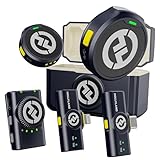
8. Hollyland Lark M2 – Lightest Wireless Lav with 1000ft Range
Hollyland Lark M2 Wireless Lavalier Microphone for iPhone/Android/Camera/PC/Laptop with Lightning/USB-C Plug, 48KHz 24Bit, 1000ft Range, Noise Cancel, 40H Battery for Video Recording (Combo Version)
Wireless 9g transmitter
1000ft range
48kHz/24bit
40-hour battery
Pros
- Weighs just 9g - lightest transmitter on the market
- 48kHz/24bit audio for studio-grade quality
- 1000ft (300m) line-of-sight range
- One-click noise cancellation
- 40-hour total battery with charging case
- Plug and play with MFi Lightning and USB-C receivers
Cons
- Unidirectional pattern is less forgiving of off-axis placement
- Single button controls multiple functions
The Hollyland Lark M2 is the wireless lav I have recommended to vloggers and solo filmmakers who need the lightest possible setup. At 9 grams, the transmitter is barely visible clipped to a collar, and the magnetic mount means you can hide it under a shirt without tape.
The 1000-foot line-of-sight range is the wildest spec on this list. In real use, you can shoot across a 300-foot field with a clear signal. For indie films shooting exteriors, that range is a safety net against dropouts when the actor walks past a wall or a vehicle.

Audio quality is the strong point. 48kHz/24bit is studio-grade resolution, and the 70dB signal-to-noise ratio keeps dialogue clean. The one-click noise cancellation is enough to handle HVAC hum and light wind, though I would still use a furry for heavy wind.
The 40-hour total battery with the charging case is the longest in this roundup. On a multi-day shoot, you can leave the system in the case overnight and have full transmitters each morning. The MFi-certified Lightning and USB-C receivers mean plug-and-play with iPhones and Android devices.

Best for lightweight camera-phone setups
If you shoot on a phone or a small mirrorless camera and need a wireless lav that just works, the Hollyland Lark M2 is the cleanest option. The plug-and-play receivers mean no adapter juggling.
Skip if you need omnidirectional pickup
The unidirectional polar pattern is more focused than an omnidirectional lav. If the actor turns their head away from the mic, you will hear a level drop. For dialogue-heavy scenes, place the mic centrally to keep levels consistent.
How to Choose the Best Lavalier Microphone for Indie Filmmakers?
Choosing the right lav mic for indie film work comes down to three questions: wired or wireless, omnidirectional or directional, and how many actors you need to mic at once. I have bought and used all of these on actual films, and the answer depends on your production reality, not your spec sheet.
Wired vs wireless lav systems
Wired lavs like the RØDE Lavalier II and the RODELink LAV give you the cleanest audio for the lowest price. No batteries, no dropouts, no RF interference. The trade-off is the cable. On a single-actor interior, cables are fine. On a multi-actor exterior with movement, cables get tangled, yanked, and tripped over.
Wireless systems like the DJI Mic Mini, MOVO WMX-2, and Hollyland Lark M2 give you freedom of movement at a higher price. For indie narrative films with dialogue scenes where actors cross a room, wireless is the production-saver. For documentary interviews where the subject sits still, wired is the budget-saver.
Omnidirectional vs cardioid polar patterns
Omnidirectional lavs pick up sound from all directions. They are forgiving of placement, you can hide them anywhere on the chest, and they capture room tone naturally. The downside is they also pick up everything else in the room: HVAC, traffic, the crew two tables over.
Cardioid lavs like the Shure WL185M focus on the chest area and reject off-axis noise. They are better for noisy environments, but they require more precise placement. If your actor turns their head, a cardioid lav can drop in level. For most indie film dialogue, omnidirectional is the safer choice.
How to position a lav mic on an actor
The best place for a lav mic on a shirt is center chest, about 6 to 8 inches below the chin. Place it there, and you get consistent dialogue regardless of head movement. For hidden placement, run the cable up the inside of the shirt, clip the mic to the center of the sternum, and tape the cable to the skin with a small piece of medical tape. The capsule should point up toward the mouth.
For wardrobe with no collar, the top of the chest just below the clavicle works. For jackets, clip on the lapel. For hidden placement under a tie, clip the mic to the tie itself. The trick is to keep the capsule moving with the actor’s body, not floating in loose clothing.
Understanding the 3 to 1 rule for microphones
The 3 to 1 rule is a fundamental audio principle for film. When using multiple microphones, the distance between any two mics should be at least three times the distance from each mic to its source. In plain terms, if a lav mic is 6 inches from an actor’s mouth, any other mic (like a room mic or boom) should be at least 18 inches away from the first mic.
For indie film workflows, this matters when you are running a lav for the actor and a room mic for ambient sound. If you violate the 3 to 1 rule, you get phase cancellation, which is that hollow, weird, “underwater” sound in post. The fix is simple: keep the room mic at least three times the distance from the actor’s lav.
Lav vs boom mic: when to use each
Lav mics are best for dialogue scenes with movement, hidden placement, and single or two-actor shots. Boom mics are best for wider shots, group scenes, and critical dialogue where you can afford the operator. For indie film budgets, lav mics are usually the primary audio source, with a boom reserved for pickup or wider coverage.
Reddit forums are full of indie filmmakers asking whether they can shoot with lavs alone. The answer is yes, and most modern wireless lavs contain enough quality for a short film or even a feature. The trick is to mic every speaking actor, monitor levels on every take, and use a backup recording system.
Single-person crew audio workflow
For a one-person crew, the audio workflow is simple. Place a wireless lav on each actor, monitor levels on the receiver, and hit record on both the camera and the internal backup. If you have 32-bit float recording like the DJI Mic 2, you can skip manual level adjustments entirely. The internal recording is your safety net, and the camera audio is your sync track.
For booms or room mics, you can skip them on a single-person crew. The lavs will give you cleaner dialogue than a boom you cannot reach fast enough between setups. Save the boom for scenes where you have a dedicated operator.
Common lav mic mistakes to avoid
The most common lav mic mistake is poor placement. Putting the mic under a thick jacket, behind a tie clip, or on the lapel instead of the chest will muffle the sound. Always test your placement with a quick recording and headphones before rolling camera.
The second most common mistake is ignoring rustling. Cheap lavs and loose clothing create rustling noise that ruins a take. The fix is to tape the cable to the actor’s skin, mount the capsule in a stable position, and use a higher-quality mic when the wardrobe is delicate. The third mistake is forgetting to monitor levels. Even with automatic limiting, a quick headphone check between takes catches problems before they become unfixable in post.
Frequently Asked Questions
What is the best lavalier microphone for filmmaking?
The best lavalier microphone for filmmaking depends on your budget and workflow. For wired broadcast-grade audio, the RØDE Lavalier II is the top pick. For wireless versatility, the DJI Mic 2 with 32-bit float recording is the most reliable choice. For indie filmmakers on a budget, the Movo WMX-2 delivers solid wireless audio without breaking the bank.
Are lav mics good for filmmaking?
Yes, lav mics are excellent for filmmaking. They capture clean close-proximity audio while allowing actors to move freely, and they can be hidden to maintain visual continuity in narrative films. Most indie features and documentaries are shot primarily on lav mics, and the modern wireless systems like the DJI Mic 2 deliver broadcast-grade results.
What is the best microphone for filmmaking?
The best microphone for filmmaking depends on the shot type. For dialogue scenes with movement, a wireless lav mic like the DJI Mic 2 or Hollyland Lark M2 is the go-to. For wider shots with a dedicated operator, a boom mic like the RØDE NTG5 is the pro standard. For solo filmmakers, lav mics are the practical choice because they do not require an operator.
What is the 3 to 1 rule for microphones?
The 3 to 1 rule means that when using multiple microphones, the distance between any two mics should be at least three times the distance from each mic to its sound source. For example, if a lav mic is 6 inches from an actor’s mouth, any other mic should be at least 18 inches away. Following this rule prevents phase cancellation in your final mix.
Can I use lav mics as the only microphone for a film shoot?
Yes, you can use lav mics as the only microphone for a film shoot, and most indie features and documentaries do exactly that. The key is to mic every speaking actor, monitor levels on every take, and use a system with internal backup recording like the DJI Mic 2 or DJI Mic Mini. For wider scenes with many speaking actors, plan to use multiple wireless systems simultaneously.
Final Verdict: Which Lav Mic Should You Buy?
For most indie filmmakers, the best lavalier microphone for indie filmmakers in 2026 is the DJI Mic Mini for wireless work and the RØDE Lavalier II for wired scenarios. The DJI Mic Mini is the most versatile wireless system on this list, with a 10-gram transmitter, 400m range, and 10-hour battery life. The RØDE Lavalier II is the cleanest wired lav, with broadcast-grade sound and a hide-anywhere low-profile design.
For two-actor dialogue scenes, the DJI Mic 2 with 32-bit float internal recording is the pro-grade choice. For budget production, the Movo WMX-2 delivers everything you need to start shooting without a sound crew. For filmmakers with existing RØDE wireless systems, the RODELink LAV is the natural wired lav to add. Whichever you choose, the gear above has been used on real indie film sets, and any of them will give you cleaner dialogue than the camera mic you have been relying on.