
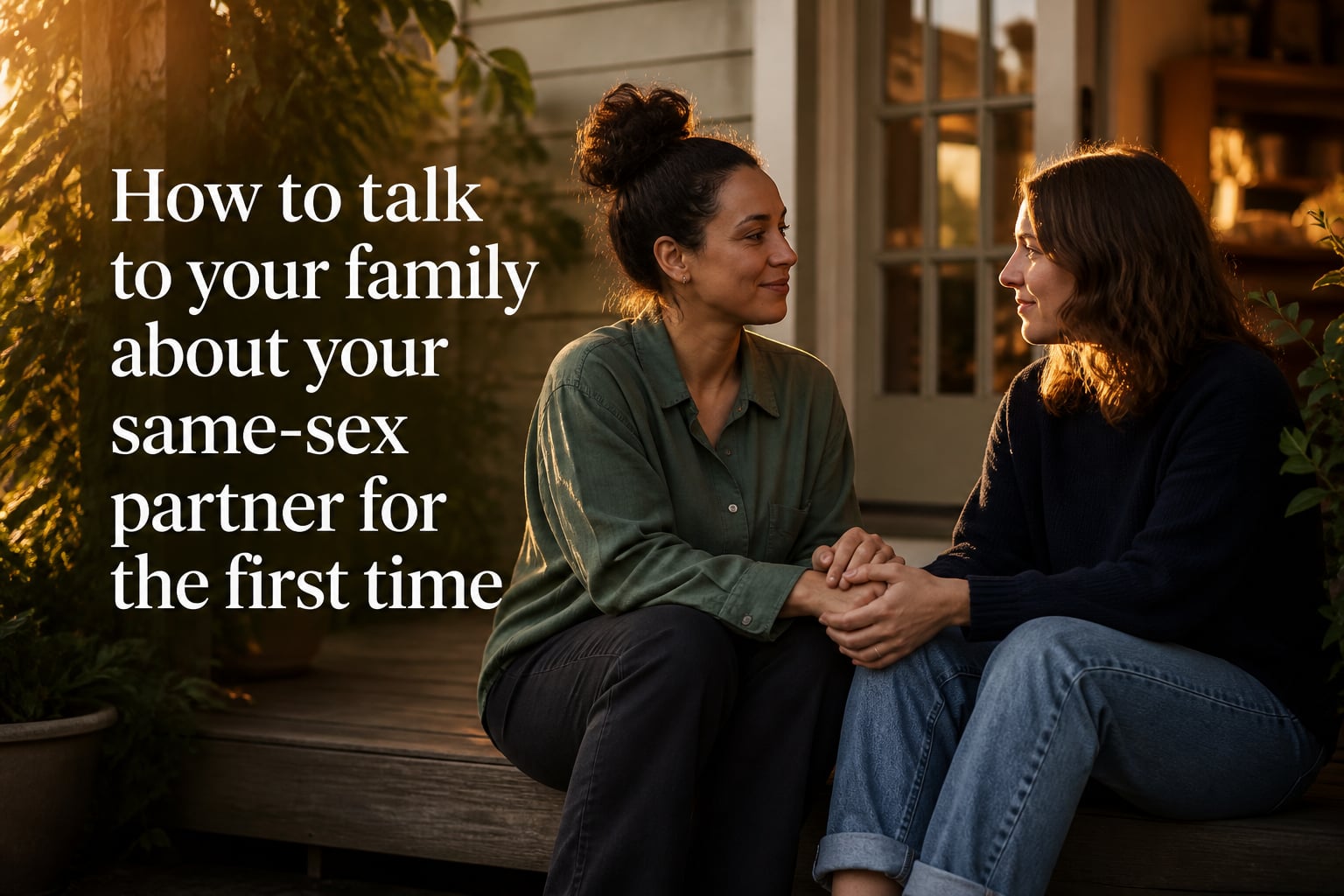
Talking to your family about your same-sex partner for the first time is one of the most emotionally loaded conversations you will ever have. Your stomach knots, your mind races, and you may find yourself drafting the same opening line over and over in the shower. I have sat with people who rehearsed their words for weeks and people who finally blurted it out while passing the potatoes at Sunday dinner. Both approaches were valid. Both took courage.
This guide walks you through the emotional, practical, and relational steps of having that conversation. It is written for LGBTQ+ individuals in same-sex relationships who are ready to introduce their partner to family, whether you are coming out at the same time or have been out for years and are now ready to be seen in full.
Table of Contents
How to Prepare Yourself Mentally and Emotionally
The conversation starts inside you, not across the dinner table. Before you rehearse a single sentence, take time to check in with yourself about why this matters, what you hope will happen, and what you are willing to accept.
Ask yourself what you want the outcome to be. Do you want full acceptance? Curiosity? A door left open? Naming the goal keeps the conversation from drifting into arguments you did not sign up for. It also helps you notice when you have already gotten what you needed.
Anticipate a range of reactions. Some parents will cry happy tears. Some will go quiet for a while. Some will defend a religion or a tradition. Some will say something careless. Mentally rehearsing the messy possibilities, not just the ideal one, reduces the shock when something unexpected lands. According to community accounts on Reddit and Quora, families who eventually came around often did so in slow, awkward stages rather than in a single dramatic moment.
Build a grounding ritual for the day of the conversation. Five minutes of slow breathing, a walk around the block, a text to a friend who knows you are doing this, all of these help. You do not need to feel calm. You just need a way to return to yourself when the conversation gets loud.
Tips for Talking to Your Parents First
If your family does not yet know you are in a same-sex relationship, plan to tell your parents about your partner before the meeting happens. A surprise introduction can feel loving on paper, but for many parents it is a lot to absorb in front of a stranger. A private conversation first gives them space to feel what they need to feel.
Choose the right moment. Avoid holidays, anniversaries, or moments when family stress is already high. A quiet weekend afternoon, a one-on-one walk, or a phone call when the day is calm all work. Practically speaking, give yourself enough time so the conversation does not have to end on a deadline.
Open with honesty about why you are speaking up. You can say something like, “I want to share something important about my life, and I would love your support.” You do not need to perform confidence. If your voice shakes, that is okay. Vulnerability is not weakness, and it can actually help a parent read you as sincere rather than rehearsed.
Keep the first conversation short. You are not trying to resolve fifty years of their beliefs in one sitting. You are opening a door. A simple “I’m in a relationship with someone, and her name is Sam” is enough for the first beat. The rest can come later.
Have a follow-up plan. Suggest a second conversation a few days later, after everyone has had time to process. Many parents report that their first reaction was not their real reaction. Time often works in your favor.
How to Introduce Your Same-Sex Partner to Your Family
Preparing your partner is just as important as preparing your family. Before any introductions, share what your family is like, what topics tend to come up, what phrases or jokes might land badly, and what your partner can do if they feel uncomfortable. A simple “If anyone says something off, we can leave together, no apology needed” goes a long way.
Pick a setting that feels low stakes. A casual lunch, a coffee at home, or a short walk in the park beats a formal sit-down dinner. The goal is to let your partner exist as a person in your family’s world, not to stage a single impression.
Introduce them naturally, the way you would introduce any partner you love. “This is Alex, my partner” is clear and warm. You do not need to overexplain, defend, or pre-emptively apologize. If your family already knows you are gay, lead with the person. If they do not, a brief “I wanted you to meet someone I love” is both honest and gentle.
Bring an ally if you can. A sibling, cousin, or close family friend who already knows and supports you can soften the energy in the room. They can change the subject, refill drinks, or simply sit nearby so the introduction does not feel like an ambush.
Give your family an easy way to engage. Share something light about your partner: their work, a funny story, a shared hobby. Most awkwardness comes from not knowing what to ask. A small detail often invites real conversation.
Handling Reactions and Difficult Questions
Even with the best preparation, families sometimes say things that hurt. The good news is that you do not have to absorb every comment, answer every question, or win every argument in real time.
For invasive questions like “So who is the man in the relationship?” or “Are you sure this is what you want?”, you can answer briefly and redirect. Try, “We work as a team, and we love each other. Tell me about your weekend.” You are not obligated to defend your identity to people who are still learning.
For homophobic or dismissive comments, you have a few options. You can name what you heard: “That word is hurtful, please don’t use it about my partner.” You can set a clear limit: “I will leave if we can’t speak with respect.” Or you can simply end the visit. None of these are rude. They are mature responses to disrespect.
Give yourself permission to leave early. Agree with your partner on a signal, a code word, or a time limit. If the meeting goes sideways, you both leave together. You can always try again later, but you cannot un-do a night where one of you felt humiliated.
Remember that a bad first reaction is not always a final answer. Many people in same-sex relationships have watched a parent who walked out in shock later become a proud grandparent. Acceptance is often a process, not a moment.
Setting Boundaries and Practicing Self-Care Afterward
The conversation does not end when the visit ends. Plan for the hours and days afterward, when you will be replaying every word and waiting for the next message.
Set boundaries for follow-up contact. It is okay to ask for a few days of space. It is okay to say, “I need to take a break from this conversation for now.” Healthy boundaries protect the relationship you have with your family, and they model the respect you want in return.
Lean on your support system. Call the friend who has been cheering you on. Talk to your partner about how they are feeling. If you have access to an LGBTQ+ affirming therapist or counselor, this is exactly the kind of experience they are trained to help you process.
Stay kind to yourself. You did something brave. Even if the conversation did not go the way you hoped, you showed up honestly. That is the part you get to keep, no matter how anyone else responds.
Frequently Asked Questions
How do I tell my parents I have a same-sex partner?
Choose a calm, private moment and start with a simple, honest sentence such as u0022I want to share something important about my life.u0022 Keep the first conversation short, name what you hope for, and suggest a follow-up talk in a few days so they have time to process.
What should I say when introducing my same-sex partner to my family?
Introduce them the way you would introduce anyone you love, with a clear phrase like u0022This is Alex, my partner.u0022 Share a small, warm detail about them so your family has an easy way to engage, and avoid overexplaining or apologizing on their behalf.
How do I prepare my partner for meeting my family?
Walk them through your family’s personality, common topics, and any phrases that might land wrong. Agree on a signal or exit plan if the visit gets uncomfortable, and remind them that you are a team going in together.
What if my family doesn’t accept my same-sex partner?
You cannot control their reaction, but you can protect your own wellbeing. Set clear boundaries, leave if you are disrespected, and give yourself time. Many families need multiple conversations before they shift, and acceptance often arrives slowly rather than in a single moment.
How do I handle homophobic comments from family members?
Name what you heard, set a clear limit, and be ready to leave. You can say, u0022That word is hurtful, please don’t use it about my partner,u0022 and if the behavior continues, end the visit. You are not obligated to argue your identity in your own home.
You Are Not Alone in This Conversation
Learning how to talk to your family about your same-sex partner for the first time is less about finding the perfect words and more about showing up as yourself, even when your voice shakes. Take your time, prepare well, bring an ally, and remember that honesty and self-respect belong together. Whatever your family’s first reaction is, it is only the beginning of the story, and you do not have to write it alone.