
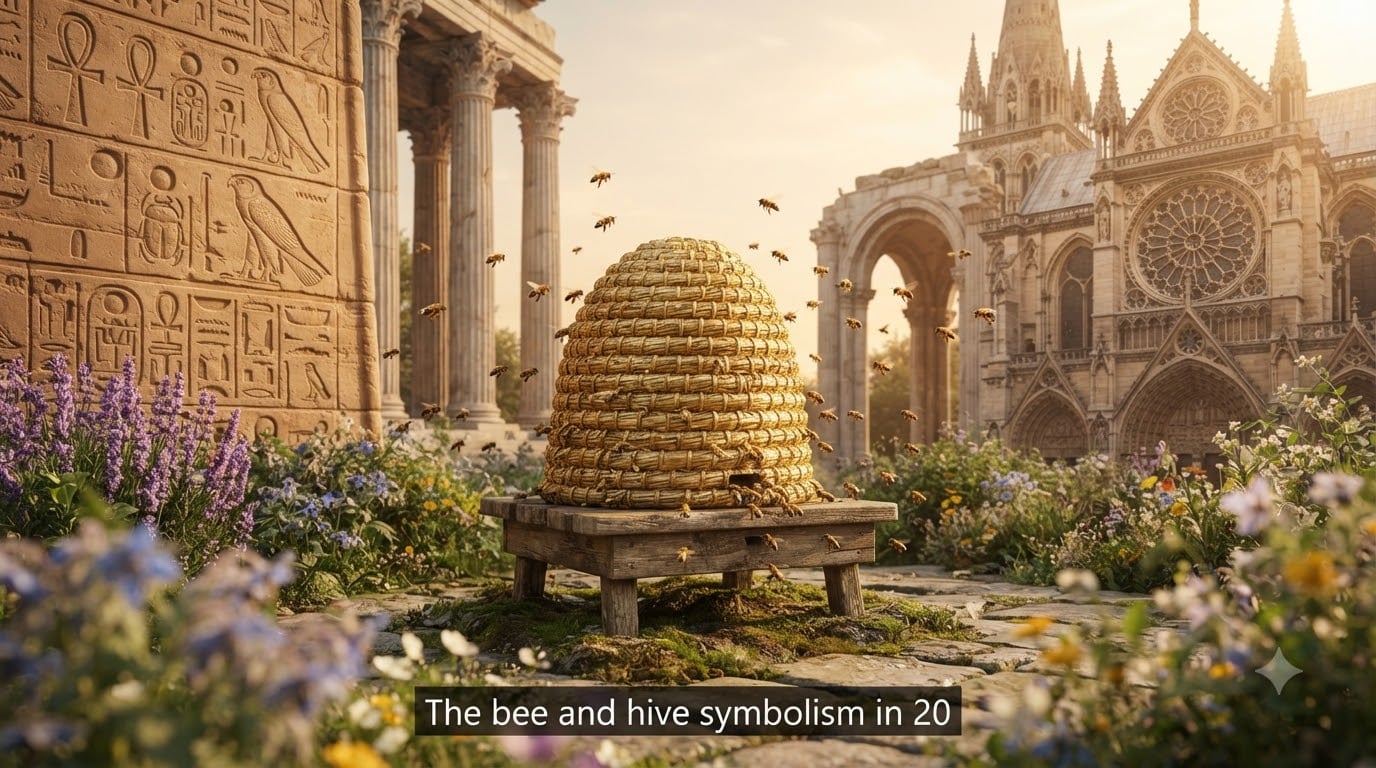
The bee and hive symbolism has fascinated humans for thousands of years. From the tombs of Egyptian pharaohs to the emblem on Utah’s state seal, bees and their hives carry meaning that stretches across cultures, religions, and centuries.
I have spent months researching this topic, comparing ancient hieroglyphs, biblical passages, Masonic writings, and forum discussions where people share what bee encounters mean to them. What I found is that bee symbolism is not one story but many stories woven together, all circling back to a few core themes: hard work, unity, and the power of community.
In this guide, I will walk you through every major tradition, from ancient Egypt to modern spiritual practice, so you can understand what bees represent and how that meaning applies to your own life.
Table of Contents
What Does the Bee and Hive Symbolism Represent Across Cultures
Bee and hive symbolism represents industry, cooperation, and divine order across virtually every culture that has observed these creatures closely. The bee works tirelessly without rest, builds geometrically perfect honeycombs, and serves a community larger than itself, which is why ancient peoples saw bees as living emblems of virtue.
Across cultures, bees consistently carry these core meanings:
- Hard work and diligence (the original meaning of “industry”)
- Unity through cooperation
- Divine communication and messengers between worlds
- Resurrection, immortality, and the soul
- Royalty and legitimate rule
- Community, order, and structured society
The beehive itself amplifies these themes. Where a single bee suggests personal effort, the hive represents collective achievement, a reminder that humans accomplish more together than apart. This is why so many institutions, from medieval monasteries to American states, have adopted the beehive as a symbol.
Ancient Egyptian Bee and Hive Symbolism
Ancient Egyptian bee symbolism is among the oldest documented in human history. Bees appeared on royal insignias, tomb walls, and ceremonial objects stretching back over 4,000 years.
The pharaohs of Lower Egypt used the bee as a royal title. Kings were called “He Who Reigns Over the Bee,” and the honeybee appeared on official seals alongside the pharaoh’s name. This was not decorative. It tied the ruler to themes of fertility, productive power, and just authority.
Egyptian mythology went further. Bees were believed to be born from the tears of Ra, the sun god, which made them sacred creatures. The bee carried the soul to the afterlife, which is why honey was placed in tombs. For the Egyptians, bees connected the living to the divine.
Greek and Roman Bee Symbolism
Greek bee symbolism elevated the bee into the realm of prophecy and divine inspiration. The priestesses at the Oracle of Delphi were called “Melissae,” meaning bees, because bees were seen as carriers of messages from the gods.
According to Greek myth, the god Zeus was hidden as an infant and nursed by bees. He later elevated the bee to sacred status. Greek writers saw in bees a perfect example of how individuals sacrifice personal interest for the greater good. Plato described a just society as one that functioned like a well-run hive.
The Romans inherited this symbolism and made it practical. Roman legions carried bee emblems into battle, and Roman law treated beekeeping as a serious civic duty. Virgil wrote the Georgics, where he praised bees as the only creatures who share their work, their housing, and their rewards in common. Roman coinage featured bees as signs of noble lineage and disciplined citizenship.
Christian and Biblical Bee Symbolism
Christian bee symbolism draws from both Old Testament references and the writings of the early Church Fathers. Honey and bees appear across the Bible, often as signs of divine blessing, wisdom, and the sweetness of God’s word.
In the book of Exodus, the Promised Land is described as “a land flowing with milk and honey.” In Proverbs, the word of God is said to be “sweeter than honey.” The Psalms compare divine judgment favorably to honey from the honeycomb. Bees were part of how people understood grace, provision, and revelation.
Early Christian writers carried this symbolism further. Saint Ambrose taught that bees represent the soul gathering wisdom from flowers, transforming scattered knowledge into something unified and nourishing. Monks used the beehive as a model for the ideal monastery, where each member had a role and the whole worked in harmony. The hive became an emblem of the Church itself.
Industry and Hard Work: The Core Meaning of Bee Symbolism
Industry and hard work sit at the heart of bee and hive symbolism, and this is where the modern word “industry” originally took its meaning. When people called an activity “industrious,” they meant it had the quality of a bee.
A worker bee in summer can visit hundreds of flowers per hour. She spends her short life in constant service to the colony, never pausing for comfort, building and guarding the hive with tireless focus. The bee taught humans that meaningful work shapes a meaningful life.
This is why the beehive became an emblem of productive societies. Benjamin Franklin proposed the beehive as a symbol for America itself, with the motto “We work for the common good.” The idea was simple: a free society functions like a hive, where citizens contribute according to their gifts and share in the rewards.
Unity and Community in Hive Symbolism
Unity and community define the second pillar of hive symbolism. Bees do not work alone, and their colonies succeed because every member performs a role.
The queen bee does not rule by command. She lays eggs while thousands of workers build comb, feed larvae, guard the entrance, and forage for nectar. Each bee has a job, and the hive survives because no bee tries to do everything at once.
This image shaped political philosophy from Aristotle to the American Founders. A healthy community depends on cooperation, shared purpose, and the willingness of individuals to serve something larger than themselves. Hive symbolism teaches that personal success and collective success reinforce each other.
Beehive Symbolism in Freemasonry
Beehive symbolism in Freemasonry is one of the most visible and well-documented uses of the symbol in modern Western tradition. The beehive appears on Masonic tracing boards, lodge regalia, and instructional materials, where it represents industry, unity, and the productive spirit of the Craft.
Masonic tradition teaches that the beehive represents a well-ordered society where every member contributes. In the symbolic third degree of the Master Mason, the beehive is described as a place where each bee labors faithfully and idle bees cannot remain. The lesson to new Masons is clear: a brother who does not contribute weakens the lodge, just as a lazy bee weakens the hive.
Freemasons also use the beehive to represent the gathering of wisdom, much like bees gathering nectar from many flowers and turning it into honey. The hive becomes a metaphor for moral and intellectual work, where scattered insights are refined into shared understanding.
Mormon Beehive Symbolism and the State of Deseret
Mormon beehive symbolism is one of the most recognizable religious uses of the symbol in America. The Church of Jesus Christ of Latter-day Saints adopted the beehive as an emblem of community labor, mutual support, and the building of Zion.
When Mormon settlers arrived in the Salt Lake Valley in 1847, they faced a barren landscape. Brigham Young urged his people to work together, comparing the new community to a hive where every member must pull weight. The beehive became a frequent symbol in LDS publications, architecture, and programs.
The beehive moved beyond the Church into civic life. The provisional State of Deseret, which later became Utah, placed the beehive on its official seal. Today it remains on Utah’s state emblem, a reminder that prosperity comes from cooperative industry.
Modern Spiritual Meaning of Bees
Modern spiritual meaning of bees centers on personal signs, life transitions, and messages from the unseen. Many people today report bee encounters during meaningful moments and seek to understand what these experiences mean.
On forums and in spiritual discussions, people frequently describe bees appearing during weddings, funerals, periods of grief, or major decisions. Across traditions, bees are often read as confirmations that the person is on the right path. The bee’s industry suggests that hard work will pay off.
Some practitioners see bees as messengers from loved ones who have died, drawing on the ancient Egyptian idea that bees carry souls. Others interpret a single bee as encouragement to stay focused, while a swarm can signal overwhelm. Whatever the specific reading, the central message remains consistent: bees remind us to live with purpose.
Bee Symbolism in Dreams and Witchcraft
Bee symbolism in dreams and witchcraft emphasizes productivity, communication with spirit, and the magic of transformation. Across modern pagan and witchcraft traditions, the bee holds a respected place as a symbol of focus, fertility, and the sweetness that comes from disciplined craft.
In dream interpretation, a single bee often points to a small success or a quiet achievement. A hive in a dream typically represents home, family, or a project that is quietly thriving. Honey in a dream points to rewards, often the sweet results of patient effort.
In witchcraft and pagan practice, bees are associated with the goddess, particularly the Greek goddess Artemis and her Roman counterpart Diana. Honey is used in ritual offerings, and beeswax candles carry spiritual significance. Practitioners call upon the bee as a totem when starting a creative project or working on community building.
How to Apply Bee and Hive Symbolism in Your Life
Applying bee and hive symbolism in your life does not require any religious affiliation. The lessons translate directly into practical choices about work, relationships, and personal growth.
Start with industry. Treat your tasks, even small ones, with the focus a bee brings to a single flower. Small consistent efforts produce results that flashy bursts cannot. Next, build community. Look for the people around you who share your purpose and treat their work as part of your own.
Finally, respect the hive. When you join a group, contribute. When you lead, serve. Bee and hive symbolism has lasted thousands of years because it describes something true about how human beings flourish. We do best when we work steadily, together, for something greater than ourselves.
Frequently Asked Questions About Bee and Hive Symbolism
What does a beehive symbolize spiritually?
A beehive spiritually symbolizes industry, unity, and divine cooperation. Across ancient cultures and modern traditions, the beehive represents a community where every member contributes to collective success, mirroring the harmony found in religious communities and well-ordered societies.
Is a beehive a Masonic symbol?
Yes, a beehive is one of the most recognized Masonic symbols. It represents industry, unity, and the productive spirit of the Craft, and it appears in the symbolic third degree of the Master Mason where idle bees are taught to be unacceptable in a well-functioning lodge.
Is bees in a hive a metaphor?
Bees in a hive are widely used as a metaphor for human cooperation, civic duty, and collective achievement. Writers from Plato to the American Founders have used the hive to describe how individuals sacrifice personal interest for the greater good of a community.
Is a beehive a good omen?
Across most traditions, a beehive is considered a good omen. It signals productivity, harmony, and blessings to come. Ancient Egyptians placed honey in tombs as a substance of immortality, and modern pagans often see bees as messengers of confirmation and encouragement.
What does a bee symbolize spiritually?
A bee spiritually symbolizes hard work, divine inspiration, and the soul’s journey. Ancient Greeks believed bees carried messages from the gods, early Christians saw bees as emblems of resurrection, and modern spiritual practitioners view bee encounters as signs of confirmation and purpose.
What do bees symbolize in witchcraft?
In witchcraft and modern pagan traditions, bees symbolize focus, fertility, and the sweetness that comes from disciplined craft. They are associated with goddesses such as Artemis and Diana, and honey and beeswax play important roles in ritual offerings and candle magic.
What does a single bee symbolize?
A single bee typically symbolizes personal industry, focus, and small but meaningful effort. Seeing one bee is often interpreted as encouragement to keep working steadily toward a goal rather than expecting immediate large rewards.
Are bees a good or bad omen?
Bees are overwhelmingly seen as a good omen across cultures. They represent productivity, cooperation, and divine communication. The rare exception is when bees are seen as a warning of gossip or conflict, usually in dream interpretation contexts where stinging may signal interpersonal tension.
Conclusion
Bee and hive symbolism has earned its place across every major human tradition because it points to something we already know about ourselves. We accomplish more when we work steadily. We flourish more when we serve a community larger than ourselves. And we discover meaning when we treat our work, our relationships, and our spiritual lives with the discipline of a bee.
From the tombs of Egyptian pharaohs to the architecture of Mormon temples, from Masonic lodges to modern witchcraft altars, the same truth keeps surfacing. The bee teaches us how to live. The hive shows us how to live together.