
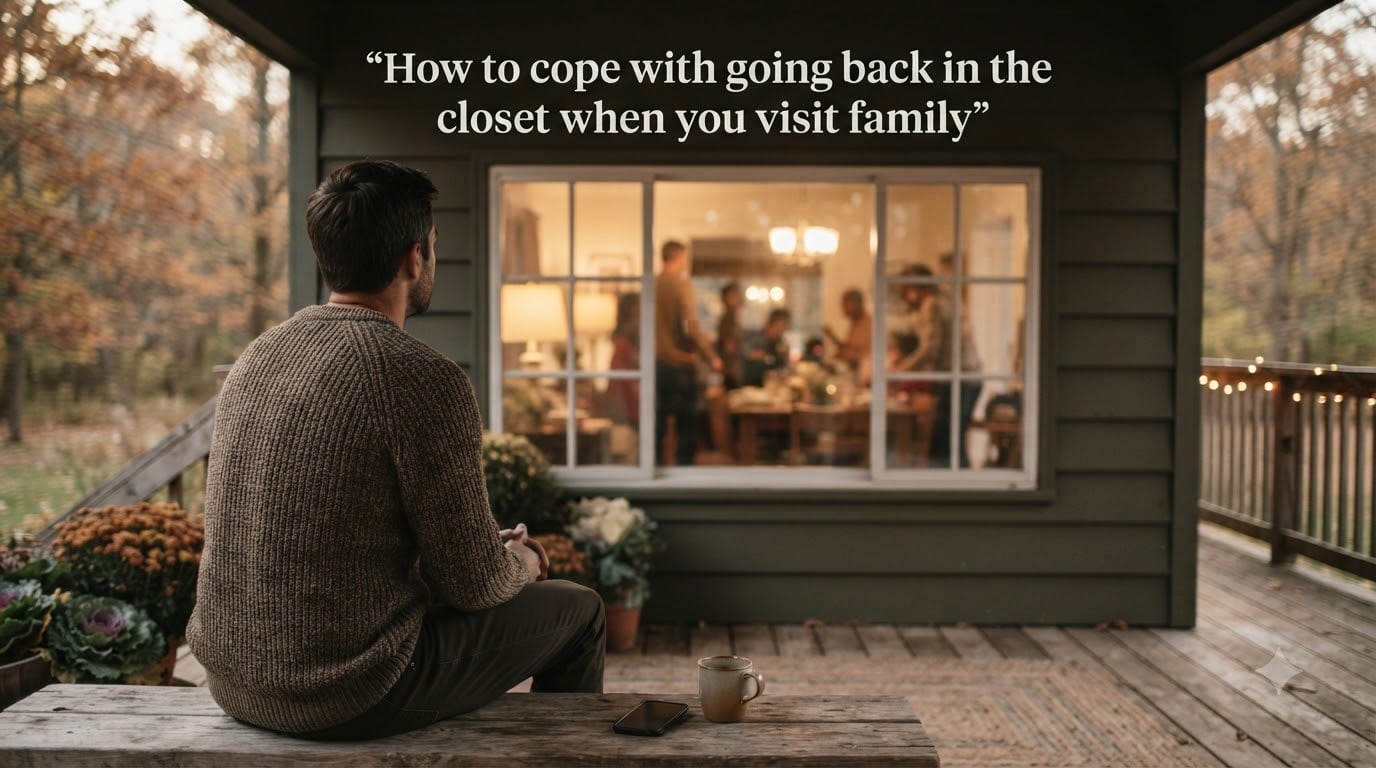
Going back in the closet when you visit family is one of the most emotionally draining experiences many LGBTQ people face. You live openly in your daily life, then suddenly you are hiding core parts of who you are just to get through a dinner or a weekend. The dissonance between your authentic self and the version of you that family expects can trigger real anxiety, dysphoria, and emotional exhaustion.
If you are reading this, you are not alone. Countless LGBTQ individuals navigate this exact challenge every holiday season, every wedding, every graduation. Research from counselling professionals and community discussions on Reddit consistently shows that going back in the closet is a common survival strategy, not a failure. This guide will walk you through why it hurts, how to prepare, and practical coping strategies you can use before, during, and after your family visit.
Table of Contents
Why Going Back in the Closet Causes Emotional Distress
Going back in the closet when you visit family hurts because your body remembers old roles. Therapists who specialize in family dynamics explain that when we walk back into our childhood homes, our nervous systems often revert to patterns we developed as kids. You may feel like a teenager again, small and dependent, even though you are a capable adult with a full life.
This regression is not a weakness. It is a physiological response. Your body associates that environment with a time when you were not yet out, not yet safe, and perhaps not yet accepted. The anxiety you feel is your nervous system trying to protect you.
Then there is the dysphoria. Many transgender and nonbinary people in community discussions describe a specific type of dysphoria that surfaces during family visits. It is different from body-focused dysphoria. It is the pain of being misgendered, the discomfort of wearing clothes that feel wrong, and the ache of being seen as someone you no longer are.
For people with partners, there is an additional layer of grief. You are separated from your main support person, often during a stressful time. On Reddit, users describe the loneliness of referring to their spouse as a “roommate” or not mentioning them at all. That erasure takes a real emotional toll.
All of this adds up to something professionals call minority stress. It is the chronic strain of living with a stigmatized identity, and it intensifies when you must hide that identity. Knowing the name for what you are experiencing can be validating. The distress you feel is real, documented, and shared by many.
Before the Visit: Preparing Yourself Mentally
Preparation is one of the most powerful tools you have. Going back in the closet when you visit family goes better when you have a plan. Here are some practical steps to take before you pack your bags.
First, ask yourself some honest questions. Is this visit safe for you? If there is any risk of physical, emotional, or financial harm, you have the right to decline or shorten the visit. Safety always comes before obligation.
If the visit is safe but stressful, set a time limit. Decide in advance whether you are staying for three hours or three days. Having a clear endpoint gives you something to count down toward and reduces the feeling of being trapped.
Coordinate with your partner or support person before you leave. Talk about how you will stay connected during the visit. Agree on check-in times, even if they are just a quick text. Let them know what topics are off-limits and what words of encouragement you need when things get hard.
Plan an exit strategy. Know how you will leave if a situation becomes unbearable. This might mean having your own rental car, booking a refundable hotel room instead of staying in the family home, or having a friend ready to call you with an “emergency.” Having an out, even if you never use it, reduces anxiety significantly.
During the Visit: Coping Strategies for When You’re Closeted
During the visit itself, self-care becomes your anchor. Here are the strategies that community members and therapists recommend most often.
Stay connected to your identity in small, private ways. Wear something under your clothes that represents who you really are. Keep a photo of your partner on your phone where only you can see it. Write in a notes app throughout the day. These small acts of self-recognition remind your brain that the closeted version of you is temporary, not permanent.
Take regular breaks. Step outside for air. Offer to run an errand. Lock yourself in the bathroom for five minutes of quiet. Use these moments to breathe deeply and remind yourself that this environment does not define you.
Use grounding techniques when anxiety spikes. The 5-4-3-2-1 method works well. Name five things you can see, four you can touch, three you can hear, two you can smell, and one you can taste. This pulls your nervous system out of fight-or-flight mode and back into the present moment.
When family members ask invasive questions about your relationship status, have deflection scripts ready. Here are a few that community members swear by. “I’m really focused on my career right now.” “Nothing new to report on that front.” “I’m happy, and that is what matters.” Practice saying them so they come out naturally.
If someone presses harder, redirect the conversation back to them. Most people love talking about themselves. Ask about their work, their kids, their recent trip. A well-timed question can steer attention away from you entirely.
Limit alcohol and substances. It can be tempting to numb out during painful family gatherings, but alcohol lowers inhibitions and increases emotional volatility. You need your wits about you to maintain boundaries and manage your emotional state.
Find small moments of joy. If a younger cousin is fun to talk to, spend time with them. If the family dog is a comfort, sit on the floor and pet it. Micro-moments of connection can sustain you through the harder parts of the visit.
Managing Anxiety During Family Visits
Anxiety during family visits is both physical and emotional. Addressing both dimensions helps you stay grounded and present.
For physical anxiety, try EFT tapping. This technique involves gently tapping specific points on your face and body while focusing on a calming statement. Many LGBTQ individuals report it helps reduce the intensity of anxiety in real time, and you can do it discreetly in a bathroom.
Box breathing is another powerful tool. Inhale for four counts, hold for four, exhale for four, hold for four. Repeat this cycle three or four times. It activates your parasympathetic nervous system and slows your heart rate within minutes.
For emotional regulation, try journaling in private. Even a few sentences can help. Write what happened, how you felt, and what you needed in that moment. This validates your experience and prevents emotions from building up internally.
Text someone who knows your situation during stressful moments. A quick message like “This is hard” to your partner or a trusted friend can provide immediate relief. You do not have to carry the weight alone, even if you are physically alone.
Remember that you are not responsible for your family’s reactions. If someone says something hurtful, that reflects their limitations, not your worth. You cannot control their behavior, but you can control how much space you give their words in your mind.
After the Visit: Recovery and Reconnection
The visit may be over, but the emotional hangover often lasts longer. Many LGBTQ people report feeling sad, drained, or numb for days after returning from family visits. This is completely normal.
Build in recovery time before you return to your normal routine. If possible, take a day off work or clear your schedule for the first day back. Use that time to sleep, process, and reconnect with your authentic self.
Reconnect with your partner or support network immediately. Tell them what happened, what was hard, and what you need. Physical closeness, whether that is a long hug or just sitting on the same couch, helps regulate your nervous system after a period of stress.
Do something that affirms your identity. Watch a show with LGBTQ characters. Attend a community event. Wear something that feels like you. These acts of reconnection help you transition back into the life you have built for yourself.
Consider speaking with a therapist who understands LGBTQ issues if family visits consistently leave you depleted. A professional can help you process the emotions and develop a long-term strategy for managing family relationships on your terms.
How to Cope With Going Back in the Closet When You Visit Family: Key Takeaways
Learning how to cope with going back in the closet when you visit family is an ongoing process. Every visit will be different, and some will be harder than others. What matters is that you have tools, a plan, and people in your corner.
Remember that staying closeted for safety is a valid choice. You do not owe anyone your truth if sharing it would put you at risk. Your identity is not diminished by the times you choose to protect yourself. You are still you, even when the room around you cannot see all of who you are.
FAQs
Why do I get anxiety when I visit family?
You get anxiety because your body remembers old family roles and reverts to the emotional patterns you developed as a child. When you walk back into your family home, your nervous system associates that environment with a time before you were out or safe. This triggers a stress response even if there is no immediate threat.
How to cope with being in the closet?
Coping with being in the closet involves staying connected to your identity in private ways, taking regular breaks during stressful situations, using grounding techniques like box breathing, journaling your feelings, and staying in contact with your support network. Finding LGBTQ community online and giving yourself permission to stay closeted for safety are also essential.
How to deal with family anxiety?
Deal with family anxiety by preparing a time-limited visit plan, coordinating check-ins with a trusted person, using grounding techniques like EFT tapping or box breathing during stressful moments, and taking physical breaks away from the family. Having deflection scripts ready for invasive questions also reduces anxiety significantly.
How to handle moving back in with parents?
Handle moving back in with parents by setting clear boundaries around your time and space, maintaining regular contact with your support network outside the home, creating private rituals that affirm your identity, and planning an exit timeline if the arrangement is temporary. If the environment is unsafe, explore alternative housing options before committing to the move.
Final Thoughts
You deserve to feel like yourself, wherever you are. If going back in the closet is what keeps you safe right now, that is okay. Build your plan, lean on your people, and come back to your authentic life when the visit is done. The door of the closet is one you get to open and close on your own terms.