
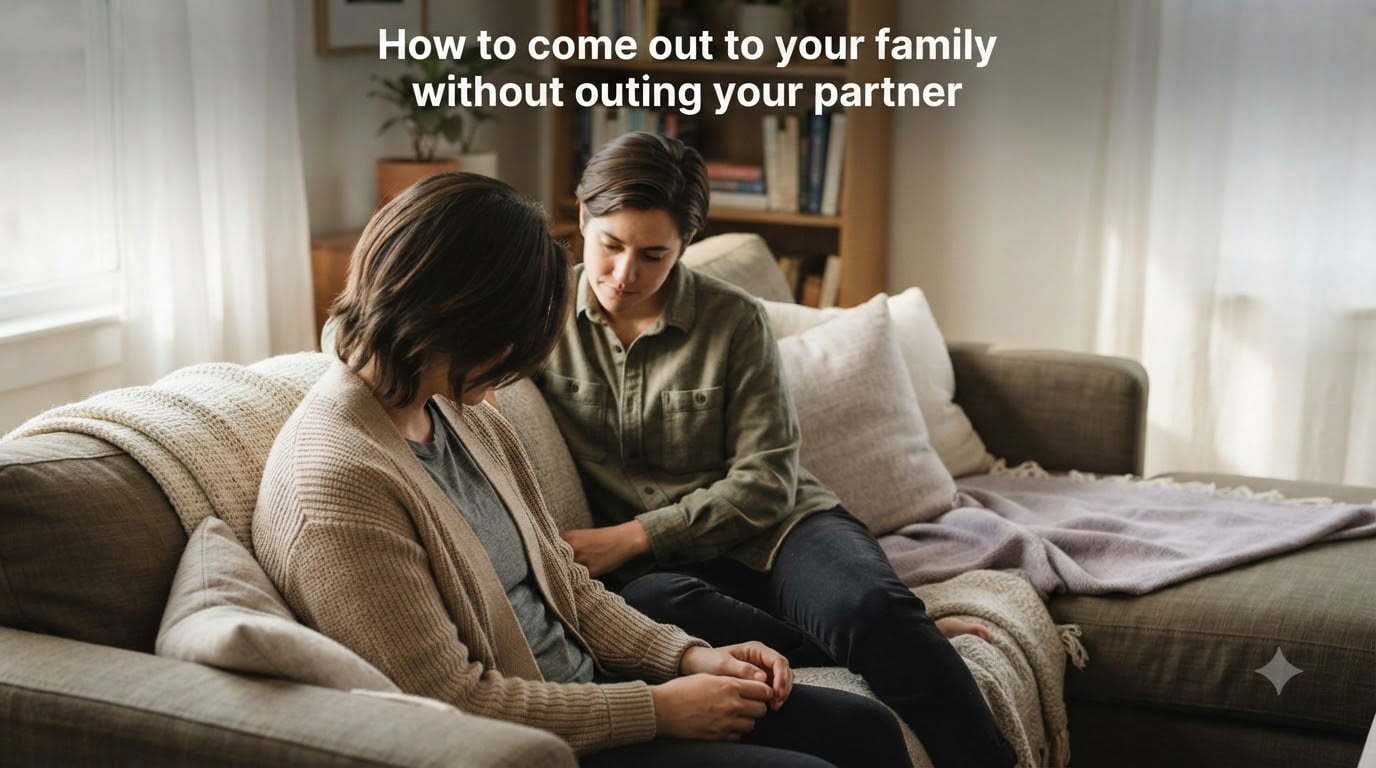
Figuring out how to come out to your family without outing your partner is one of the most emotionally loaded decisions in any LGBTQ+ relationship. Your identity deserves space to breathe, and so does your partner’s. Learning how to come out to your family without outing your partner means honoring both truths at once: yours and theirs.
I have walked this road myself, and I have watched friends navigate it for years. The good news is that selective disclosure is not just possible. It can be done with care, with boundaries, and with a surprising amount of relief on the other side. This guide is here to help you do it thoughtfully.
Table of Contents
What It Means to Come Out Without Outing Your Partner
Coming out without outing your partner means sharing your own truth about your sexual orientation or gender identity while deliberately keeping your partner’s identity private. You are speaking about yourself, not about someone else. The difference matters more than most people realize, because an outing strips away someone else’s choice to share their own story.
Selective disclosure looks different for every family. Sometimes it looks like telling your mom you are queer while saying nothing about the person you love. Sometimes it means introducing your partner as a friend at a holiday dinner. There is no single right way, and your partner’s comfort level gets to set the pace.
Why Protecting Your Partner’s Privacy Matters
Your partner’s privacy is not a side note in your coming out process. It is the foundation of trust in your relationship. Deciding together how to handle family disclosure is, in many ways, your first real test of communication as a couple.
Here is what I keep coming back to: your partner has a right to control their own coming out story. Their reasons for staying private may involve family rejection, religious pressure, professional risk, or simply not being ready. None of those reasons are lesser than yours.
Different Outness Levels Are Completely Normal
Couples rarely move through coming out in perfect synchrony. One partner may be out to everyone except their father. The other may have posted a coming out video online. Both are valid. Living at different outness levels just requires ongoing negotiation.
From the forums I read: people in relationships of 6 to 8 years sometimes still hide from one set of in-laws. They act as “straight roommates” during visits, share separate beds in childhood homes, and translate affectionate texts into something safer. The strain is real, and so is the relief when they finally find a strategy that works.
How to Come Out to Your Family Without Outing Your Partner: Step by Step
There is no universal script, but there is a process that makes the conversation less overwhelming. These steps come from counselor guidance, community wisdom, and a lot of trial and error from real couples.
Step 1: Talk to Your Partner First
Before you say anything to your family, sit down with the partner. Ask what is okay to share. Ask what feels unsafe. Agree on specific boundaries, and write them down if that helps. Topics to cover include:
- Names, pronouns, and relationship labels
- Photos or social media mentions
- Plans involving visits or shared spaces
- What happens if a family member asks directly
This is not a one-time conversation. Check in regularly, especially before family events.
Step 2: Decide What Level of Disclosure Feels Right
You have options. None of them are dishonest. Some common levels:
- Full disclosure: You name your partner and acknowledge the relationship
- Identity-only disclosure: You share your orientation without identifying your partner
- Identity with boundaries: You mention a relationship but withhold identifying details
- No disclosure yet: You wait until your partner is ready too
Step 3: Choose the Right Moment and Place
Pick a private, calm setting where you will not be interrupted. The Trevor Project recommends choosing a moment when the person you are telling is relaxed and not rushed. Avoid major holidays, anniversaries, or other emotionally loaded times.
Step 4: Keep the Focus on Yourself
Use “I” statements. Share your feelings rather than facts about your partner’s life. Saying “I realized I am bisexual and that has been true for years” leaves your partner out of the conversation entirely.
Assessing Your Family Situation First
Before you share anything, take an honest look at your family dynamics. This is not about expecting the worst. It is about protecting yourself, your partner, and your shared future.
A Simple Safety Check
Ask yourself these questions, honestly:
- Has anyone in my family made homophobic, biphobic, or transphobic comments?
- Could coming out put me at risk of housing, financial, or physical harm?
- Do I have a safe place to go if the conversation goes badly?
- Is there even one person in my family I can count on to be supportive?
- Is my partner in any immediate danger from my family knowing about them?
If your answers raise concerns, please wait. There is no deadline. The Strong Family Alliance reminds us that there is no one right way to come out, and timing is always yours to choose.
Testing the Waters Without Committing
If you are not sure how your family will respond, you can probe gently first. Bring up a same-sex celebrity couple you admire. Share a news story about LGBTQ+ rights. See how people react. You are gathering information, not testing them.
Practical Strategies for Partial Disclosure
Once you decide to share, you will likely face direct questions about your love life. Knowing your answers in advance is one of the kindest things you can do for yourself and your partner.
Sample Scripts for Common Scenarios
If your mom asks “Are you seeing anyone?”: “I am focusing on myself right now, but I am in a really good place.”
If someone asks “Do you have a girlfriend/boyfriend?”: “I am seeing someone, and I would love to tell you more when the time is right.”
If a relative pushes for details: “That is really personal and I would like to keep it between us for now.”
If someone demands to meet your partner: “They are very private, and I am respecting that.”
Deflecting Without Lying
You never have to choose between being honest about yourself and lying about your partner. Deflection is a real skill. Try:
- “I would rather focus on how I am feeling, not who I am with.”
- “Can we talk about that another time?”
- “I have asked them to give me space and I am trying to honor that.”
Setting Boundaries Around Your Partner’s Information
Boundaries are not walls. They are agreements you make about what belongs to you and what belongs to someone else. Your partner’s identity, name, job, and personal history belong to them, full stop.
Phrases That Hold the Line
Sometimes family pressure makes boundaries hard to maintain. These phrases help:
- “My relationship is something I choose to keep private.”
- “They are not ready to be out, and I have to respect that.”
- “I will not share details without their consent.”
- “Please do not bring this up with anyone else in the family.”
Enforcing Boundaries After the Initial Conversation
Family members often “forget” boundaries after a few weeks. Be ready to repeat yourself. Calmly. With love, if you can, and with firmness if you must. Persistent boundary setting is how respect actually develops.
Managing Family Reactions and Follow-Up Questions
Reactions fall anywhere on a wide spectrum. Some parents need time. Some ask unexpectedly kind questions. Others react with confusion or anger. None of those responses tell you what your coming out is worth.
Common follow-up questions include “Are you sure?”, “Is this because of someone?”, “So what does this mean for your future?” Answer what feels right and redirect what does not. You can always revisit later.
If Someone Tries to Out Your Partner
If a family member starts telling others about your partner without permission, address it quickly. Say directly: “I did not authorize this, and I need you to stop.” Then check in with your partner. Their consent was violated, even if unintentionally.
When to Reconsider Coming Out
Sometimes the right choice is to wait. There is no shame in postponing disclosure until conditions are safer. Consider waiting if:
- You depend on family for housing, school, or healthcare
- Your partner could face physical danger
- You are in the middle of a crisis and do not have support
- Your family has a history of violence or forced conversion attempts
Coming out is a powerful act of self-love, but safety is the priority. You can come out on your own timeline. You can change your mind. You can try again later.
Frequently Asked Questions
Can I come out to my family without mentioning my partner?
Yes. You can talk about your own sexual orientation or gender identity without naming or describing your partner. Use ‘I’ statements that focus on your feelings and experiences, and say something like ‘My relationship is private and I would like to keep it that way for now.’ Your partner’s information belongs to them.
What if my partner isn’t ready to come out?
Respect their timeline. Coming out should happen when both of you feel safe and ready. Have an open conversation about what each of you is comfortable sharing, write down your agreements, and check in regularly. Your partner has the right to come out on their own terms, at their own pace.
How do I handle follow-up questions about my partner after coming out?
Prepare a few go-to phrases ahead of time, such as ‘They are very private and I am respecting that’ or ‘I would rather talk about how I am feeling right now.’ You can also redirect by asking the family member about their own life. Calmly repeating boundaries is normal and expected.
What should I do if a family member tries to out my partner?
Address it directly. Tell them clearly that you did not give permission and you need them to stop. Then talk to your partner about what happened so they can decide how they want to respond. If the behavior continues, consider limiting contact with that family member.
Should I come out if my partner doesn’t want me to?
Generally, no. Both partners deserve to control their own narrative, and honoring your partner’s wishes is part of building trust. If you feel the need to come out is urgent for your own wellbeing, have an honest conversation with your partner about why, and work toward a compromise together, possibly with a couples counselor.
You Get to Choose the Pace
Learning how to come out to your family without outing your partner is really about learning to honor two people at once. Yourself, and the one you love most. With clear communication, mutual consent, and a little bit of preparation, you can share your truth without sacrificing your partner’s.
Take what you need from this guide. Bring your partner into the planning, give yourself permission to wait if waiting feels safer, and remember that you are not alone. Many people have walked this exact path before you, and our community at Lez Bomb Movie is here to walk with you through the rest of the journey in 2026 and beyond.