
A commuter e-bike is an electric bicycle built for one job: getting you from a front door to an office, a school or a market and back again, day after day, in real weather. That job demands hardware a trail bike does not need and a cheap scooter cannot fake: full fenders that keep road spray off your jacket, a rear rack that carries a laptop bag and a week’s groceries, lights wired into the frame, disc brakes that work when it is wet, and a battery you can lift out and carry inside at night.
Pick the wrong machine and you will find out within a month. The failure modes are consistent. Fender mounts that were never drilled. A battery sealed into the down tube with no key. A 60 lb frame you cannot get up three flights of stairs. A motor that bogs down on the ramp to the bridge. None of those show up in a showroom, and most of them cannot be fixed after delivery without replacing the frame.
What follows is a roundup of ten e-bikes assessed specifically for city use, not for trail fun or for maximum speed. We weighted full fenders, integrated lighting, rack mounts, removable batteries, real weight, UL 2849 certification and whether a human can actually repair the thing when it breaks. Range figures quoted are manufacturer claims, and we tell you plainly where owner reports diverge from them. For anyone also shopping the saddle end of the bike, our guide to the best bike saddles for long distance riding is worth a look before you commit.
We also cover the three things roundups usually skip: how to size a battery to an actual commute, how to stop an expensive bike from disappearing off a rack at work, and which e-bikes to walk away from before the test ride.
Table of Contents
Top 3 Picks: Best Commuter E Bikes for City Riding in 2026
If you read nothing else, these three cover most city riders. The Heybike Cityscape 2.0 is the most complete daily driver in the group, the Jasion EB5 has by far the deepest long-term owner record, and the basket-equipped LELEKUAI is the most honest entry point here.
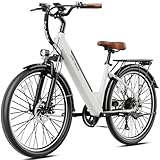
Heybike Cityscape 2.0
- 468Wh IPX6 removable battery
- 500W motor with 1200W peak
- Rear rack and full lighting included
- 7-speed with front suspension

Jasion EB5
- Light full-size 26 inch frame at 49.6 lb
- 360Wh removable battery
- 2600+ owner reviews
- 7-speed with 26 inch tires

LELEKUAI T1 with Basket
- Folds for transit and trunks
- 48 lb with basket and lights in the box
- UL 2849 certified
- 480Wh removable battery
10 Best Commuter E Bikes for City Riding in 2026
Here is the full list at a glance. Every bike is a Class 2 machine capped at 20 mph assisted, which is the legal sweet spot in most US cities because it stays inside standard bike-lane rules without registration.
| Product | Specs | Action |
|---|---|---|
| Heybike Cityscape 2.0 |
|
Check Latest Price |
| Jasion EB5 |
|
Check Latest Price |
| LELEKUAI T1 with Basket |
|
Check Latest Price |
 REOCRO RE0-14 REOCRO RE0-14 |
|
Check Latest Price |
 Funhang EB-C1 Funhang EB-C1 |
|
Check Latest Price |
 Funhang EB-C2 Funhang EB-C2 |
|
Check Latest Price |
 TotGuard W-206-UL TotGuard W-206-UL |
|
Check Latest Price |
 Gotrax Dolphin Gotrax Dolphin |
|
Check Latest Price |
 Gotrax R1 Gotrax R1 |
|
Check Latest Price |
 LELEKUAI T1 20 MPH LELEKUAI T1 20 MPH |
|
Check Latest Price |
Two notes on the table. First, no bike in this group publishes a torque figure except the Funhang EB-C1 at 55 Nm, which tells you something about how little the industry publishes for city riders. Second, the battery figures are usable numbers, not marketing ones, and several manufacturers state a range claim that assumes the lightest assist level, a flat road and a temperate day.
1. Heybike Cityscape 2.0 – The Most Complete Daily Driver
Heybike Cityscape 2.0 Electric Commuter Bike for Adults – 468Wh Removable Battery, 26″ Wheels, Up to 50 Miles, 7-Speed, Front Suspension, UL Certified
500W brushless motor with 1200W peak
468Wh IPX6 removable UL-certified battery
7-speed with front suspension
Rear rack and full lighting included
Pros
- Fast in real traffic
- owners report 21-22 mph on the flat
- Rear rack included which most rivals sell separately
- IPX6 battery is one of the few weather-rated packs here
- Bright color LCD with speed mileage and assist level
Cons
- Assembly is the weak point
- with unclear instructions and missing manuals
- Very heavy and large for a 26 inch frame
- Brakes are underpowered for the speed it reaches
- Supplied saddle is widely replaced
This is the bike I would put a first-time commuter on. The Cityscape 2.0 is a full-size 26 inch frame with a rear rack already bolted on, a working headlight and tail light, front suspension and dual disc brakes, which is a genuinely complete city package rather than a bare bike with accessories to hunt down later. A 468Wh IPX6-rated removable battery means a full day of commuting on one charge and a battery you can carry to a desk charger rather than wheeling the whole bike to an outlet.
Owners consistently report real-world speed that beats city traffic: around 21 to 22 mph assisted on the flat and close to 27 mph on a downhill, with several riders describing overtaking cars at junctions. The 662-review pool is deep enough to be informative, and the average of 4.4 holds with only a small one-star share, which for a bike of this size is a good result.
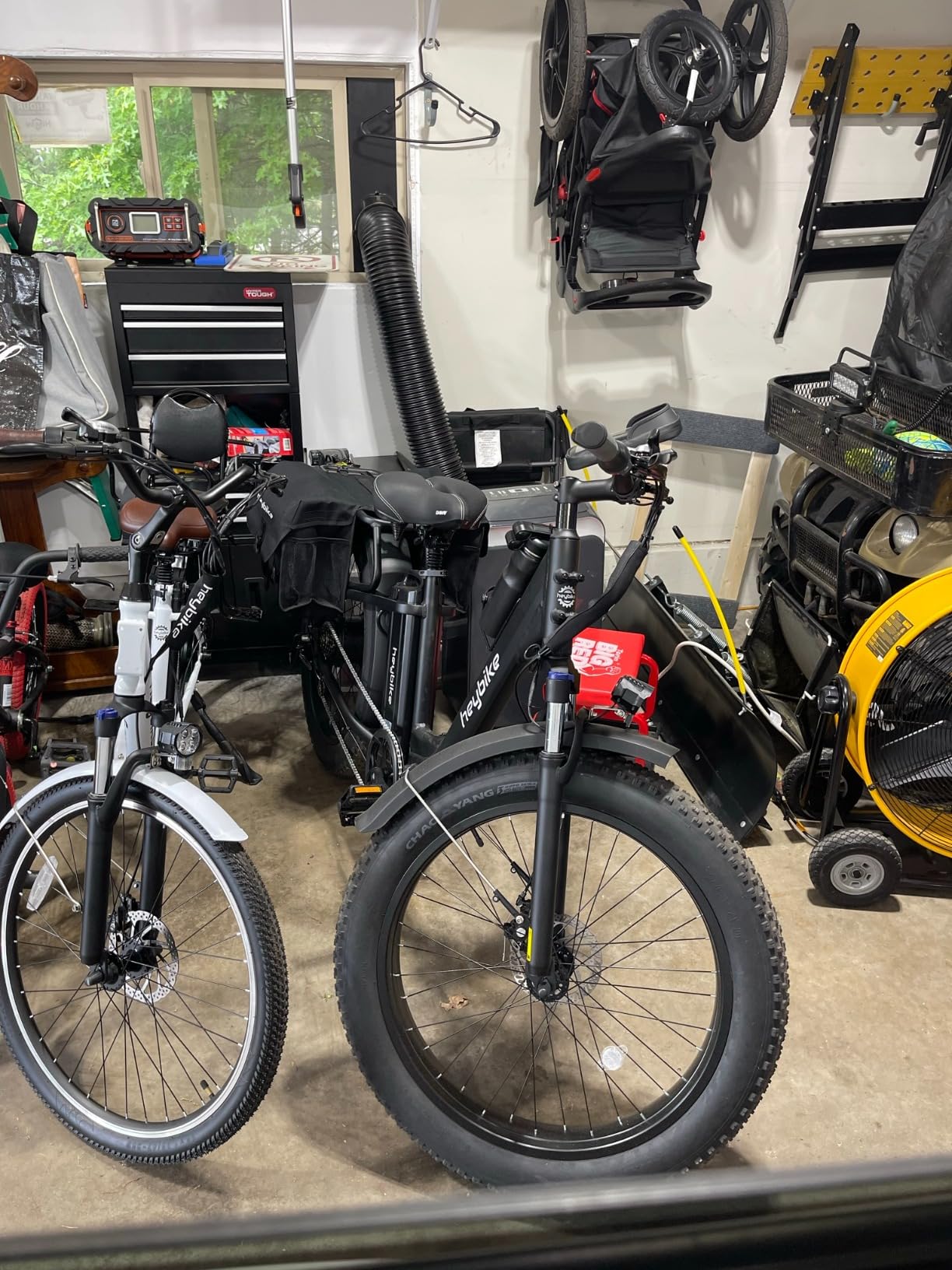
Battery behaviour is the standout for commuters. Reviewers log a 6 mile commute using 15 to 20 percent of the pack even on an uphill route, and the stated 30 to 35 miles on throttle or 35 to 50 on pedal assist is at least plausible given that figure. The charge is quick enough that topping up at a desk during the working day is realistic rather than aspirational.
The weaknesses are consistent and all fixable. Assembly is the single most common complaint, with unclear instructions, missing manuals in some boxes and one owner spending roughly seven hours on the build, so budget an afternoon or pay a shop. Brakes are the second complaint, described as noisy and underpowered for a bike that approaches 30 mph downhill, and brake pads are a sensible first upgrade. The bike is also heavy and large, which matters if you have stairs.

Who this bike suits
It suits a confident adult rider on a flat to moderately hilly route who wants everything fitted from the factory and does not mind a large, heavy bike in exchange for speed. A 6 to 10 mile round trip is its comfort zone, and the rack means the laptop and the shopping can share the same ride. Riders who need to move it up stairs should look further down this list before buying.
It also suits anyone who wants to avoid the assembly roulette entirely, because the rack, lights, fender-adjacent hardware and display are all present. Just confirm before you buy that you or a shop can handle the setup, and keep the assembly video open while you work.
Who should skip it
Skip it if you are shorter than about five foot three and want to stop both feet on the ground, because the frame is full-size and large. Also skip it if you ride steep hills regularly; big hills cut the speed noticeably, with one owner reporting a drop to 13 to 14 mph. Riders who care about silent, cheap, discreet commuting should note that a bike this fast and this bright is a target.
2. Jasion EB5 – A 49.6 lb Full-Size Bike With the Deepest Owner Record
Jasion EB5 Electric Bike for Adults 26″ tire with 1000W Peak Motor
1000W peak motor with 20 mph top speed
360Wh removable battery,5-6 hour charge
49.6 lb high-carbon steel frame
7-speed with 26 inch puncture-resistant tires
Pros
- Heavily reviewed with over 2600 owner reports
- Light full-size 26 inch frame at 49.6 lb
- Owners log 400 to 1500 mile commutes
- Booster mode helps while pushing the bike on climbs
- Removable battery charges at home or in the office
Cons
- Front fork on newer models is flimsy and no longer adjustable
- Soft tires wear out inside a year
- Handlebar and brake adjuster screws loosen in ride
- Nearly proprietary battery connector with no spare available
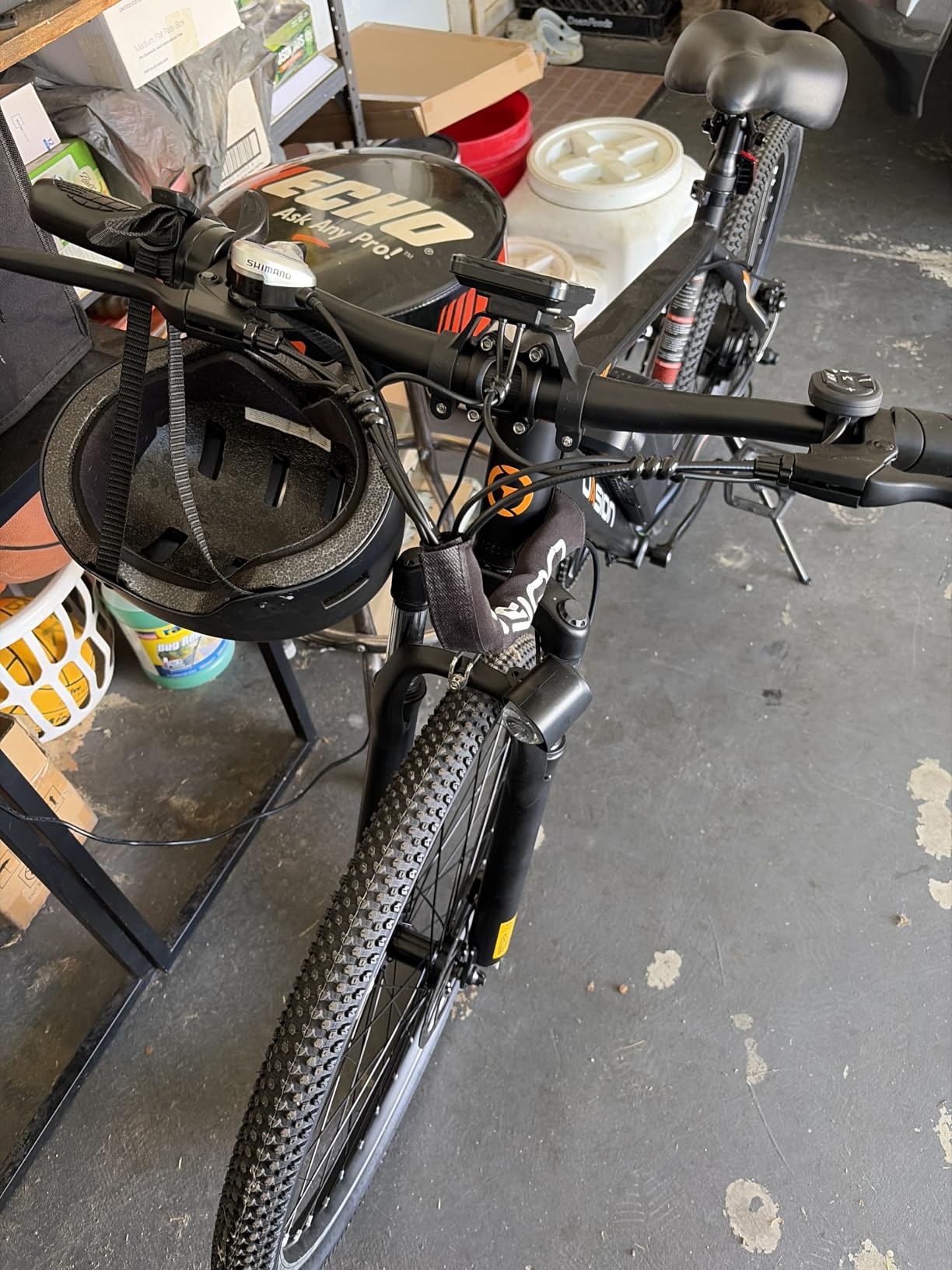
The Jasion EB5 wins on data. With over 2600 reviews it has the deepest long-term record of any bike here by a wide margin, and that record is unusually reassuring: owners log commutes of 400 miles, 1,500 miles and more on the same machine. At 49.6 lb it is one of the lighter full-size 26 inch frames in this group, which is genuinely useful if you occasionally need to lift it into a car or move it around an apartment.
It comes with 26 inch puncture-resistant tires, seven-speed shifting, dual mechanical disc brakes, dual lights and a display with adjustable backlight brightness, odometer and average speed readouts. Four riding modes are available, including a booster that walks the bike along at walking pace, which matters more than it sounds when you are pushing a loaded bike up a curb.
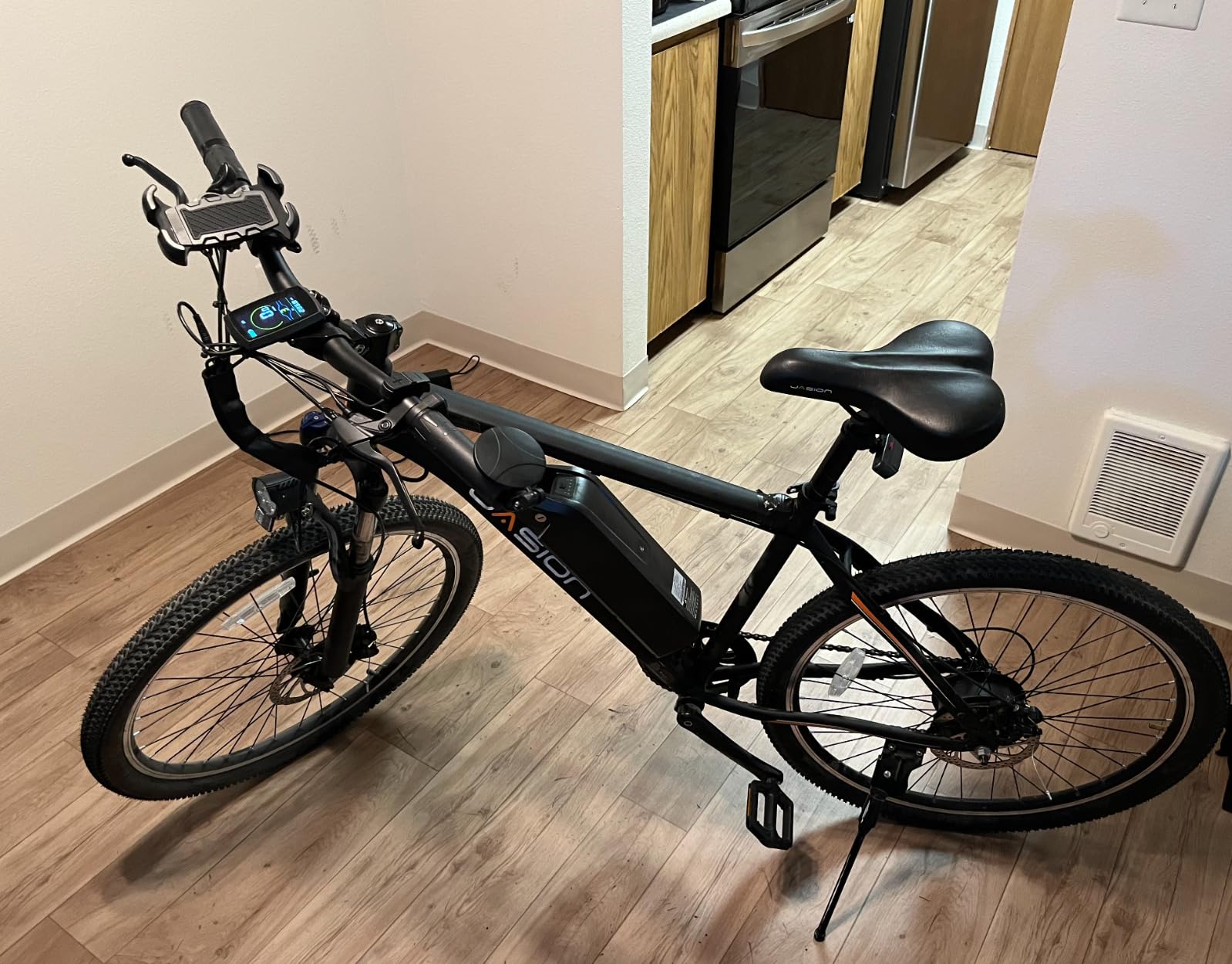
Battery life is the quiet strength. The 360Wh pack charges in 5 to 6 hours and one rider reported covering 50 miles on a single charge on low assist. The assist levels can be reconfigured from three to five through the display settings, which is a small thing that makes a real difference on rolling terrain.
The 4.1 average is honest and worth understanding rather than hiding. It reflects cheap consumable components, not a bad concept. Tires are soft and wear quickly, with the rear often needing replacement inside a year of moderate riding. The front fork on current models is no longer lockable or adjustable and is described as flimsy. Adjustment screws on the handlebar and rear brake repeatedly loosen during a ride, which is a genuine safety concern rather than a nitpick.
Who this bike suits
It suits a committed rider who puts serious mileage on a bike and is willing to do basic maintenance. Replace the tires, check the adjuster bolts before every ride, and the EB5 will keep going for years. It is the right choice for anyone whose commute is long enough that cumulative comfort matters and whose storage situation makes 49.6 lb manageable.
It also suits anyone who values evidence over marketing, because you can read a thousand real owner reports before you buy. A buyer who wants a torque-sensing mid-drive should know this is not that, but the assist tuning and booster mode cover a lot of the same practical ground.
Who should skip it
Skip it if you are not comfortable with self-maintenance, since the recurring complaints all live in the hardware-adjustment category. Do not buy it expecting a spare battery, because the connector is nearly proprietary and a second pack is not offered. Riders who need a rack or full fenders out of the box will need to add both.
3. LELEKUAI T1 with Basket – The Most Versatile
Electric Bike for Adults Teens, Folding E-Bike,Commuter City Foldable ebike with 560W Motor 48V 10Ah Battery, 24MPH 3-Level Pedal Assist, Dual Disc Brakes,14″ Compact Electric Bicycle with Pedals
560W motor with 24 mph claimed top speed
480Wh removable lithium battery
Folds flat for transit and trunks
48 lb with basket and lights in the box
Pros
- Light for a folding bike at 48 lb
- Front basket headlight tail light phone holder and lock included
- Battery removes for indoor charging
- Silent motor with no throttle surge
- Service replaced a damaged seat quickly
Cons
- Entire right grip is the twist throttle which hurts steering control
- No safety cut-off so the bike runs while charging
- One usable gear in pedal-only mode caps pedal speed near 5 to 6 mph
- Brakes drag and get noisy after about a day
At the entry level, accessory completeness is the thing that usually disappears, and not here. The box includes a front basket, headlight, brake-activated tail light, phone holder and a lock, and the 480Wh battery lifts out for charging indoors. At 48 lb it is also among the lighter folding bikes in this roundup, which makes the transit or car-trunk routine realistic rather than theoretical.
Owners report genuine city use, with several describing 8 to 18 mile daily commutes on it. The motor is quiet with no throttle surge, which reviewers single out as noticeably calmer than most bikes in this class. The 379-review pool is one of the more informative ones, and the 4.3 average holds even after accounting for the hardware complaints below.
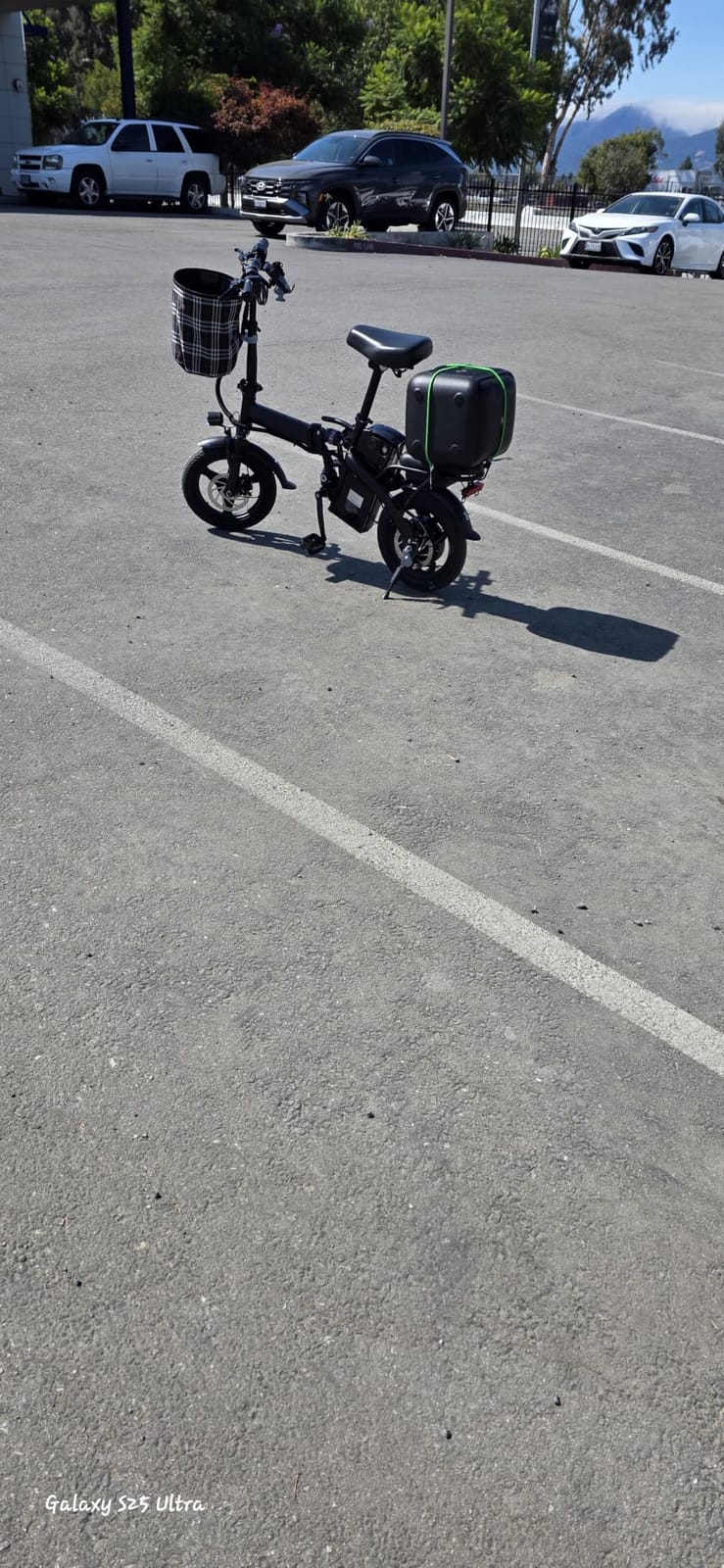
There is one design flaw you should know about before you buy. The entire right-hand grip is the twist throttle, so twisting it for power also takes your right hand off the bar, which makes right-hand turns genuinely harder. That is a handling problem in exactly the environment you bought the bike for: dense city traffic with cars alongside.
Second, there is no safety cut-off. The bike will run if the key is on and the throttle is twisted while it is plugged in, which is a meaningful fire-safety habit to enforce. Third, the controller is limited to 13 amps, so real top speed lands closer to 15.5 mph rather than the listed 24 mph, and pedal-only mode has a single usable gear that caps you around 5 to 6 mph.
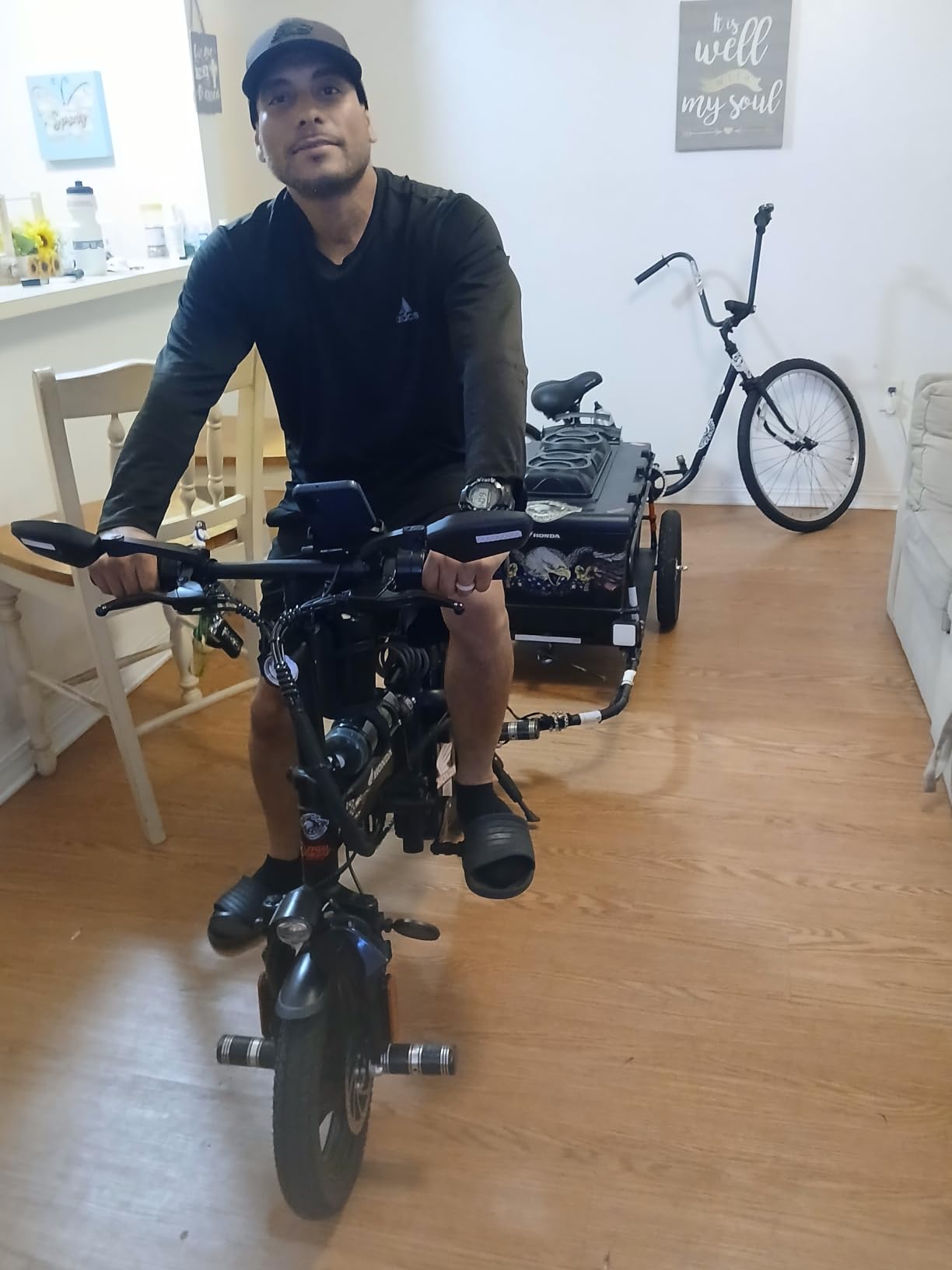
Who this bike suits
It suits shorter riders on short to medium commutes who need a bike that fits in a small flat or rides on a train, and who value the included basket and lights over refined handling. If your commute is under about 8 miles each way and mostly flat, this is enough bike.
It also suits a first e-bike purchase on a tight budget, because the failures reported are consumable and serviceable rather than structural. Budget for replacement tires, a new brake setup and a saddle, and treat the fold as the feature you are really buying.
Who should skip it
Skip it if you are taller than roughly five foot six, because the frame is small and comfort complaints come from exactly that mismatch. Skip it if your route has heavy traffic on the right, given the full-grip throttle. Anyone with stairs should also note the supplied saddle and small rear passenger pegs, which cannot hold a foot and are not a real passenger option.
4. REOCRO RE0-14 – Best for Broken Pavement
Folding Electric Bike for Adults and Teens, 14″ E Bike for Daily Commuting
350W brushless motor with 700W peak
48V 10Ah UL-certified removable battery
Dual suspension plus sprung saddle
Two-point folding frame
Pros
- Dual suspension and sprung saddle smooth out broken sidewalks
- Handles grass gravel and uneven roads better than the class average
- Two fold points at frame and stem
- Customer service sends replacement parts item by item
- Documented multi-day commutes on mostly full electric
Cons
- Saddle clamp will not hold seat height even under the 250 lb limit
- Weak handlebar clip that needs modification to stay locked
- Manufacturer advises against riding in rain
- Battery gauge shows full bars then drops suddenly
This is the bike in the group most suited to a city with bad roads. Suspension at both ends plus a sprung saddle is a combination that is hard to find at this end of the market, and it makes a genuine difference over brick, tram tracks and patched asphalt. Owners also report it handling grass, gravel shoulders and uneven ground better than the weight and price class would suggest.
Range is the other strength. One reviewer documented 30 to 33 km on mostly full electric across two days of commuting, a 7 km each-way route. The battery is UL 2271 and UL 2849 certified with SGS validation, and it is removable. The two fold points, one at the frame and one at the stem, make it genuinely small for a trunk, an office corner or a cupboard.
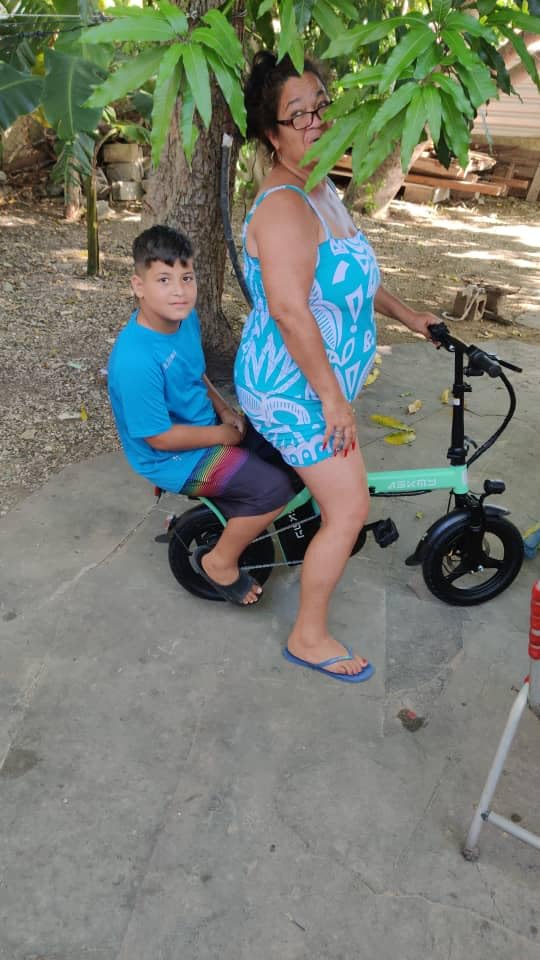
The 543-review pool is one of the larger ones here, and it is where the trouble shows. The one-star complaints cluster on assembly and hardware: a saddle clamp that will not hold the seat at height, a weak handlebar clip that has to be modified, and tires that tend to pop off the rim, with owners advised to deflate slightly after assembly. At roughly 55 lb it is still a heavy bike to carry up stairs despite the fold.
Two further practical notes. The manufacturer advises against riding in rain, which is a real limitation in a city that gets wet nine months a year. And the pedal-assist cadence sensor makes assisted pedalling nearly useless, jumping straight to full assist speed rather than ramping in gradually, which is a comfort and control problem on any ride with a passenger or a heavy bag.
Who this bike suits
It suits riders on genuinely bad infrastructure: uneven sidewalks, gravel turnoffs, park paths and short grass verges. The dual suspension makes a longer daily ride possible for people with a sensitive back or a wrist that dislikes vibration. It also suits anyone whose city is wet and muddy in winter and who accepts the trade of not riding in heavy rain.
Support quality is a real asset here. Buyers describe item-by-item responses and fast replacement parts including a seat shim, which is a service level several better-known brands are slow to match at this end of the market.
Who should skip it
Skip it if you ride in the rain regularly, given the manufacturer guidance, or if you are close to the 250 lb weight limit and need the seat to stay put, because the clamp gives up before the frame does. Riders who want a quiet, predictable assist ramp should also look elsewhere, because the cadence sensor is jumpy.
5. Funhang EB-C1 – Best for Hills
Funhang Electric Bike for Adults, 26″ City Cruiser Ebike with 1000W Peak Motor, 20MPH 50 Miles Commuter Adult Electric Bicycles with 48V Battery, Adjustable Stem, 7-Speed, UL 2849 Certified
500W motor with 1000W peak and 55 Nm torque
374Wh IPX5 removable battery
Step-through frame with adjustable stem
Rear rack and full fenders fitted
Pros
- Only bike here with a published torque figure at 55 Nm
- Step-through frame is genuinely easy to mount
- Rear rack and full fenders make it ready for errands
- Stable at speed with no wobble
- Quiet electric horn pitched to be noticed
Cons
- Supplied stem and inner tubes are questionable quality with a stem failure reported inside two days
- Handlebars loosen when the bike is pushed
- At 61.5 lb it is comfortable to ride and hard to carry
- Tires arrive under-inflated and need a car pump
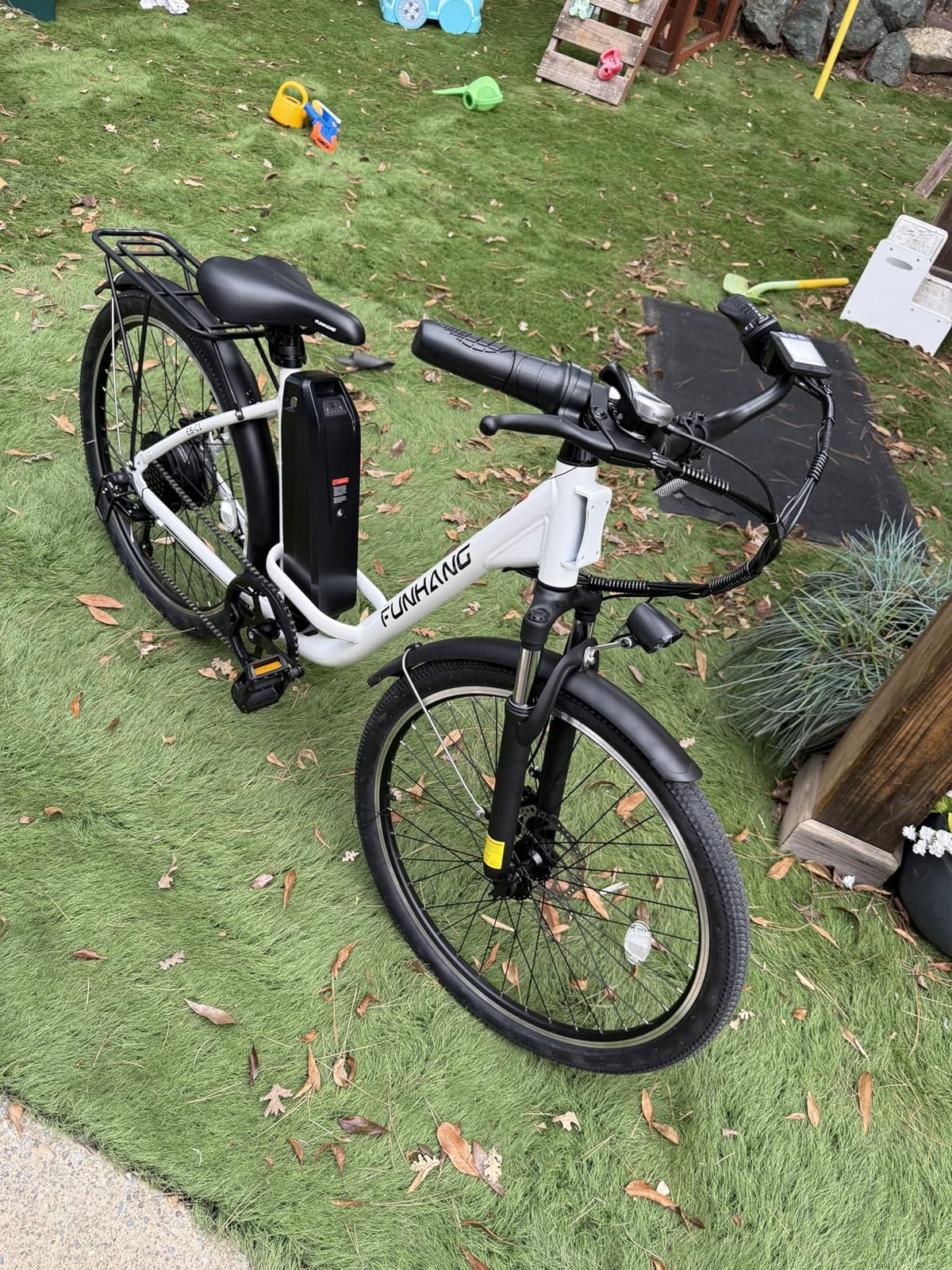
If your city has real elevation, the Funhang EB-C1 is the pick, and the reason is simple: it is the only bike in this roundup that publishes a torque figure. At 55 Nm it has the most pulling power on paper, and owner measurements back it up, with riders clocking 21 mph on the flat and climbing steep hills without complaint.
It is also one of the most complete city packages. A rear cargo rack sturdy enough for groceries or a basket, full fenders, a bright LED headlight, a Shimano 7-speed drivetrain, front suspension and a step-through frame with an adjustable stem. The 374Wh IPX5 battery is removable, and one owner logs 20 mile round trips mostly on full assist. Five riding modes including cruise and booster add flexibility on mixed-effort routes.
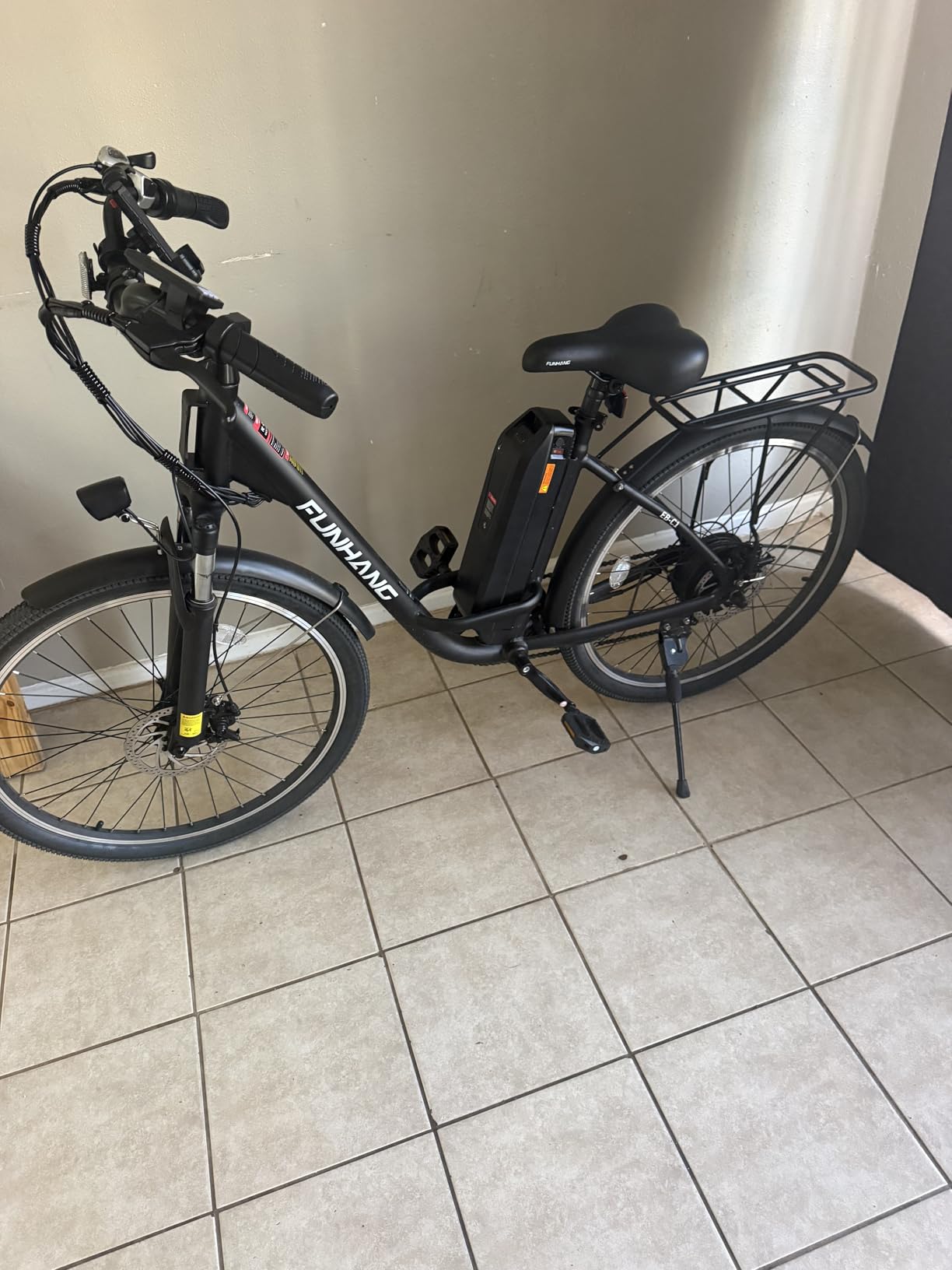
Step-through geometry is worth calling out because it is not a style preference. A 77-year-old rider and a parent with limited mobility are both named in reviews as specific beneficiaries. For an easy mount at a kerb, at a bike rack or in traffic, a low step-through frame removes a real source of falls that a top tube does not.
Its complaints are assembly-adjacent rather than about how it rides. One owner had the stem break within two days, causing a flat, and handlebars loosen with repeated jostling such as pushing the bike. The supplied saddle sits high on an awkward bracket and many owners replace it. The included wrenches do not properly fit the rear wheel bolts, and there are no clear removal instructions.
Who this bike suits
It suits riders on a route with real climbing, older riders, and anyone returning to cycling who wants a low frame to mount. The rack, fenders and lights mean it can leave the rack at home and do errands straight after work, which is where a lot of city e-bike value quietly lives.
It also suits riders who plan to carry passengers or cargo occasionally, because the rack takes the load without affecting handling badly. Check your own weight against the 300 lb recommendation before buying, especially with a second passenger.
Who should skip it
Skip it if you have stairs and no ground-level storage, because 61.5 lb is heavy. Do not ride it straight out of the box without inflating the tires and checking the stem bolts, given the reports. It is also not the bike for you if you want the quietest, smoothest assist, since it offers five levels but no torque sensing.
6. Funhang EB-C2 – Best for Daily Errands
Funhang Electric Bike for Adults, 1000W Peak Ebike, 50Miles Step Thru Electric Bicycle, 26″ Commuter E Bikes with 48V Built-in Removable Battery, Adjustable Stem, 7-Speed, UL 2849 Certified
500W brushless motor with 1000W peak
374Wh IPX5 removable battery with BMS
Full fenders and rear cargo rack
Step-through frame, seven speeds
Pros
- Full-coverage fenders and a solid rear rack as standard
- Step-through frame tuned for upright city riding
- Five ride modes including cruise and booster
- Dual disc brakes and front suspension for rough streets
- Removable battery with BMS charges at home or in the office
Cons
- Written owner feedback was thin on this listing
- Tires arrive under-inflated and need inflating before the first ride
- At 62 lb it is one of the heavier bikes here
- Remaining assembly after 85 percent pre-assembly is required
The EB-C2 is the step-through sibling of the EB-C1 and shares its rating profile with a 4.4 average across 424 reviews. On specification, it is unusually well equipped for a commuter in this roundup: seven-speed derailleur shifting, dual disc brakes, front suspension, full-coverage fenders, a rear cargo rack, five riding modes and a UL 2271 and UL 2849 recognised removable battery with a battery management system.
Those fenders are the reason it earns this slot. Full coverage is what keeps road spray off your legs through a wet winter, and combined with the rack it turns the bike from a commuting tool into a shopping runabout. The claimed 40 to 50 miles on pedal assist and 20 to 30 on throttle is optimistic for a 374Wh pack but reasonable as an upper bound on the lowest assist level.
We want to be straightforward about one thing here. No customer-written reviews or customer images could be retrieved for this specific listing, so the 4.4 rating stands largely on aggregate and specification data rather than on a body of owner accounts. That is a weaker evidence base than the other bikes in this roundup, and we would rather say so than fill the gap with enthusiasm.
What is verifiable is the specification, and it is strong. The 300 lb weight recommendation, the recommended rider height of 5 foot 3 to 6 foot 1, the IPX5 battery rating and the five assist levels are all documented. Plan for the tires arriving under-inflated and for the final stage of assembly after the 85 percent pre-build.
Who this bike suits
It suits riders who want one bike to do the commute and the shopping, in a city with rain and rough streets. The fenders and rack combination is the single most commuter-specific feature set in this roundup, and the step-through frame makes frequent stops easy.
It also suits anyone who charges at a desk and values the battery management system, since the pack is removable and protected. Riders buying a second bike for errands will find this package hard to argue with.
Who should skip it
Skip it if you want the reassurance of thousands of written owner reports, because that evidence is thin here. Skip it if you have stairs, at 62 lb. Anyone taller than about six foot one, or shorter than five foot three, should check fit carefully given the stated height range.
7. TotGuard W-206-UL – Best for Mixed Surfaces
TotGuard Electric Bike,20″ Electric Bike for Adults 500W Brushless Motor, 19.8MPH Fat Tire Ebike,Foldable Adult Electric Bicycles with 48V 10Ah Removable Battery,7-Speed
500W brushless motor with 19.8 mph top speed
20 by 4.0 inch fat tires and dual shocks
48V 10Ah removable lockable battery
Aluminum folding frame
Pros
- Fat tires and dual shocks handle grass sand gravel and curbs
- Climbs steep hills with a 245 lb rider
- Lockable removable 480Wh battery with a 5 to 6 hour charge
- One rider logged 60 miles on a single charge
- Folds small enough for an SUV without removing wheels
Cons
- Throttle power is tied to the pedal-assist level so there is no throttle-only power
- Pedal assist does not cut instantly when you brake
- Heavy and awkward to carry when folded
- Weak brake pads and no tail light included
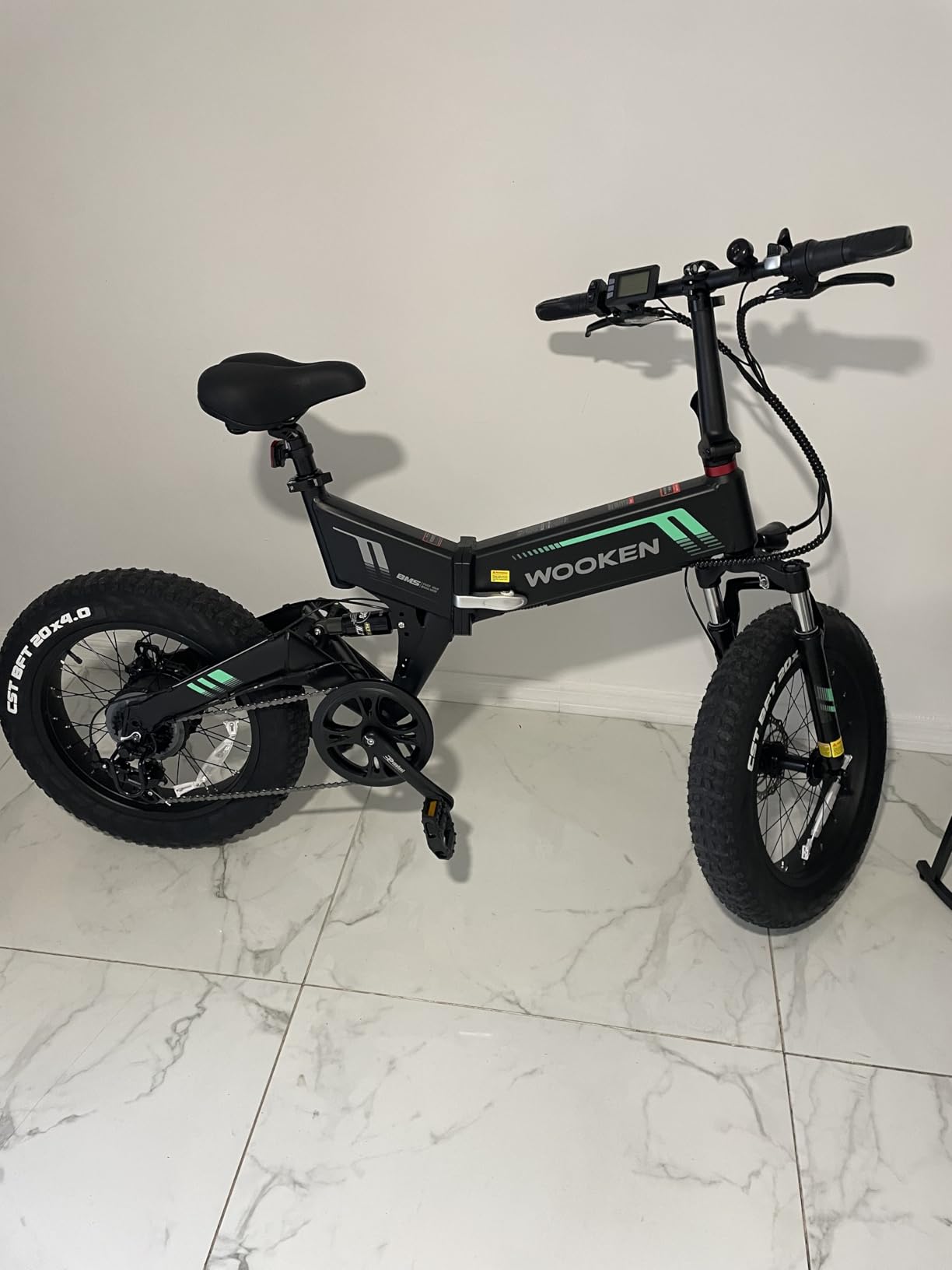
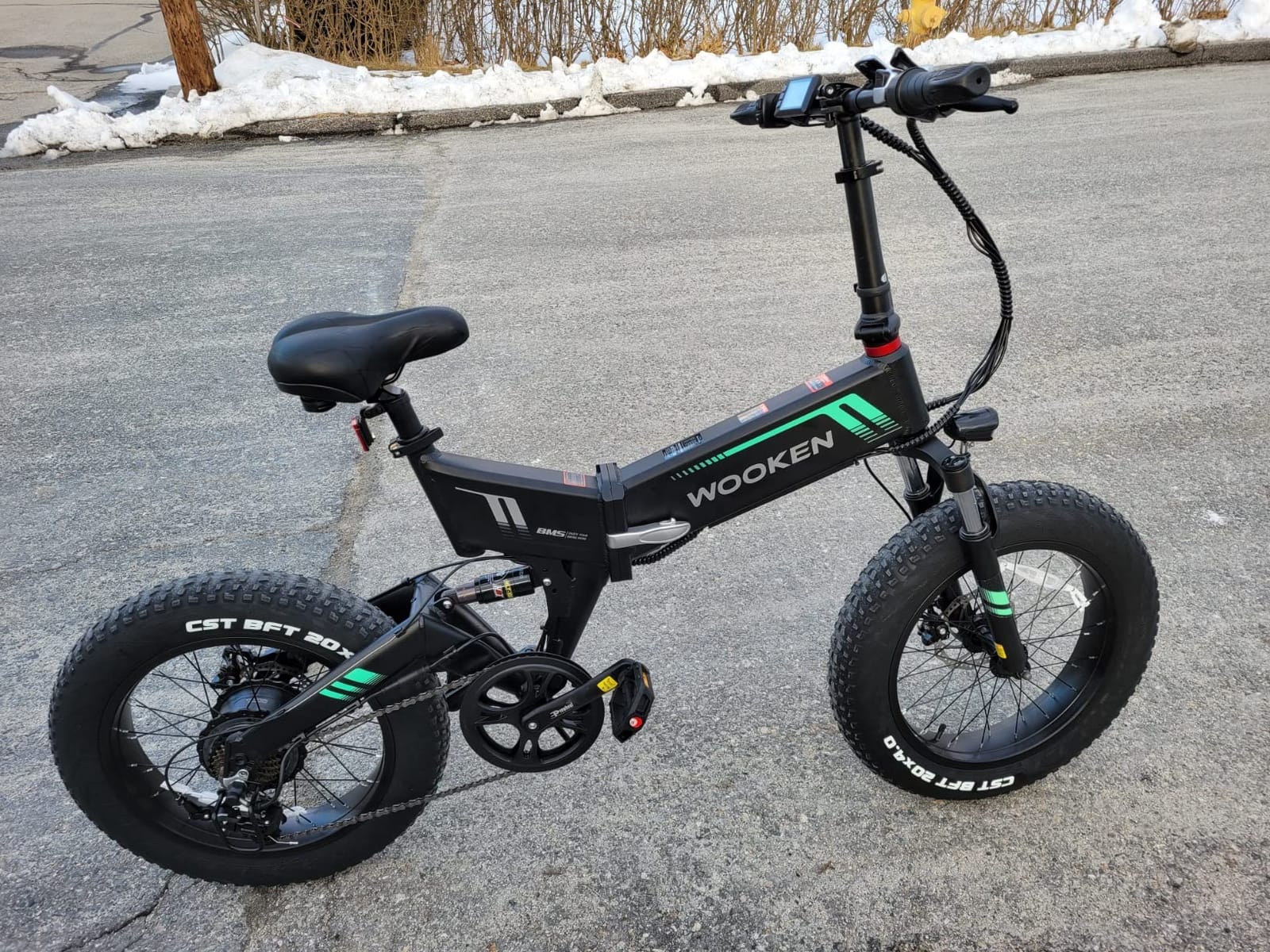
Some city commutes are not made of tarmac. If your route involves park paths, gravel shoulders, grass verges or a trail connection, fat tires change the ride more than any other single feature. The TotGuard pairs 20 by 4.0 inch tires with dual shock absorbers at the fork and the seat, and riders describe it as unusually comfortable over surfaces that would stop lighter commuters.
The motor climbs well on paper, rated to a 15-degree maximum slope, with one owner reporting it takes steep hills with a 245 lb rider aboard. Battery endurance is a genuine highlight, with one rider logging 60 miles on a single charge and another getting over an hour on full electric. The 480Wh pack is removable and lockable, which is the strongest anti-theft feature in this group.
The control design is where it loses points, and the issues are real. The throttle power is linked to the pedal-assist level, so you must enable assist to use the throttle and cannot get throttle-only power. Pedal assist does not cut instantly when you brake, which on loose gravel or a wet kerb is uncomfortable. The keyhole sits under the bike in the battery, so the key dangles while you ride.
At 62 lb folded it is not the transit-friendly folder the frame shape suggests. Owners are clear that the fold works for an SUV or a RAV4 trunk, not for a bus or a train, and the wide tires take up the space that made it seem compact. Brake pads are weak and are the first upgrade most owners make, and there is no tail light included, which matters for a bike you may ride at dusk.
Who this bike suits
It suits riders whose commute touches dirt at some point, riders on rough rural or suburban routes, and anyone who wants the lockable battery. Fat tires also add comfort and grip in winter rain, so it does double duty for a city that gets wet and cold.
Long-distance riders will like the battery endurance. The one-year parts warranty with lifetime technical support is also more generous than several rivals in this roundup, and the aluminum alloy frame feels durable for the class.
Who should skip it
Skip it if your commute is smooth city tarmac, because you will carry dead weight and rolling resistance for nothing. Definitely skip it if you need to take the bike on a train or bus, at 62 lb folded. Riders who want predictable, independent throttle control should look at a different design.
8. Gotrax Dolphin – Best for Easy Mounting
Gotrax Dolphin 26″ Step -Thru Electric Bike for Adults, Max 30 Mile & 20Mph
350W rated motor with 500W peak
280.8Wh removable battery,5.5 hour charge
Step-through aluminum and ABS frame
Shimano 7-speed system
Pros
- Step-through frame with height-adjustable seat for easy mounting
- Shimano 7-speed is a real step up from cheaper derailleur kits
- Dual disc brakes and front shock absorbers
- Console and bell fitted as standard with most assembly done
- UL 2849 certified with 365-day parts assurance
Cons
- Written owner feedback was thin on this listing
- 280.8Wh is a small battery that caps pure-electric range near 15.5 miles
- At 49 lb it is still a full-size 26 inch bike and does not fold
- 350W rated motor is modest against rivals at 500W to 1000W peak
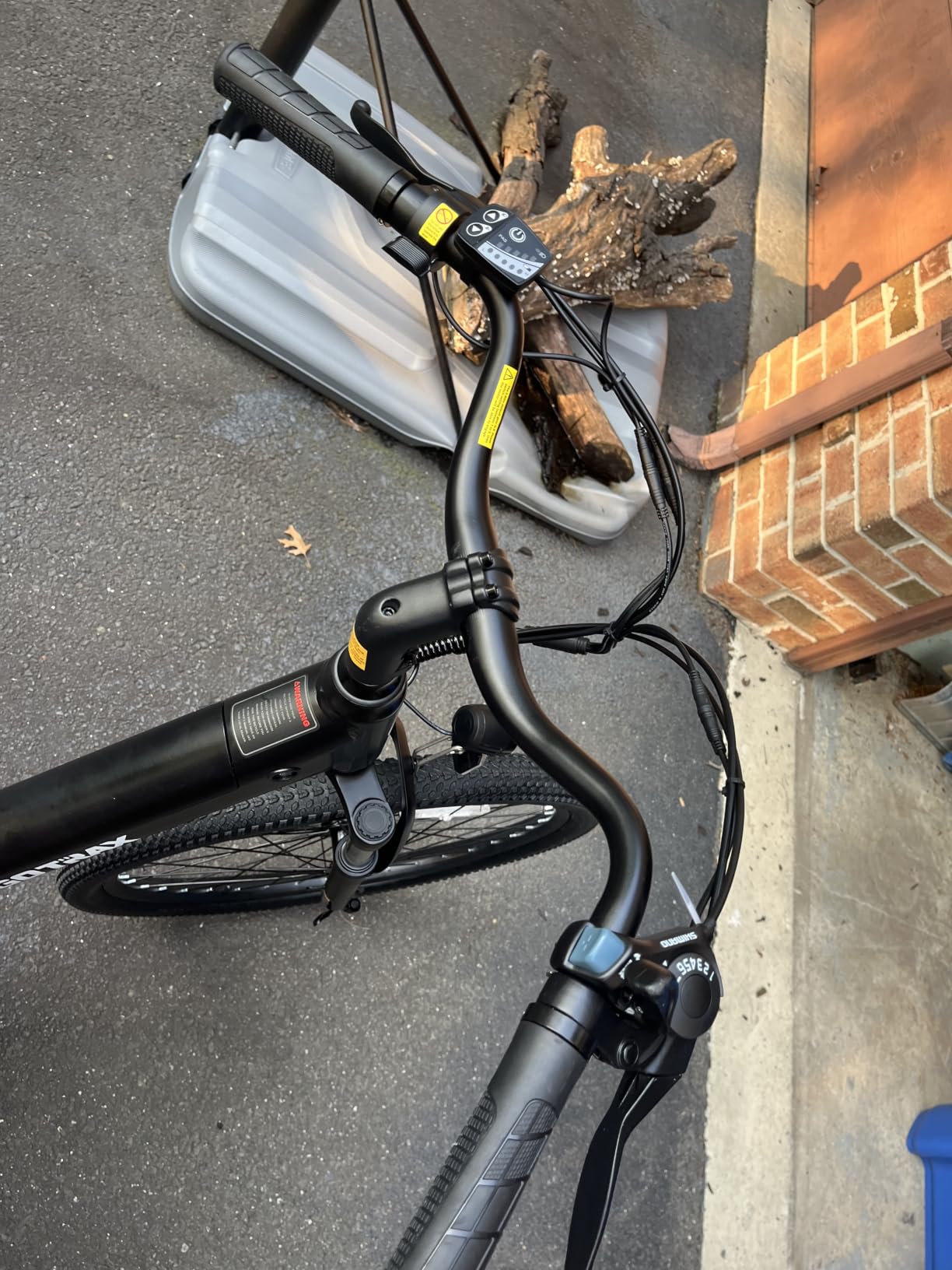
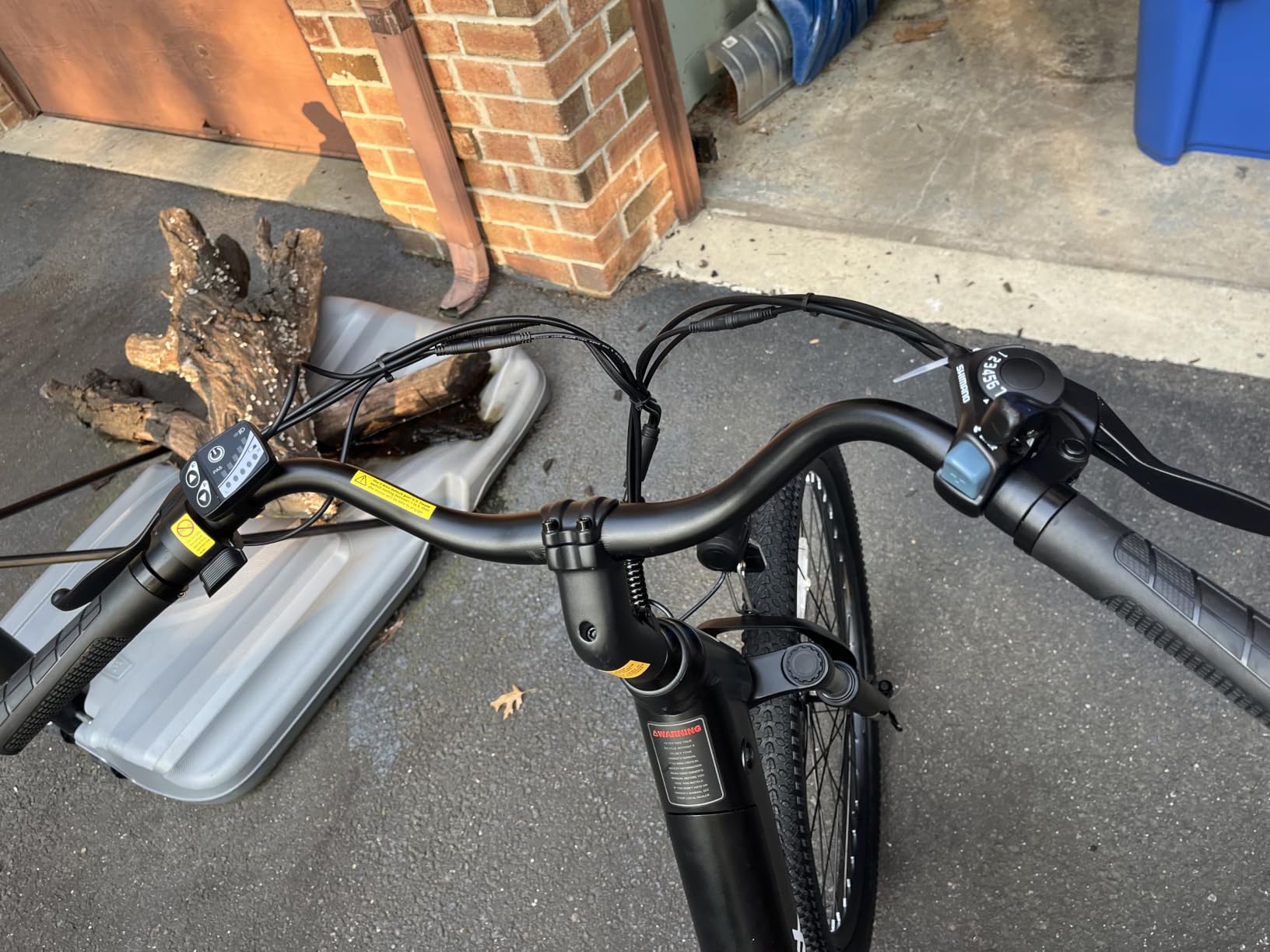
The Gotrax Dolphin pairs one of the more mechanically mature specifications in the roundup. A Shimano 7-speed system is a real step up from the generic derailleur kits on cheaper commuter e-bikes, and it is paired with dual disc brakes, front shock absorbers and a step-through aluminum and ABS frame with a height-adjustable seat and ergonomic handlebars.
Its 287-review average of 4.3 comes with a 73 percent five-star share, which is a healthy profile. Three riding modes, five pedal-assist levels and a boost mode at 3.7 mph that takes the strain off when you are pushing the bike uphill are all useful city features. A console and bell come fitted, most assembly is already done, and there is a 365-day parts assurance behind it.
The 280.8Wh battery is on the small side for this group, and that has a direct consequence: 15.5 miles on pure electric, and only a bit over 30 miles on pedal assist, with a 5.5 hour charge from empty. That is fine for an 8 mile round trip in fair weather and frustrating for anything longer, especially in winter when usable capacity drops.
As with the Funhang EB-C2, no customer-written review text could be retrieved for this listing, so the picture leans on specifications and the aggregate score rather than a body of owner accounts. At 49 lb it is light for a full-size 26 inch bike, but it does not fold, so it is not a solution for stairs or small storage.
Who this bike suits
It suits older riders, riders returning to cycling, and anyone who values predictable mechanical parts over raw power. The Shimano drivetrain is a long-term advantage because those components are stocked everywhere, unlike proprietary parts. Boost mode and the low frame make it a good car-free errand bike, and the sizing logic carries over from our best balance bikes guide for anyone fitting a younger rider to a first bike.
It also suits riders with a modest commute on a moderate budget who would rather own fewer proprietary systems. Just plan charging around the small pack, or treat the battery as a two-day pack and charge overnight.
Who should skip it
Skip it if your round trip is over about 10 miles or if you ride in cold months, because the small pack will not absorb either. The 350W rated motor will feel slow on a steep hill with a passenger. And with a 264 lb weight limit, heavier riders should check carefully before committing.
9. Gotrax R1 – Best for Apartment Living and Multi-Modal Commutes
Gotrax R1 20″ Folding Electric Bike with 40 Miles (Pedal-assist1) by 48V Battery, 20Mph Power by 350W, Weighs Only 45lbs, LCD Display & 5 Pedal-Assist Levels, Suitable for Leisure Riding&Commuting WHI
45 lb aluminum folding frame
374Wh battery,5.5 hour charge
Folds to 37.4 by 17.7 by 27.5 inches
Dual disc brakes, three riding modes
Pros
- One of the lighter complete bikes here at 45 lb with a documented folded size
- Documented to fit car trunks and subway luggage areas
- 374Wh battery gives about 15.5 miles electric and 25 on assist
- Wide 20 by 2.6 inch tires work on park and beach paths
- UL 2849 certified with 365-day parts support
Cons
- Rigid frame with no suspension
- 5 speeds is few for a bike used on hills as well as flat
- Rear reflector rather than a proper tail light
- 180-day warranty is short relative to rivals
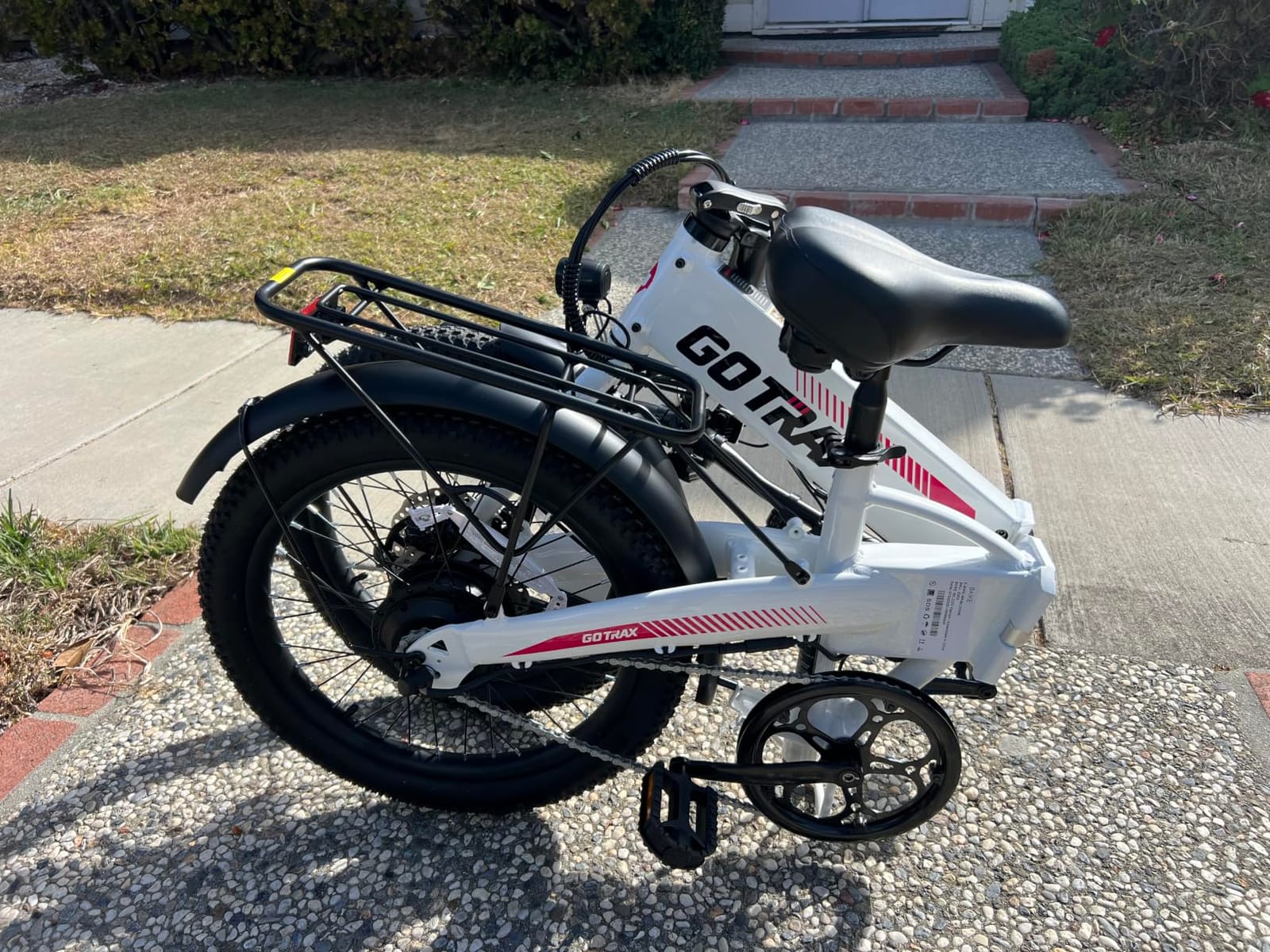
The Gotrax R1 solves the problem that stops most people buying an e-bike: where does it live? At 45 lb it is among the lighter complete bikes here, and its folded size of 37.4 by 17.7 by 27.5 inches is documented by owners as fitting car trunks and subway luggage areas. For a rider who combines bike and train or ferry, that is the difference between commuting and not.
The 613-review pool at a 4.3 average makes this one of the better-evidenced bikes here, with a 69 percent five-star share. Range is realistic rather than inflated: about 15.5 miles on pure electric and 25 miles on pedal assist from the 374Wh pack, with a 5.5 hour charge. Dual disc brakes, a smart display with key ride data, three riding modes, a bell, an LED headlight and 365-day parts support round out the package.
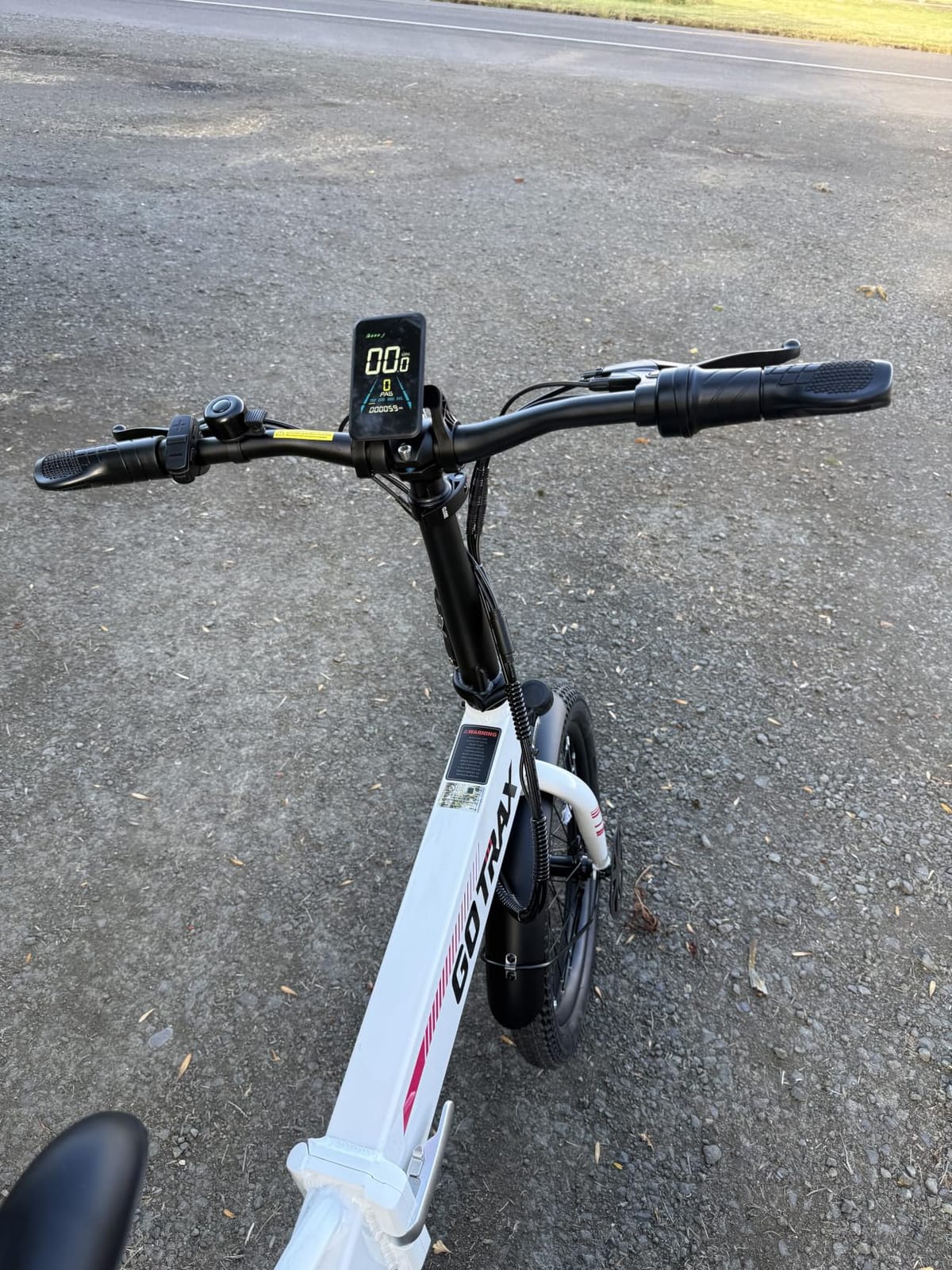
The compromises are the ones a rigid folder has to make. There is no suspension at all, which is felt immediately on tram rails and brick. Only 5 speeds, which is few for a bike that will be used on hills as well as flat, means more gear changes and a less efficient cadence. And the rear light is a reflector rather than an illuminated unit, which is a real limitation in autumn and winter darkness.
Power is modest for the money: 500W peak with a 350W rated motor, against bikes in this roundup that peak at 1000W or 1200W. On flat city streets that is fine. On a sustained climb with a passenger it is not. The 180-day warranty is also among the shortest here, though Gotrax separately advertises 365-day parts support and 24/7 assistance.
Who this bike suits
It suits apartment dwellers with no garage, stair-free storage constraints, and anyone taking a train, bus or ferry for part of the journey. At 45 lb it is manageable enough to carry up a single flight, which is more than you can say for the heavier bikes here, and the wide tires extend the route options to park paths and beach boardwalks.
It also suits riders on short commutes who want the simplest possible transport object. If your trip is under about six miles each way on smooth roads, the R1 does that job with very little fuss.
Who should skip it
Skip it if your route is rough, because the rigid frame will transmit every pothole directly to you. Skip it for hills or cargo work, because 5 speeds and a 350W rated motor are not the combination for that. If you ride after dark regularly, add a proper tail light before your first night commute.
10. LELEKUAI T1 20 MPH – Best for Very Short Trips
Electric Bike for Adults and Teens, Folding Ebike,Commuter City Foldable E Bike with 560W Motor and 48V 10Ah Battery, 20 MPH Speed Pedals Assist, Dual Disc Brakes,14″ Compact Electric Bicycle
560W high-torque motor with 20 mph top speed
480Wh removable waterproof battery
Quick-folding 14 inch carbon steel frame
Dual disc brakes and UL 2849 certification
Pros
- Genuinely quick acceleration for a small-wheel bike
- Folds down small enough for a trunk or public transit
- Removable 48V 10Ah battery that detaches for indoor charging
- Dual disc brakes give real stopping power
- Digital display with adjustable handlebars and seat
Cons
- Thin tires puncture within weeks for several owners
- Saddle and seat post do not stay tight
- Handlebar clamp loosens quickly and the bar will not stay straight
- Range falls well short of the advertised figure in real use
We are including this one because for a very specific rider it is the right answer. If your commute is under four miles each way, you have no storage at all, and you want something that fits in a car boot permanently, a 20 mph 14 inch folder does that better than anything else in this list. The fold is quick, the battery comes out, and the 20 mph cap keeps it inside Class 2 rules.
The 480Wh pack is UL 2849 certified and described as waterproof, and the 560W motor delivers acceleration owners describe as genuinely quick. Dual disc brakes are a real upgrade over the rim brakes common in this class, and the digital display plus adjustable bar and seat make it easy to fit to different riders.
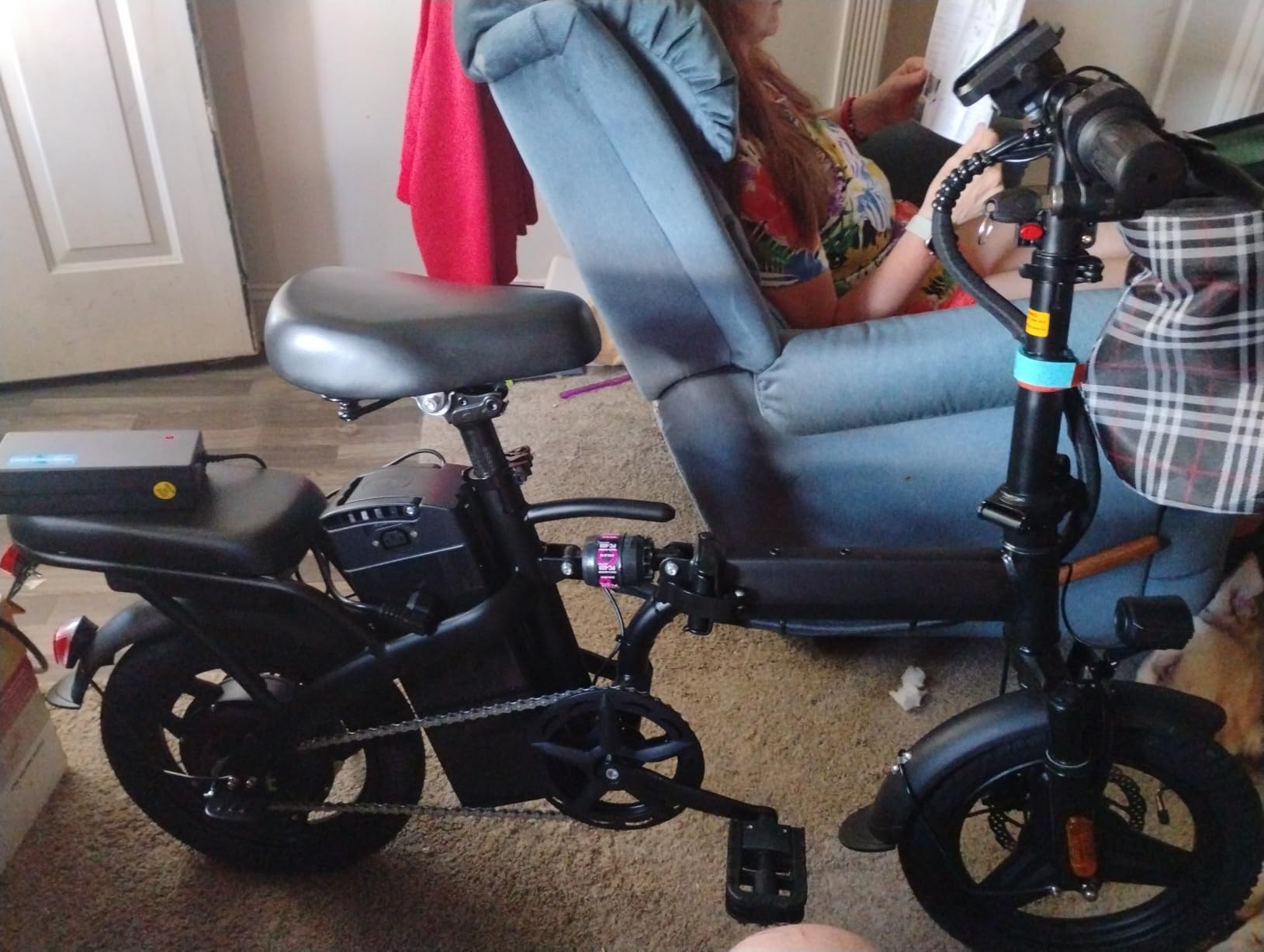
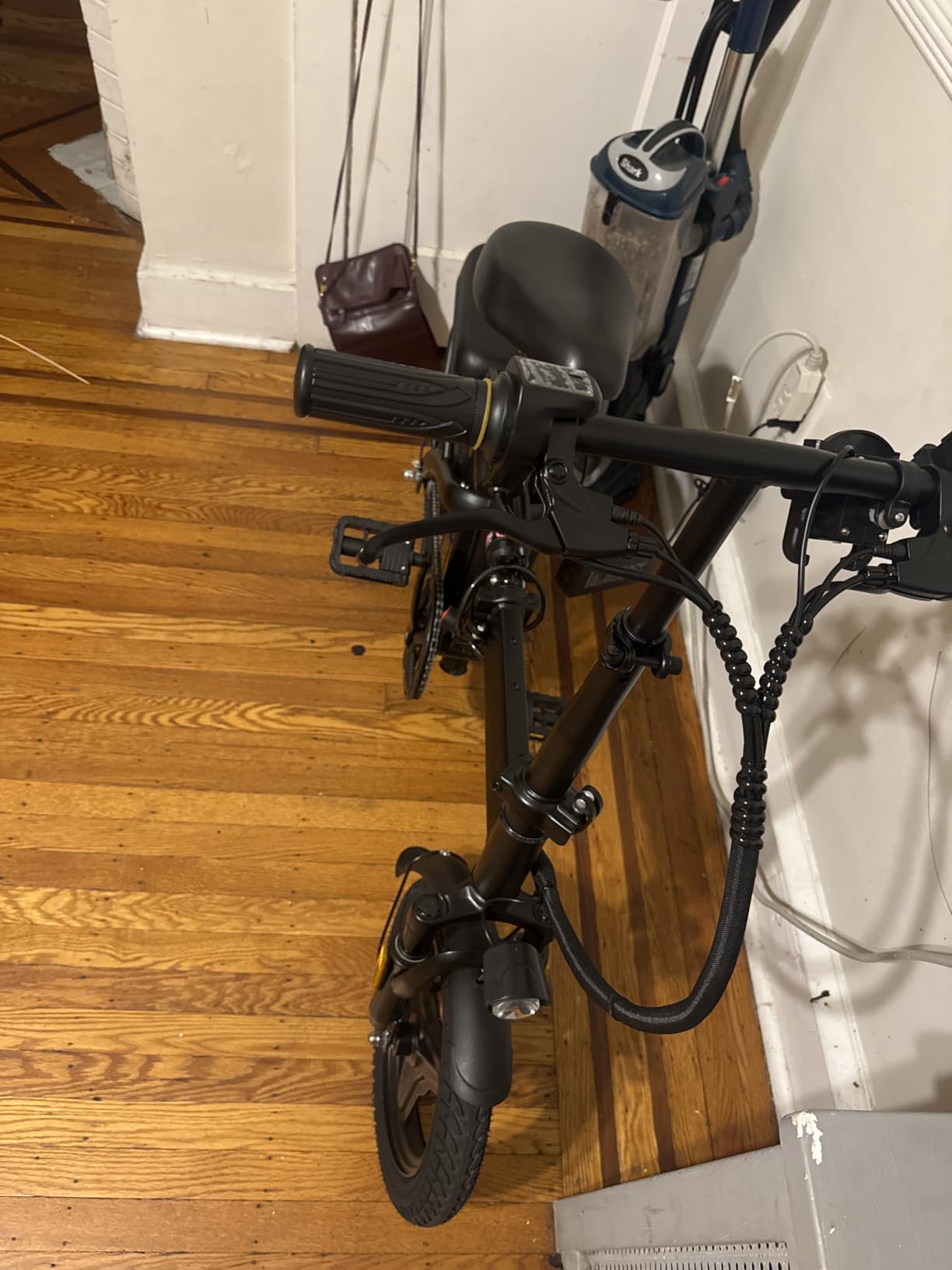
The durability record is the problem, and it is a consistent one. Stock tires are thin and not durable, with multiple owners reporting punctures within weeks including a blowout on a commute route. The saddle and seat post do not stay tight, and one reviewer had to replace the seat out of the box. The handlebar clamp loosens quickly so the bar will not stay straight, which is a safety concern rather than an annoyance.
Range also misses the advertised figure badly. The listing claims 32 miles, and one owner reported under 7 miles in real use. There is also an undisclosed weight limit of roughly 260 lb that riders only discovered by trial, and reports of brake noise and intermittent brake function within weeks of riding.
Who this bike suits
It suits a short-distance rider on a tight budget who needs genuine portability more than durability. If the bike lives in a hallway, a locker or a car boot, and the trips are a few miles of flat city streets, the fold and the removable battery are worth the compromises.
It also suits anyone who cycles only in dry weather and can live with replacing tires. Budget for a set of better tires, a seat post clamp and a handlebar check before the first long ride.
Who should skip it
Skip it if you ride in rain, if you are near or above the unstated weight limit, or if you need a bike you can leave at a rack for weeks. Anyone who values predictable long-term hardware should pick the Gotrax R1 instead, which is lighter but far less maintenance-hungry. Above all, check the handlebar clamp before every ride.
How to Choose a Commuter E-Bike: The Seven Things That Actually Matter
Motor placement decides how a bike feels more than any other spec. A mid-drive motor sits at the bottom bracket and drives the chainring, so it feels like very strong legs and frees the rear wheel for carrying weight. A rear hub motor sits in the wheel and drives it directly, which is heavier, cheaper and freewheels when you ride without assist. Nearly every bike in this roundup uses a rear hub motor, and for short, flat city trips that is a defensible choice, but if your route has sustained climbs you will feel the difference.
Torque versus watts is the second thing. Watts measure peak power, which matters for acceleration. Newton meters measure rotational force, which is what actually gets you up a ramp. A 1000W peak motor with modest torque can still feel weak on a hill with a heavy rider and a full rack. Where manufacturers publish torque, as the Funhang EB-C1 does at 55 Nm, it is the number to compare.
Assist sensing splits into two camps. A cadence sensor measures how fast you are pedalling and applies a fixed amount of power, which is cheap and simple but tends to jump straight to full assist on the first pedal stroke. A torque sensor measures how hard you are pushing and ramps the power proportionally, which feels far more natural and is the feature experienced riders most often say is worth paying for.
Battery capacity is the number that decides whether a commute feels relaxed or tiring, and the working method is simple. Watt-hours are the total energy in the pack. Divide that by the average watts the bike draws at your usual assist level and you get roughly the miles you will cover. A rider cruising at level 1 on a flat route draws far less than the same rider on level 4 up a hill, which is why two bikes with identical packs can behave completely differently on your particular street.
Match the pack to the trip, and add margin for reality. Under 5 miles round trip needs roughly 250 to 350Wh. Between 5 and 10 miles, 350 to 500Wh. Between 10 and 20 miles, 500 to 700Wh, and in a city with winter cold you want the upper end. Beyond 20 miles round trip, look for 700Wh or more, or plan to charge at work. These are the tiers most city riders actually need, and most of the bikes in this roundup sit in the middle two.
Legal class is a non-negotiable check. Class 1 stops at 20 mph and has no throttle. Class 2 stops at 20 mph and allows a throttle that works up to that speed. Class 3 runs to 28 mph and is restricted in many cities, with class requirements varying by state. Every bike here is a Class 2 machine capped at 20 mph, which keeps it inside standard bike-lane rules without registration. Several listings advertise headline figures above 20 mph; treat those as throttle or downhill potential, not as your legal assist speed.
Weight is the spec buyers ignore and then regret. Most of these bikes weigh between 45 and 62 lb. If you have any stairs, an elevator-free building, or a train leg, anything above 50 lb becomes a daily problem and you should be looking at the Gotrax R1 and the folding options specifically. Buyers with a step-through preference and stairs have the hardest combination to satisfy.
Certification is a safety question rather than a marketing one. UL 2849 certifies the whole electrical system, and UL 2271 certifies the battery cell and pack. A listing that simply says certified with no standard named is not the same claim, and several brands here name the standard and the validating body, which is the level of detail to look for.
Fenders, rack and lights are not accessories on a commuter, they are the bike. Full-coverage fenders keep winter road spray off your legs. A rear rack carries the laptop, the bag and the shopping. Integrated lights running off the main battery mean you never charge a separate light. If a bike does not have all three, plan to add them and confirm the mounts exist before you order.
Finally, think about how you will service this thing in year four. Standard drivetrain parts, conventional brake components and a battery you can replace are what keep a bike alive. A proprietary battery connector with no spare available is a genuine long-term risk, and a local shop that will not touch brands it does not sell is a real and common experience reported by commuters.
Securing Your Commuter E-Bike: Anti-Theft and Storage
Nobody publishes this section, which is strange, because theft is the number one emotional blocker for city e-bike buyers. A commuter e-bike is a more attractive target than a normal bike for one reason: the resale value of the battery alone dwarfs the value of the frame, and thieves go straight for it.
The first decision is the cheapest one. A bike that looks cheap and inconspicuous is stolen less often than a bright, branded, obviously expensive machine. Commuter riders report this advice consistently, and it is a legitimate strategy: a modest commuter e-bike with a plain frame, no branding and no accessories is a lower-value target than a flagship model parked on the same rack.
Second, use the battery as the theft control. Every battery here is removable, which is the single most useful anti-theft feature on a commuter e-bike. Carrying the pack inside removes the highest-value component and makes the remaining bike ordinary. Make removing it a habit rather than an intention, and keep the key with you rather than in the bike.
Third, lock the frame twice. A single U-lock through the frame and a rear wheel is defeated in seconds by a determined thief. A U-lock through the frame and a cable or second lock through the front wheel and into a fixed rail is what makes a bike a poor use of time. Lock to an immovable object, always, and never to a signpost on its own.
Fourth, buy a tracker. A small Bluetooth or GPS tag in the bike or the battery gives you a chance of recovery and raises the effort required. Several bikes here include a lock as standard, and the TotGuard goes further with a lockable battery that immobilises the pack itself, which is the closest thing to a real anti-theft system in this roundup.
Fifth, plan where the bike lives. Most theft happens not at home but at work, at a station or at a university. A folding bike removes the temptation and the value in one move, because a bike you can carry with you is a bike that never sits unattended. That is a large part of why the 45 lb Gotrax R1 earns its place on a commuter list.
Charging logistics belong in the same conversation. An office with no outlet means a battery you cannot top up, which is why a removable pack is worth more than a larger sealed one. If you cannot charge at work, size the battery for a full round trip on one charge with a 20 percent margin, and do not plan on a lunchtime extension in winter.
E-Bikes and Brands to Stay Away From
Some e-bikes are not worth your money regardless of the specification sheet. Riders on commuter forums are unusually direct about this, and the recurring complaints are consistent enough to act on.
First, any bike that arrives without rack mounts, fender mounts or a removable battery, because retro-fitting those three things to a frame that was not designed for them is often impossible or unsafe.
Second, anything with a non-removable battery if you live in an apartment. This is not a preference. A sealed pack has to live indoors in cold and heat, and if the frame is in a hallway and the pack is not, you have either a fire-safety problem or a permanently locked-in battery.
Third, bikes over about 85 lb if you have stairs. That is the threshold most riders cite, and it is a practical one rather than a comfort preference, because a bike that cannot be moved up a staircase becomes a bike that does not get ridden.
Fourth, unknown brands with no support footprint and a short warranty. A 90-day warranty, which some budget folders in this roundup carry, is not enough to cover the failure that matters: a component becoming unobtainable two years in. The forum consensus is clear that a wide support network and being legal everywhere often matter more than raw specifications.
Fifth, uncertified battery packs. The UL 2849 and UL 2271 standards exist because of fires, and a listing that claims certification without naming a standard is not making the same claim. If you cannot find the certification number, treat that as a red flag rather than a detail.
Sixth, Class 3-only models if your city restricts them. A 28 mph bike is not a faster commuter, it is a different legal category, and several riders report buying one only to find it restricted on their local bike network.
Seventh, and most important: do not buy a cheap marketplace e-bike expecting it to last. The most repeated warning from riders is against buying a very cheap e-bike with the mindset that failing in six months is acceptable. The failure usually shows up as a loosening handlebar clamp, a dead battery or a brake that stops working properly, and none of those are safe to live with.
Red flags to check before you pay, in order: ask for the UL certification standard by name, ask what the total bike weight is in pounds, ask whether the battery is removable and keyed, ask whether rack and fender mounts are present, ask for the torque figure, and ask whether a spare battery is sold. A seller who cannot answer those six questions is telling you something.
Frequently Asked Questions
Which electric bike is best for daily commute?
For most city riders the Heybike Cityscape 2.0 is the best commuter e-bike for a daily commute, because the rear rack and full lighting are fitted from the factory, the 468Wh battery is removable and weather-rated, and the 662-review owner record is deep enough to be reliable. Riders on a hilly route should choose the Funhang EB-C1, which has the strongest published torque figure in its class.
What is the best mid-drive commuter e-bike?
None of the ten bikes in this roundup use a mid-drive motor, because mid-drives push the price of a complete commuter e-bike well beyond this roundup. Mid-drives are the right answer for sustained hills and heavy payloads. If your route is flat to moderate and you are buying at this level, a rear hub motor with a removable battery is a defensible choice.
Is 750W better than 500W?
Watts measure peak power, which affects acceleration, not climbing ability. For city riding, torque in newton meters and battery capacity in watt-hours matter far more than a headline wattage number. A 500W motor with 55 Nm of torque will out-climb a 1000W peak motor with less torque on a ramp, especially with a passenger or a loaded rack.
How do I determine ebike range?
Divide the battery watt-hours by the average watts you actually draw. Under 5 miles round trip needs roughly 250 to 350Wh, 5 to 10 miles needs 350 to 500Wh, 10 to 20 miles needs 500 to 700Wh, and beyond 20 miles you want 700Wh or a plan to charge at work. Add margin for cold weather, hills, headwind and a heavier rider.
Which electric bike has the best anti-theft system?
No bike in this roundup has GPS or geofencing, so the practical answer is hardware you already own. The TotGuard W-206-UL has a lockable removable battery, which immobilises the highest-value component. Beyond that, remove the battery and take it indoors, use two locks on the frame and both wheels, and add a tracker tag.
Are cheap marketplace e-bikes worth it?
They can work for short flat trips, and several bikes here do thousands of miles of commuting. The risk is not performance but hardware failure: loosening handlebar clamps, saddles that will not hold height, brakes that degrade within weeks and batteries that miss their claimed range. Buy only with the expectation that you will replace tires, pads and possibly the battery, and check the warranty length first.
Can I take an e-bike on a train?
Rules vary by operator, but most systems permit e-bikes that fold and cap assisted speed at 20 mph. The Gotrax R1 folds to 37.4 by 17.7 by 27.5 inches at 45 lb, which is the documented, manageable package in this roundup. The heavier folding bikes here are practical for car trunks but not for a train luggage rack.
How heavy should a commuter e-bike be?
For a rider with no stairs, 55 to 65 lb is normal and manageable. If you have stairs, a landing without storage or a train leg, treat 45 lb as your ceiling and look only at folding frames. Forum riders generally treat 85 lb as the point at which a bike stops being commutable rather than merely heavy.
Conclusion: The Best Commuter E-Bikes for City Riding
Our default recommendation for the best commuter e bikes for city riding is the Heybike Cityscape 2.0. It is the most complete package here: rack fitted, lights fitted, 26 inch wheels that roll over bad pavement, a removable 468Wh battery that charges at a desk, and a 662-review owner record that supports the 4.4 average. Spend an afternoon on assembly, fit better brake pads, and it is a bike most people will ride every day for years.
Buy the Funhang EB-C1 instead if your route climbs, the Gotrax R1 if you have stairs or a train leg, the Jasion EB5 if you want the deepest long-term evidence and do your own basic maintenance, or the TotGuard W-206-UL if your commute touches dirt and the lockable battery matters more to you than low weight.
Whatever you choose, check the six questions we listed before you pay: certification standard, total weight, removable battery, rack and fender mounts, torque figure and spare battery availability. This roundup is updated for 2026, and the buy buttons above are affiliate links, so we may earn a commission at no added cost to you.