
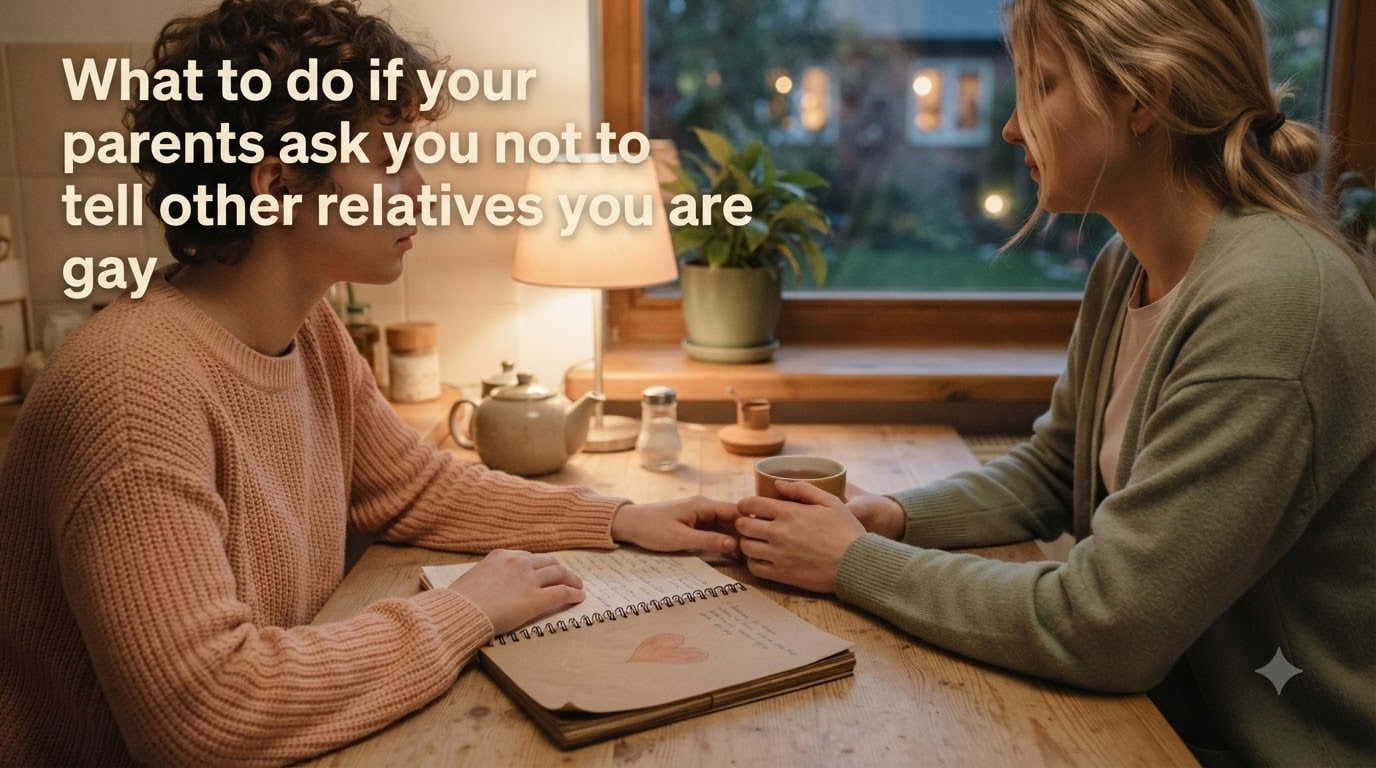
Finding out what to do if your parents ask you not to tell other relatives you are gay can feel overwhelming. I have talked with friends, counselors, and forum members across Reddit’s r/LGBTeens and r/lgbt communities, and one thing comes up again and again: this request hurts, and it leaves people unsure whether to obey, push back, or quietly come out on their own terms.
This guide is built from real experiences and real advice from LGBTQ organizations. You will learn why parents sometimes make this request, how to decide what feels right for you, and exactly how to talk with parents when you disagree. You will also find scripts, boundary ideas, and warm lines you can call tonight if the conversation has already happened.
Table of Contents
Understanding Why Your Parents Ask You to Keep Your Sexuality Secret From Relatives
Parents usually ask for secrecy about your sexuality for one of a few common reasons, and most of those reasons have very little to do with how they actually feel about you.
Sometimes it comes from embarrassment. They worry about how grandparents, aunts, uncles, or cousins might react, and they picture an awkward holiday dinner. Other times it is fear, often tied to religion or cultural expectations they absorbed growing up themselves. And sometimes it is simply unfamiliarity. Your parents may never have had a close LGBTQ person in their circle and genuinely do not know how relatives will respond.
None of this excuses the request, but understanding the source of it helps you decide how to respond. I have seen parents in queer forums say that once their child calmly walked them through what they were afraid of, the secrecy demand softened. Knowing the root motivation gives you a starting point for the conversation.
Your Feelings and Rights Matter When Parents Ask You to Hide Your Identity
Your feelings about being asked to stay closeted to extended family are completely valid. Hiding a core part of yourself around people you see at birthdays, weddings, and holidays takes a real emotional toll.
You do not owe any family member, including parents, a promise to hide your identity. Many LGBTQ advocates, including the Human Rights Campaign and PFLAG, name this clearly: telling or not telling other relatives is your decision, not your parents’ decision. If you are an adult, your coming out timeline belongs to you. If you are a minor, your safety comes first, and disclosure timing should factor in housing stability, financial dependence, and any history of abuse.
Being forced to pretend around relatives can lead to anxiety, isolation, and what therapists call minority stress. You are allowed to want to live openly. That is not rebellion. That is honesty.
Questions to Ask Yourself Before Deciding Whether to Tell Relatives
Before you decide whether to respect your parents’ request or move forward on your own, a few honest questions can help. I keep a list of these on a note in my phone, and they have helped me and several friends make clearer calls.
Am I a safe, supported adult, or am I dependent on my parents right now?
Have I already been outed to specific relatives, or am I starting from a fully private place?
Which relatives do I actually want to tell, and why?
Is there anyone in the family I already trust with this information?
What is the worst realistic outcome, and could I handle it?
Would keeping this secret hurt my mental health or self-worth?
Once you answer these, the path usually becomes clearer. Some readers realize they are safe and ready to come out on their own terms. Others realize they need to wait, build financial independence first, or have a sit-down conversation with parents first. Both choices are okay.
How to Have an Honest Conversation With Parents About Telling Other Relatives
Talking with parents about this takes courage, especially when they have already asked you to stay quiet. A few practical tips from family therapists and LGBTQ hotlines can make the conversation go more smoothly.
Pick a calm, private moment. Avoid bringing it up during a fight, a holiday, or a rushed morning. A quiet evening at home, after dinner, often works. Start with thanks where you mean it, even small thanks. For example, “Thanks for talking with me. I know this is not easy for either of us.” Then name the request directly. Something like, “I want to talk about what we agreed about telling other family members.”
Share your feelings using “I” statements rather than blame. “I feel like hiding hurts my relationship with the people I love” lands better than “You are controlling me.” Invite their concerns to the table: “What worries you most about other relatives finding out?” Often the fear they keep hidden is something workable, like an aging grandparent or a specific cousin they expect to react badly.
If the conversation goes well, you can suggest a compromise. Maybe you wait six months, or you choose specific relatives together, or you agree on who handles questions at family events. If it goes poorly, that does not mean failure. It just means the conversation will keep happening, and many parents shift their view over months, not minutes.
Setting Healthy Boundaries With Parents Around Your Coming Out
Boundaries are different from ultimatums. A boundary tells parents what you will do; an ultimatum tells them what they must do. With parents who want you to stay closeted, gentle boundaries are usually more effective than fights.
You might say, “I will not lie to my aunt when she asks about my partner, even if it means telling her myself.” Or, “I will keep family business private, but I will not pretend to be someone I am not at every gathering.” Clear, calm, and firm.
Some parents hear the word “boundary” and tense up. If that happens, try framing it as a shared plan. “I want a plan for family events so neither of us feels ambushed.” Working together often protects the relationship better than winning one argument.
For parents who refuse any discussion and continue to demand secrecy, queer-affirming family counselors exist in almost every region. Many offer sliding scale fees, and some LGBTQ centers can match you with one at no cost. You do not have to solve this alone.
Coping Strategies and Support Systems When Family Acceptance Is Uncertain
While you figure out the family piece, building your own support network helps more than almost anything else. Strong Family Alliance calls this “building your team,” and the research backs it up: LGBTQ people with even one accepting adult in their life report measurably better mental health outcomes.
Look for chosen family. Friends, coworkers, and mentors who know and love you as you are can fill the gap during tense times with biological relatives. Many cities have LGBTQ community centers with drop-in groups, and most have moved online since 2024. PFLAG chapters operate in nearly every state and offer free peer support meetings for both you and your parents.
Protect your mental health practically. Keep therapy options open, even virtual. The Trevor Project (1-866-488-7386) supports LGBTQ people under 25, while the LGBT National Hotline (1-888-843-4564) serves all ages. Both are free, confidential, and staffed by trained queer advocates. If you are in crisis, dialing or texting 988 connects you with the Suicide and Crisis Lifeline, which has LGBTQ-trained counselors available.
Document small wins. Each time a relative reacts better than expected, or each time you say your real truth to a friend, you are proving to yourself that honesty does not equal disaster. Those wins stack up.
Helpful Resources for LGBTQ Individuals Facing Family Pressure to Stay Closeted
Beyond hotlines, several organizations exist specifically for this situation. GLAAD’s Coming Out pages offer step-by-step guides and printable materials you can share with family. Family Acceptance Project research at San Francisco State University has shown that small supportive actions from family dramatically lower suicide risk for LGBTQ youth.
The HRC Foundation’s Resource Database lists local LGBTQ-friendly therapists, legal aid, and youth housing options. OutRight International works globally on human rights for LGBTQ people. If religious upbringing is part of the tension, Whosoever.org and Believe Out Loud feature faith communities that fully affirm LGBTQ members.
For online peer support, r/LGBTeens, r/lgbt, and r/AskLGBT on Reddit host thousands of members with similar experiences. TrevorSpace and Q Chat Space are moderated chat platforms built specifically for queer youth to talk through situations just like yours.
Save the links you need tonight. Print them out if that feels safer. You are not alone in this, and there is a whole infrastructure waiting to help.
FAQs
Do I have to tell my parents I’m gay?
No, coming out is your choice. In almost all situations you decide when, how, and to whom you disclose your sexual orientation. Some people tell a friend first, others never tell certain relatives, and both are valid. The only times disclosure becomes necessary are when safety, legal, or medical needs require it, and even then, you choose the trusted person.
Can parents tell if their kid is gay?
Parents sometimes notice behavioral clues such as who their child talks about, who they bring home, or who they text constantly. Many parents suspect before any explicit conversation. That said, parents are wrong as often as they are right, and a suspicion is not an invitation to pressure a child to confirm it. Your identity, including any coming out decision, belongs to you.
What should I do if my parents don’t support me being gay?
Prioritize your safety first, especially if you are a minor or financially dependent. Reach out to a trusted friend, school counselor, or LGBTQ hotline. Build a support network of affirming friends and chosen family. Consider contacting PFLAG for parent education resources, since many parents shift their views over time. Keep records of any unsafe behavior and have an exit plan if needed.
What to do if your parents treat you unfairly because you’re gay?
Document specific incidents with dates and details. Set clear, calm boundaries and follow through calmly. If you are a minor, contact a school counselor or child protective services for serious issues like housing denial or physical harm. As an adult, lean on chosen family, peer support groups, and an LGBTQ-affirming therapist. Legal aid organizations in many states help with housing, employment, and discrimination cases.
How do I tell my relatives I’m gay when my parents said not to?
As an adult, you can choose to come out to relatives on your own timeline. Start with relatives you already trust, and consider writing a letter if a face-to-face conversation feels unsafe. Many people also tell a sibling or cousin first, so they have an ally during family gatherings. If you are a minor, lean on a trusted adult outside the home for guidance and support before disclosure.
Is it okay to keep my sexuality a secret from some family members?
Yes. You get to decide who knows and who does not. Many LGBTQ people choose to be out to friends and chosen family while remaining private around certain relatives, especially early on. Telling some people and not others is not lying. It is honoring your own pace and protecting your peace. You can always share more later when you feel safer.
You Are Not Alone, and Your Truth Is Worth Protecting
If you are weighing what to do if your parents ask you not to tell other relatives you are gay, the short answer is this: there is no single right path, but there is a path that fits you. Understand why your parents are asking, name your own needs and rights, ask yourself honest questions, and have a calm conversation when you can. Build boundaries you can live with, and surround yourself with people who already love you as you are.
Take it one step at a time. Save the resources in this article somewhere safe. Reach out to one hotline or one trusted friend this week. You do not have to choose your entire coming out timeline today. You just have to take the next honest step, and that step is yours to make.